

When you look at the moon and see Earth’s shadow on it, it makes you feel extremely small. There was no fanfare, no TV countdown, and no safety glasses. Simple geometry: three celestial bodies line up in a way that has been happening for billions of years but that most of us still don’t stop to notice.
The August 2026 lunar eclipse will happen from late Thursday nite (August 27) through early Friday morning (August 28). It is one of those events that will reward you for waiting. Around 12:12 a.m. Eastern Time, when it’s at its strongest, Earth’s umbra will cover about 96% of the moon’s visible face. The umbra is the darkest, innermost part of Earth’s shadow. That covers almost everything. Almost, but not quite. Along one edge, a thin crescent of direct sunlight will stay. This will give the moon a strange, two-toned look that is more interesting to look at than a total blackout.
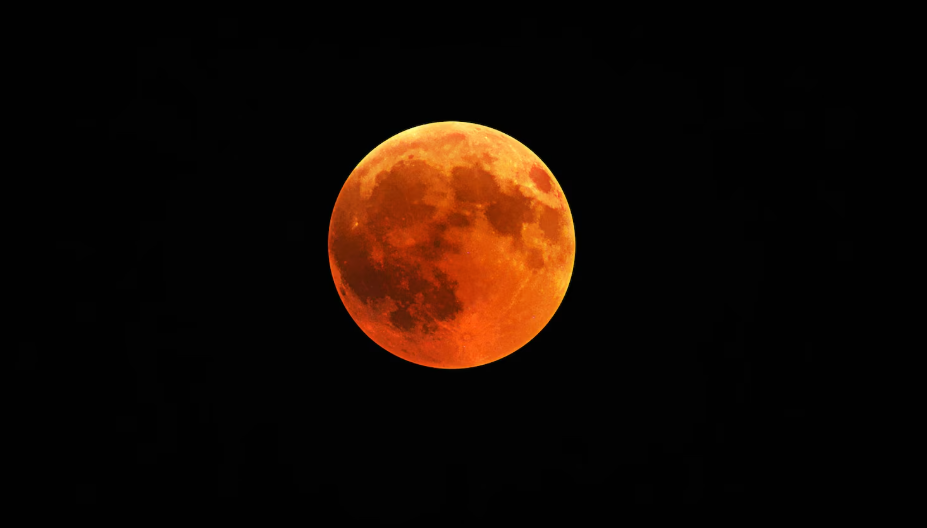
A simple but beautiful quirk of physics gives a “blood moon” its reddish color. Sunlight bends as it goes through Earth’s atmosphere on its way to the moon. The shorter blue wavelengths get lost and scattered. The main colors that reach the moon’s surface are red and orange. These colors come from every sunrise and sunset on Earth at that very moment, painting the moon at the same time. There’s a chance that no words can fully prepare you for seeing it in person. The color isn’t as dramatic as the name makes it sound—it’s more of a deep copper or rust than anything movie-like—but it has weight once you know what you’re looking at.
Like always, timing depends on where you are. People on the East Coast of the United States will be able to see the eclipse at a good time; just after midnight, it will be at its best. As of 9:12 p.m., people on the West Coast had already reached the peak. Pacific, which means that even people who don’t stay up late can really enjoy this event. For people in the UK, the eclipse lasts until dawn. By the time it reaches its deepest shadow, the moon is already low on the southwestern horizon. That low angle can make for dramatic viewing, since the moon looks bigger and more atmospheric close to the horizon, though it’s harder to see around clouds from that point of view.
The window for seeing is big. If the weather is clear, billions of people in North America, South America, Africa, and Europe will be able to see at least part of this eclipse. That caveat is more important than some people think. A clear sky in the suburbs or a dark field in the country is very different from a cloudy city nite. In late summer, wildfire smoke has become a persistent problem across much of the western United States. It can also dull or block the view in ways that are hard to predict even a few days in advance.
There’s no need for a telescope. This needs to be said clearly because astronomy has a scary reputation for needing a lot of gear and planning ahead. You can see the color change and the path of Earth’s shadow across the moon’s surface with your own eyes. Having said that, a good pair of binoculars changes everything. The craters, the dark seas on the moon, and the rough surface that goes in and out of shadow are all details that look better when you zoom in, but they still feel personal and not clinical.
When you watch something like this, you get the sense that the universe is taking a short break. The eclipse starts at 9:38 p.m. Eastern, when the penumbra, Earth’s outer shadow, touches the moon’s surface. The slow end is around 3:01 a.m. There’s a big window there, and not everyone will stay the whole time. However, staying up a little later than usual is worth it for the hour around maximum, when that shade of red hangs in the dark sky. The next lunar eclipse of the same level of beauty won’t happen until the last day of 2028. It will be a long time before it’s clear at nite.
