

Seeing someone speak for three and a half hours only to have it cut down to sixteen minutes—and not just any sixteen minutes, but ones that, according to her attorneys, were pieced together to tell a story she never agreed to tell—causes a certain kind of frustration. That’s the main accusation made by Tyra Banks against Netflix, and it’s a serious one.
Banks sued Netflix, directors Daniel Sivan and Mor Loushy, and EverWonder Studio for defamation on June 13, 2026, in the Central District of California. Reality Check: Inside America’s Next Top Model, a documentary series the streamer released in February that examined the contentious history of the reality competition she founded and hosted for more than 20 years, is the subject of her complaint. Since then, the show has come under increased scrutiny due to body shaming, deceptive production methods, and unethical photo shoots. Banks has been the target of much of the public’s ire.
ANTM’s issues are acknowledged in her lawsuit. That’s actually part of the point. According to Banks, she was ready to take some responsibility for the interview. She had previously stated in public that the show made “some really off choices” and that they weren’t always correct. She claims that she was prepared to be honest when she showed up for that three-and-a-half-hour session. She claims that the filmmakers then rearranged the sixteen minutes of that conversation, removed the parts about accountability, and created a story that she neither supported nor articulated.
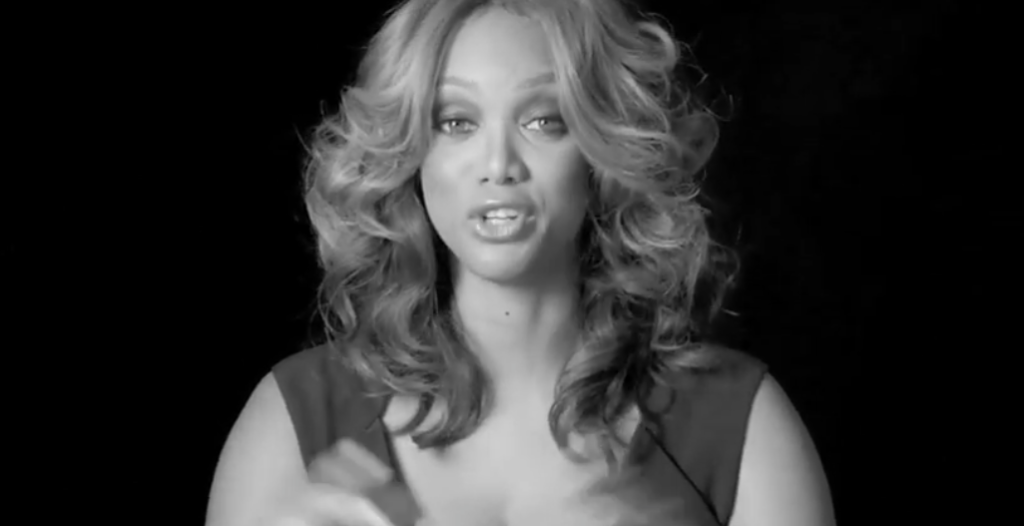
A contestant who was allegedly sexually assaulted during the show’s run is the subject of the lawsuit’s most serious allegation. According to Banks, she was not informed about the assault during the interview and was not specifically questioned about it, so she was unable to provide a meaningful response. She claims that the documentary was altered to give the impression that she was purposefully avoiding the topic and knew exactly what was being mentioned. That is the type of imputation that is difficult for the general public to forget.
Measurable effects of the damage have already been observed. Online ratings for her Sydney-based ice cream company, SMiZE & DREAM, dropped by over 20% in the weeks following the docuseries’ premiere, allegedly as a result of viewers’ coordinated criticism of what they had seen on screen. An Australian ice cream shop caught in the crossfire of a streaming controversy in Los Angeles is an odd detail, but it shows how quickly reputational harm spreads beyond its original context.
It won’t be simple to win this lawsuit, though. Because Banks is a public figure, she must meet a higher standard of proof than a private person would under US defamation law. She will have to prove what the courts refer to as “actual malice”—that is, that Netflix either acted recklessly with regard to the truth or knew the statements made about her were untrue. Although that standard is in place to safeguard press freedom and free speech, it actually makes it very difficult for public figures and celebrities to prevail in defamation lawsuits.
The lawsuit claims that Netflix’s own “Rights Agreement” with Banks contained explicit promises not to edit her in a way that constitutes actionable defamation and not to rearrange her words so as to materially change their meaning, which may be her strongest legal foundation rather than the defamation claim at all. In a court of law, the documentation of those promises may be more important than the issue of actual malice.
It’s worthwhile to sit with this larger tension. Banks is not saying that ANTM’s history shouldn’t be investigated or that the show shouldn’t exist. The version of Tyra Banks on screen isn’t the one who sat down for that interview, so she is claiming that whatever examination was done wasn’t fair to her. It is unclear if a jury will ultimately reach a verdict. However, the lawsuit itself has already accomplished something that the documentary series might not have: it allowed her to state unequivocally and publicly that she was never given one.
