

There has always been space in baseball for a particular kind of player, one whose worth isn’t necessarily evident in the numbers and who gains his spot on the team by doing things that are more difficult to discern on a box score. Tyler Heineman was that player for the Toronto Blue Jays over three different periods, the most recent of which ended this week when he was traded to the Los Angeles Angels in exchange for cash. This type of transaction contains more intricacy than the title implies, but it seldom makes an impact on the news cycle.
This season, Heineman, 34, had been having a lot of trouble at the plate. He was hitting.154 with an OPS of.410 in 33 games, which would typically put a stop to a backup catcher’s career rather fast. Nevertheless, he posted a plus-7 behind the plate during that same time, ranking third among all qualified catchers in fielding run value. That is not a minor issue. Even though fans seldom ever discuss it, pitching staffs are aware of a plus-7 fielding run value, despite the fact that defensive stats for catchers are notoriously hard to assess. In one version of this tale, Heineman’s defense alone kept him on a major league team for a much longer period of time than his bat should have.
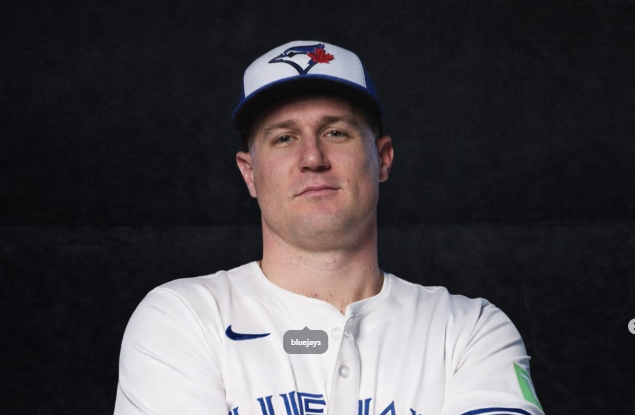
The cause of his departure was simple. The Blue Jays just didn’t have room for a second catcher hitting.154 after Alejandro Kirk returned from the injured list on Friday. Toronto didn’t dismiss Heineman outright; instead, they designated him for assignment before finding a trade partner in Anaheim a few days later.
A veteran who can frame pitches, manage a staff, and perform the unsexy task that shows up in team ERA rather than individual numbers is probably valuable to the Angels, who are rebuilding and always thin at catcher. They might be correct. It’s also feasible that the offensive side has simply deteriorated to the point where the glove can make up for it at 34, with an OPS below.450.
The longevity and rhythm of the Tyler Heineman Blue Jays connection are what make it very fascinating. He joined the Toronto organization in 2022, returned in 2023, and then returned for a stint that lasted from 2024 to this season. This indicates that the Blue Jays front office thought highly of him because he spent three different chapters with the same team, which is unusual for a backup catcher.
His greatest season in Toronto was last season, when he contributed to a division title with a.289 average, three home runs, and a.777 OPS in 64 games. Heineman appeared to be a real weapon when he wasn’t on the bench. The version from this year never achieved the same level of success.
The Houston Astros selected him in the eighth round of the 2012 draft, which is far from the first row of a draft class and far from the kind of prospect pipeline that teams base their marketing efforts on. The majority of eighth-round selections never make it onto a major league club. Those that do typically thrive on flexibility—learning to be helpful in less spectacular ways.
Pitch by pitch throughout the course of nine innings, Heineman discovered his specialty behind the plate in the mechanics of receiving and framing as well as the silent exchange between catcher and pitcher. He didn’t become famous as a result. However, teams continued to call him as a result.
