

The neighborhoods of north St. Louis are far from the Supreme Court’s marble steps, but what transpired in Washington last month had a significant impact on Missouri. The court’s 6-3 decision to declare a Louisiana congressional map to be an unconstitutional racial gerrymander resolved more than just a Deep South case. It sent a signal that reverberated all the way to Jefferson City, where Republicans in Missouri have spent the better part of two years watching the legal landscape change in their favor.
The current configuration of Missouri’s 1st Congressional District has been in place for many years. For the majority of that time, it has restored African American representation in Congress with little significant opposition. It encompasses the entire city of St. Louis as well as parts of St. Louis County. That is now changing. Republicans have made it quite evident that they want to redraw it, so that is not the question. When and if courts will allow them are the questions.
Timing is currently the practical barrier. Any redistricting bill passed during a regular or special session would miss the August primaries because Republicans in the Missouri House lack the votes to approve a new map with immediate effect. The majority of legal observers believe the 1st District is safe for this cycle because it is a limited window. However, being safe for one election is not the same as being safe going forward. The Missouri Voter Protection Coalition’s leader, Denise Lieberman, stated unequivocally that the ruling “green lights gerrymandering” and leaves communities of color with significantly fewer resources to resist.
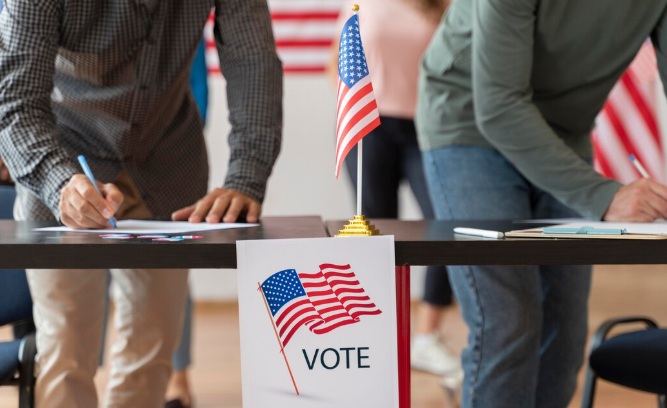
The Supreme Court’s decision affects the legal framework underpinning minority-majority districts, which makes it feel significant and a little unsettling to those who have followed voting rights litigation for years. The Voting Rights Act provision that formally protects such districts was not removed by the court. However, it made it much more difficult to overcome the evidentiary bar. Any district that wasn’t created by recent, deliberate discrimination is now vulnerable, according to Kansas City lawyer Eddie Greim, who argued the Louisiana case before the court. That is a significant change. The dissent acknowledged the notoriously difficult nature of proving intent.
St. Louis University political science professor Nathan Carrington gave a difficult-to-disregard explanation of the decision. He claimed that the Voting Rights Act has been progressively weakened between this ruling and the earlier Shelby County decision. Pre-clearance is no longer available. Without a paper trail, which contemporary legislators are careful not to leave, proving discriminatory intent is nearly impossible. Rep. Wesley Bell, who presently represents the 1st District, called for the John R. Lewis Voting Rights Advancement Act once more this week, but it is still unclear if Congress has the will or the votes to pass it.
Democratic state representative Dr. Kem Smith, who was raised during the civil rights movement, talked about what it’s like to be a member of a legislature where her party has little influence. She said something that transcends partisan annoyance. She contended that worse laws are produced when one side controls every lever. That may sound like a talking point, but it also accurately captures how conflict, compromise, and opposing viewpoints have historically been the best ways to govern. It is genuinely debatable whether Missouri’s current political system permits any of that.
Additionally, a more comprehensive map is emerging. Midway through the decade, Texas has already redrawn its congressional districts. North Carolina came next. Ohio made adjustments. According to analysts at Brownstein Hyatt Farber Schreck, Republicans could win nine to twelve House seats prior to the 2026 midterm elections if Republican-drawn maps in those states, along with Missouri and possibly Indiana, are upheld in court. Even though the legal outcomes are still uncertain, the numbers are startling.
There is more going on in and around St. Louis than just a local redistricting dispute. In courtrooms, state capitals, and eventually in precincts where voters have been casting ballots for generations, it’s a stress test for what’s left of minority voting rights. The question that this moment, more than any other in recent memory, is forcing into the open is whether the legal tools to protect that participation still exist.
