

There were no big events to mark the start of Malaysia’s National Service Training Program, which is also known as PLKN or Program Latihan Khidmat Negara. It began its trial session quietly on January 12, 2025. About 150 volunteers between the ages of 18 and 25 showed up at training grounds that hadn’t been used in years. It was very different from 2004, when 85,000 young people were sent to camps across the country as draftees out of about 450,000 who were eligible. The difference is very clear, and it shows how much has changed and how much is still unknown.
Late in 2002, PLKN was formed because of a real national issue. People from Malay, Chinese, Indian, and dozens of other smaller ethnic groups in Malaysia were thot to be moving farther apart. It looked like teens and young adults were growing up in separate worlds, going to different schools and living in different neighborhoods and rarely meeting in a meaningful way. The show was meant to be a bridge. Three months of training, meals, and being tired together. As the idea went, putting teens from different backgrounds in the same house would make them get along.
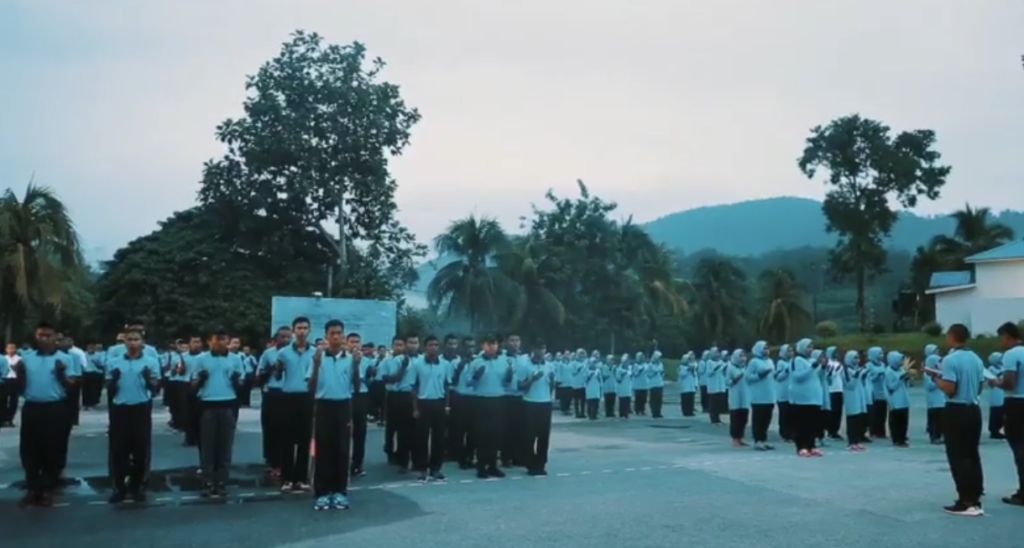
In its early years, the show was very important. There were camps in 79 different places across the country. Some people didn’t like that the conscripts had to wear blue camouflage uniforms because blue stands out so much in the jungle. They went thru four training modules that covered things like physical fitness, national history, building character, and community service. The physical module was tough. It included obstacle courses, abseiling, canoeing, survival training, and even getting to know the Colt M16. It wasn’t quite military duty, but it wasn’t a holiday either.
It seems like the program worked, at least in part, for some people who went thru it. A lot of former trainees say that the camp really opened their eyes because it was their first real, long-term contact with people of different ethnic groups. It’s harder to say if those bonds lasted longer than three months. You can’t make a good graph of social cohesion in a spreadsheet.
The situation with money was never good. The Deputy Defense Minister at the time said that the PLKN cost more than RM2.37 billion just between 2004 and 2007. At first, the government promised that annual costs would stay below RM500 million. This goal was met from the very first year on. The program finally ran out of money because of budget constraints. It stopped in 2015 and was reorganized as PLKN 2.0 in 2016, but people could choose to join or not. After that, in August 2018, the newly elected Pakatan Harapan government got rid of it completely. Syed Saddiq, the Minister of Youth and Sports, was clear about the reason: claims that the program had been used to teach racist and political ideas, especially thru its “nation-building” module.
That accusation hurt a lot. Also, it wasn’t totally a surprise. People would always be interested in a module that taught national loyalty and government civics. This is especially true in a country with a complicated political history around race and identity. Depending on who you ask and what camp they went to, the claims of indoctrination may have been mostly true or slightly exaggerated.
Defense Minister Mohamad Hasan made the announcement about the revival in October 2023. The new one, PLKN 3.0, is designed to be smaller. One police camp and 13 army camps are taking part. The new structure for training is made up of three stages, with 70 percent military training and 30 percent national curriculum modules. For the January 2025 pilot, most of the volunteers were SPM graduates who had been uniformed as cadets before. This was a good place to start, but it also means that the reach is limited, at least for now.
It’s still not clear if PLKN 3.0 will ever go back to the size of its predecessor or even if it needs to. A program that depends on people volunteering is very different from one that depends on people signing up. It may depend on what the government wants to do this time to decide whether that’s a strength or a weakness. From far away, it’s hard not to get the sense that Malaysia is still trying to figure that out.
