

A Gaithersburg Holiday Inn most likely had no idea that it would become a scene from American political history. However, on a Tuesday night, shortly after 11 p.m., Representative April McClain Delaney entered a room that was still crowded with supporters, grinned wearily, and said, “I’m feeling good — are you feeling good?” The audience responded. The race had not yet been officially announced outside. However, something had already changed.
While classic rock music played overhead, David Trone’s supporters gathered at a Frederick brew pub a few miles away, picking at appetizers. On his end, the large screens that had been displaying the election results fell silent. Reporters were informed by a campaign staff member that there would be no speech. Just a social media post. The disparity and its implications for a race that cost $23 million in TV expenditures alone are difficult to ignore.
Rich businessman Trone served three terms as the representative for Maryland’s 6th District before resigning to run for the Senate in 2024. Angela Alsobrooks defeated him in that primary as well. Then, in December, he declared his intention to return and challenge the candidate who had won the seat he had left. He cited McClain Delaney’s support for the Republican-backed Laken Riley Act as a contributing factor. Politically speaking, it was a legitimate complaint. However, many were unimpressed with the way he prosecuted it.
Later, McClain Delaney expressed regret for that vote, admitting that she had not anticipated the realities of Trump’s immigration enforcement. It appears that she presented her case sufficiently, regardless of whether voters were satisfied with that explanation. Although this primary was closer, she prevailed by just over six points in her 2024 election.
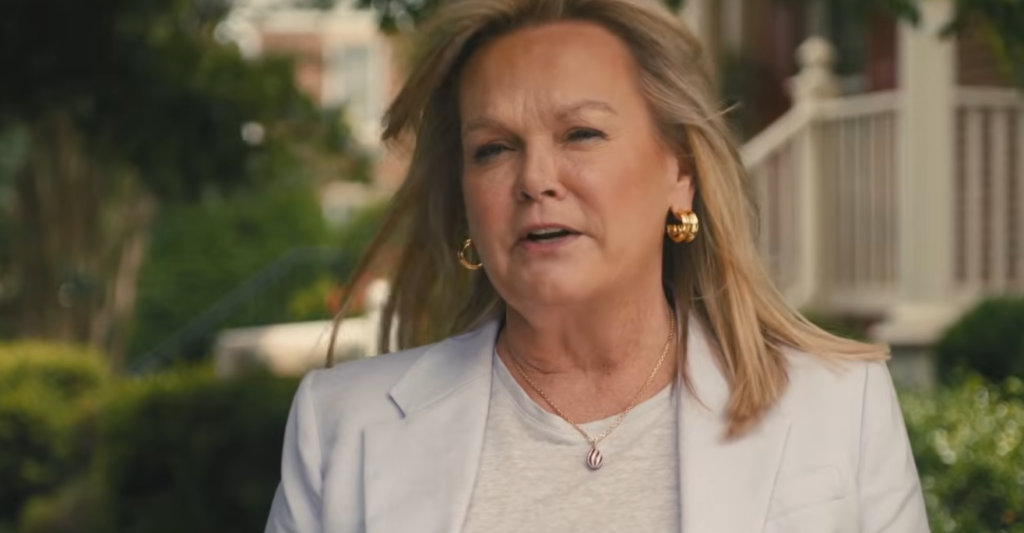
Who ended up at her election night party is telling. Frederick engineer Khalil Elshazly had previously backed Trone. He traveled to Gaithersburg this time to support McClain Delaney. He later told people that he was turned off by Trone’s strategies and that the millions being spent on this primary seemed pointless and even offensive. “Uncalled for” was what he said. It’s the kind of subdued, thoughtful disapproval that manifests itself in results but not in polling.
Oliver King, a 63-year-old Frederick Democrat, claimed that he was pushed toward McClain Delaney by the almost daily barrage of Trone mailers and canvassers at his front door. A well-funded campaign losing ground specifically because it tried too hard is almost poetic. Instead of persuasion, saturation can lead to exhaustion.
The contest touched on current issues within the Democratic Party, such as immigration, the role of money in politics, and the difficulty of opposing Trump. It felt a little tense coming from both sides as each candidate spent months attempting to link the other to MAGA Republicans. Since 2013, the district—which includes portions of Western Maryland and Montgomery County—has alternated between these two families. It was held by John Delaney. It was held by Trone. April McClain Delaney is in control once more.
The Democratic congressional delegation from Maryland, along with Governor Wes Moore, fully support her going into the general election. For the midterm elections, the seat is regarded as safely Democratic. It’s still unclear if the magnitude of this primary—the money, the commotion, the family drama—will cause any long-term damage by November. Most likely not. However, it’s important to keep in mind that $23 million was spent to resolve a dispute that didn’t need to occur in the first place.
