

When you see the numbers go up this quickly, it seems almost strange. The Democratic Republic of the Congo had its tenth Ebola outbreak in 2018. It took about 235 days for the number of cases to reach 1,000. That same line was crossed again in 2026, and it only took 40 days. Forty days. This kind of number stops you in the middle of a thought because it suggests that something has changed, and not just with the virus but also with the environment around it.
It is now the second largest outbreak of Ebola ever, thanks to the Bundibugyo strain. The Democratic Republic of the Congo has confirmed more than 5,700 cases and almost 2,750 deaths as of the end of August 2026. Uganda’s capital, Kampala, has been the site of 20 confirmed cases. A single case has been proven in France. Since the virus is spread by touching bodily fluids of infected people, the fact that it has spread so far shows how open the borders around this outbreak really are.
You should take a step back and picture what northeastern DRC looks like in real life. These names—Haute-Uele, Ituri, and Nord-Kivu—do not just come from a report from the health ministry. Years of fighting have left these provinces with roads that aren’t reliable at best and can’t be used at all at worst. A medical team trying to find contacts of an infected patient might have to go through militia-controlled territory. The outbreak is more than just a health problem. It’s both a disease crisis and a security crisis at the same time, and both are getting much worse.
People who work in healthcare have gotten sick while treating patients. That little thing, which is usually buried in the middle of official briefings, should get more attention than it does. When the people who were trained to stop a disease start dying from it, partly because they don’t have enough personal protective equipment and partly because of the violence in the area, the system is under pressure it wasn’t designed to handle. The fact that the bravest people in the room are also the most visible is a sad irony.
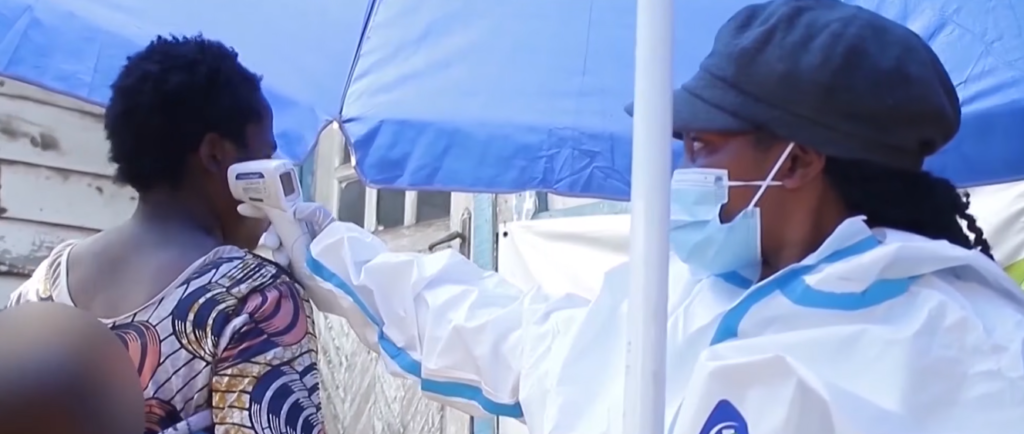
Public health officials have been trying for years to deal with a problem that makes all of this more difficult: people in the area have a deep and historically understandable distrust of government institutions. Along with the virus itself, false information spreads through areas that have it. Families hide sick family members from treatment centers because they are afraid of being judged or don’t know what will happen there. That kind of mistrust isn’t irrational; it’s been built up over many years. But it makes the already hard job of finding contacts even worse.
To be fair, the answer is not small. About 500 people from the CDC are working on this outbreak, and more than 120 are out in the field right now. People coming into the US from the DRC are limited in what they can do, and people coming into the US from Uganda and South Sudan are subject to more thorough screening at certain airports. The US has also made it clear that people should stay away from Ituri and Nord-Kivu and think twice before going anywhere else in the affected area.
We still don’t know how far this outbreak will go or how long it will last. It’s more likely that the things that make it possible—conflict, lack of infrastructure, mobile populations, and broken trust—won’t go away any time soon. The Bundibugyo strain may not be as dangerous as the Zaire strain that caused the crisis in West Africa in 2014, but since over 2,700 people have already been confirmed dead, that doesn’t help much. What you’re seeing right now is the second-biggest Ebola outbreak ever, and it doesn’t look like it will stop any time soon.
