

Jazz enthusiasts frequently revisit a black-and-white clip from the 1958 Newport Jazz Festival. Anita O’Day dissects “Sweet Georgia Brown” in front of the audience while standing on a brightly lit stage wearing white gloves and a wide-brimmed black hat. At first, the crowd is unsure of what to do. Then it does. Most people first meet her on that afternoon, which is depicted in the movie Jazz on a Summer’s Day. It’s also somewhat deceptive. She had already experienced three lives by that point.
Anita Belle Colton, an Irish-American child whose family relocated to Chicago shortly after, was born in Kansas City in 1919. In the small, grinding manner typical of Depression-era households, the household was harsh. Her dad drank his salary. When the marriage eventually failed, her mother sold the piano. Reading her own description of those years gives the impression that she didn’t romanticize anything. She simply continued to move.
She persuaded her mother to allow her to drop out of school at the age of fourteen in order to participate in the walkathon circuit, which were harsh endurance dance competitions that dominated American ballrooms in the 1930s. The truant officer gave her the name O’Day, which is pig Latin for “dough.” It was only supposed to be temporary. For the next seventy years, it remained in place. The fact that Frankie Laine and Red Skelton emerged from the same marathons speaks volumes about how unique and productive a training ground they were. You acquired the skill of performing while exhausted. You acquired the skill of performing while hungry. You acquired the ability to hold a room.
When Gene Krupa discovered her in 1941 while she was leading his large band as the “canary,” she did something that wasn’t supposed to happen right away. On “Let Me Off Uptown,” she traded lines with Black musician Roy Eldridge, a trumpeter, on an equal footing. The Black horn player and the white girl singer passed the song back and forth as if it were nothing out of the ordinary. Many believed it to be in 1941. In any case, the record sold. You can tell it still irritated her that Krupa paid her $7.50 per side because she brought it up so frequently afterward.
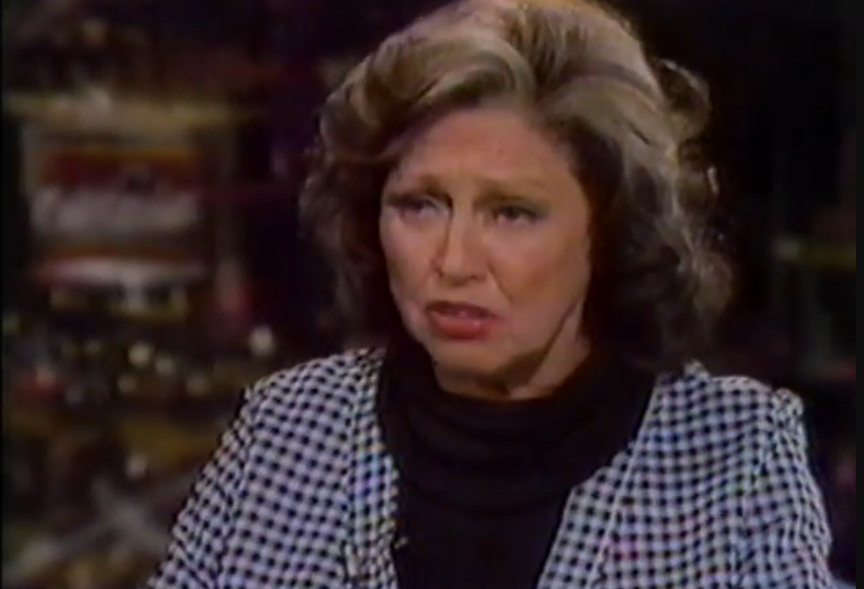
Then came Stan Kenton and his 1944 million-selling book “And Her Tears Flowed Like Wine,” which was polled by Esquire and Down Beat. Woody Herman at the Hollywood Palladium. She was already well-known by the time she went solo in 1947, and club listings referred to her as “the Jezebel of Jazz”—a moniker that singers typically quietly detested but press agents adored.
The reason to slow down is the voice itself. She was unable to produce a natural vibrato because a doctor had clipped her uvula during a tonsillectomy when she was a child. That would have ended most singers’ careers. She made it the whole point. As Charles Michener once noted in Newsweek, her phrasing went horizontal where other singers went vertical, playing hide-and-seek with the melody. She maintained that she was not at all a singer. She would claim, “I’m a song stylist,” which sounds like a lie until you hear what she does to “Honeysuckle Rose” during the Anita sessions in 1956.
She herself documented the devastation of those years in 1981 in High Times Hard Times, a book co-authored with George Eells. Heroin addiction for sixteen years. a 1953 prison term of six months. A near-fatal overdose in 1966 was the catalyst for her eventual recovery. She didn’t pretend the recovery was spotless, nor did she soften any of it on the page. “If you’ve been a junkie for sixteen years,” she once said, “it takes you a long time to recover.” That sounds about correct.
Observing her career trajectory from a distance, it’s remarkable that the second half was longer than the first. Following her sobriety, she went on a tour of Japan, founded her own record label, appeared on Carson and 60 Minutes, performed at Carnegie Hall for her 50th anniversary in 1985, and continued to record into her 80s. In 2006, the year she passed away, her final album, Indestructible!, was released. There was no subtlety in the title. It wasn’t incorrect either.
Her influence is audible all the way downstream. Chris Connor and June Christy. The entire elite school of singers who discovered that it was possible to swing without yelling. It’s difficult to ignore how infrequently she is mentioned in casual conversation alongside Sarah Vaughan or Ella Fitzgerald, and how frequently working jazz singers will tell you that O’Day is the one they actually study when pressed. After her passing, the documentary Anita O’Day: The Life of a Jazz Singer was released in 2007. Those who needed to know were already aware by that point.
