

Around the time you reach puberty, most doctors stop paying much attention to a small organ that is located just above your heart and tucked behind your breastbone. the thymus. It performs vital tasks during childhood, such as developing the body’s defenses and training immune cells, and then, according to conventional wisdom, it fades. shrinks. turns into a biological afterthought of sorts. That was essentially medicine’s official stance on the matter for many years.
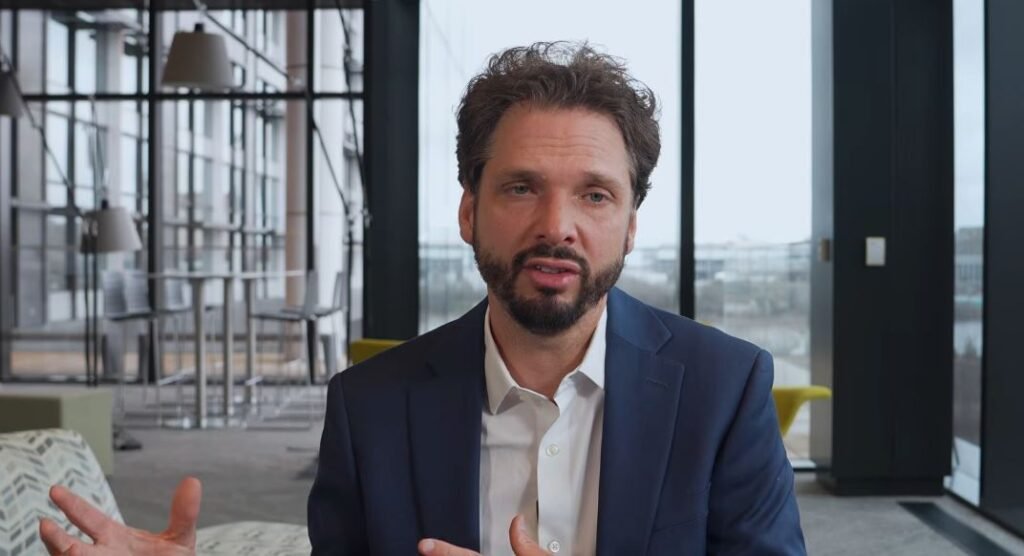
Hugo Aerts, the director of Mass General Brigham’s Artificial Intelligence in Medicine program and a physician-scientist at Harvard Medical School, wasn’t so sure. His team wasn’t either. The results of their actual investigation, which involved using AI to examine CT scans from over 27,000 adults in two sizable independent cohorts, were so remarkable that they were published in two consecutive papers in Nature earlier this year.
You have to read the sentence twice because of the numbers. The relative risk of death was about 50% lower for adults with high thymic health scores than for those with low scores. They had a roughly 63% lower risk of dying from heart disease. Lung cancer risk is reduced by about 36%. These were not tiny signals that were lost in the data. After controlling for smoking, age, sex, and other health-related variables, they persisted. between two distinct cohorts. What distinguishes an intriguing discovery from something that actually changes the way a field thinks is that kind of consistency.
It is worthwhile to comprehend the method itself. Aerts and his associates created a self-supervised deep learning model that could read standard CT scans, such as those currently used in lung cancer screening programs, and extract details about the thymus, including its size, shape, and composition. They used this information to create what they called a “thymic health” score, which is essentially a stand-in for the thymus’s continued functional activity as an adult. It’s a clever strategy because it doesn’t require any new tests or invasive procedures; instead, it repurposes imaging that already exists.
Simultaneously published, a second study by the same group looked at more than 1,200 cancer patients receiving immunotherapy. The findings were consistent with each other. Even after controlling for variations in tumor type, treatment strategy, and patient characteristics, patients with improved thymic health were approximately 37% less likely to experience cancer progression and 44% less likely to die. Immunotherapy targets cancer cells by stimulating the immune system.
It makes sense that a thymus that is healthier and more active could aid in that process. “We suspected the adult thymus might still matter,” Aerts told one publication, “but we were surprised to see it confirmed at this scale.” We were surprised by how strongly and consistently these variations were linked to longevity, cancer incidence, cardiovascular disease, and response to cancer therapy in several sizable, independent cohorts.
The length of time this specific organ was neglected is almost annoying. The thymus shrank at about the same rate in terms of both size and scientific interest. The presumption that shrinkage equated to irrelevance proved to be, at the very least, inaccurate. Poorer thymic health was found to be correlated with smoking, chronic inflammation, and higher body weight. This suggests that common lifestyle factors may be subtly influencing immune resilience in ways that are only apparent decades later.
The claims made by the researchers are carefully considered. The imaging method is not yet prepared for regular clinical application. Because the studies are observational, they are able to find correlations but are unable to determine whether enhancing thymic health through interventions or lifestyle modifications would result in better outcomes. Next are those inquiries. The impact of accidental radiation to the thymus during lung cancer treatment on patient survival is already being investigated by Aerts’ team.
It’s possible that in the future, doctors will consider the thymus as a standard component of disease risk assessment and treatment planning. It’s too soon to say that with certainty. However, as this field of study advances, there is a real sense that medicine has been overlooking something significant, and that Hugo Aerts and his associates may have simply made it much more difficult to overlook.
