

When you talk to a farmer, you quickly question what you thought you knew. The weather or crop prices aren’t talked about for very long. At some point, it turns inward, to the weight of carrying on a family tradition, the worry of a dying pasture, and the strange loneliness of working land with nothing but sky above. Emma Alexander, who is from Rogersville, Missouri and is a seventh-generation farmer, said it clearly: it’s not that farmers can’t handle things. It’s just that there’s more to deal with than ever.
In Missouri’s farming communities, that thought has been going around in the background for years. These days, things are different because someone is finally doing something about it. They are doing it methodically, county by county, across all 114 of them.
With the help of the MU Psychological Services Clinic and the University of Missouri Extension, a statewide mental health infrastructure has been built that is specifically for farm communities. Families who need it most don’t have to pay for workshops, training in how to prevent suicide, programs for dealing with stress, or remote teletherapy. It reached more than 3,000 farmers, ranchers, and farmworkers just from September 2022 to September 2023. That’s an important number, even if it only shows a small part of the problems that many people are facing.
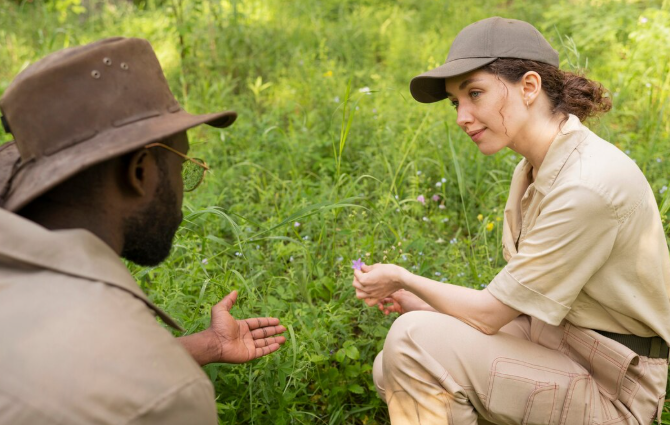
The reason to pay attention to Missouri’s approach is that it was done on purpose. This isn’t an extra hotline added to an agricultural website that was already there. Extension educators and clinical psychologists work together so that they don’t provide the same services twice. One group raises awareness and trains people in the community, while the other provides therapy. It makes sense to divide up the work this way, and it seems to be working.
Though, the walls are still there. It is true that 45 of Missouri’s rural counties do not have a general acute care hospital. Sometimes you just have to be willing to see a therapist. It’s not always about how far away something is, how much gas is left, or who will feed the animals while you’re gone. That’s one reason why teletherapy is so important here. 42% of people in the program, who were of different races and socioeconomic backgrounds, got counseling sessions over the phone. This is a small group, but it shows that the model can reach people who wouldn’t get help otherwise.
Jason Medows, a farmer and pharmacist in Crawford County, has been open about his own mental health problems. That seems quietly important. A lot of the time, this kind of self-disclosure has caused problems in farming communities. It seems like the stigma is slowly shifting because people like Medows are willing to talk in public and on the record. “It’s better to not face them alone,” he replied. Even though that’s not a new idea, it hits home differently in rural Missouri than it might in other places.
The bigger problem is one that people who study mental health in communities have been trying to solve for a while now. Missouri isn’t the only state with problems like services being spread out, people not trusting formal care systems, and it being hard to reach people who live in large areas. But what’s interesting about what’s being built here is that it tries to meet people where they are. Instead of forcing farmers to fit into a system made for patients in urban clinics, care is being redesigned to fit how farm families live and work.
It’s still not clear if programs like this one can grow in a way that is sustainable or if they’ll always need new grants and the support of institutions. It’s worth holding on to that uncertainty. It’s less doubtful that there is a need, that it has been underfunded for a long time, and that farmers, who are in charge of almost 90% of Missouri’s family-owned farms, deserve more than a pamphlet and a toll-free number.
Anyone in Missouri’s farm communities who needs help can call the AgriStress Help hotline at 833.897.2474. It opened in 2022.
