

According to Terry O’Neill, a Liverpool policeman’s son, he was captivated by tales of people with extraordinary physical prowess at a young age. He was initially drawn to judo by this curiosity. Then he told a little lie, just like many teenagers in his generation. In order to join the Liverpool Karate Club, he shaved a few years off his age. It’s the kind of detail that might seem insignificant, but it reveals how much he wanted in.
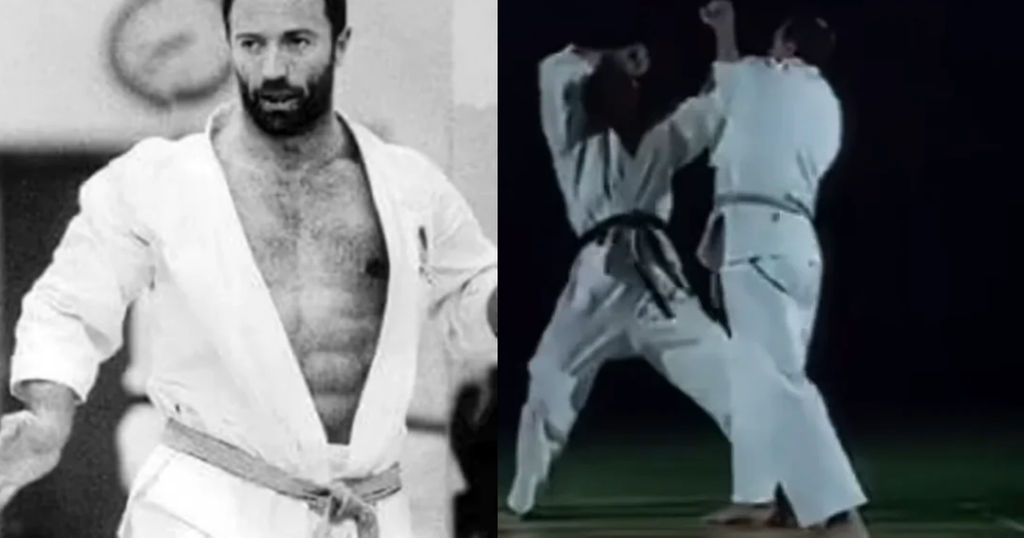
Andy Sherry was his first teacher, and later Kanazawa Sensei and other senior Japanese instructors paid him occasional visits. Shotokan, a style based on timing, distance, and clean technique, was the training. O’Neill’s handling of it was less neat. He developed a reputation as a kicking expert with a flair for the unexpected, and it seems that people came to watch him because they were unsure of what he would attempt next.
It wasn’t a glamorous start to his competition career. He has acknowledged that his lack of experience caused him to lose badly at the 1967 KUGB National Championships. That was short-lived. He went on to become a three-time KUGB Grand Champion and win the national individual title in 1972, 1973, 1974, 1975, 1977, and 1978. He was a member of the Red Triangle Team, which won 13 national team championships between 1967 and 1981.
| Detail | Information |
|---|---|
| Name | Terry O’Neill |
| Born | 27 February 1948, Liverpool, England |
| Family Background | Son of a police officer |
| Martial Art | Shotokan karate |
| Current Rank | 8th Dan |
| Early Training | Started in judo, then joined the Liverpool Karate Club |
| First Teacher | Andy Sherry |
| Other Instructors Mentioned | Murakami Sensei, Vernon Bell, Terry Wingrove, Kanazawa Sensei |
| First National Championship Entry | 1967 KUGB National Championships |
| National Individual Titles | 1972, 1973, 1974, 1975, 1977 and 1978 |
| Grand Champion | Three-time KUGB Grand Champion |
| Team Success | Member of the Red Triangle Team, 13 national team titles |
| International Squad | KUGB International Squad, 1968 to 1982 |
| Major International Win | Captained British All-Styles Squad to victory over Japan, 1975 World Championships, Los Angeles |
| Signature Technique | Rolling kakato geri used in the 1977 final against Steve Cattle |
| Fighting Style | Kicking specialist with a fast uraken and empi combination |
| Career-Ending Injury | Knee ligament damage in a 1982 match against Italy |
| Magazine Founded | Fighting Arts International, 1972 to 1997 |
| Early Jobs | Security work at music venues and the Cavern Club for about 17 years |
| Black Belt Ranking | Listed No. 1 among deadliest fighters in 2006 |
| Notable Films | Conan the Destroyer, In the Name of the Father, Dragonheart, Entrapment, Gangs of New York |
| Notable Co-Stars | Arnold Schwarzenegger, Michael Caine, Sean Connery |
| TV Appearances | Civvies, Comics, The Governor |
| Current Role | Senior KUGB member, international referee and grading examiner |
In karate circles, one technique is still mentioned. He defeated Steve Cattle in the 1977 KUGB final with a rolling kakato geri, a spinning heel kick that was regarded as one of the most inventive moves ever seen at a championship. Before it landed, you can practically picture the hall becoming silent. The notion that he was merely a kicker is complicated by the fact that he outpunched Danny Bryceland in 1969.
He led the British All-Styles team that defeated Japan at the 1975 World Championships in Los Angeles. At the time, defeating Japan in karate was a big deal. When he severely injured his knee ligaments during a fight against Italy in 1982, his fighting career came to an abrupt end. Even now, it’s difficult not to question how much longer he might have lived.
His life appeared very different away from the mats. He spent roughly 17 years working as a security guard at music venues where bands like the Walker Brothers and the Rolling Stones performed. After that, he worked at the Cavern Club. He was once described by The Independent as a bodybuilder, karate instructor, and seasoned nightclub doorman. Although some of the most difficult tales about him are based on secondhand accounts, they should be handled with some caution. This combination of discipline and harsh surroundings is likely part of the reason his reputation developed the way it did.
He established Fighting Arts International in 1972, a publication that continued until 1997 and gained significant recognition among martial artists. The screen work followed. Conan the Destroyer, In the Name of the Father, Dragonheart, Entrapment, and Gangs of New York are just a few of the movies in which he starred alongside Arnold Schwarzenegger, Michael Caine, and Sean Connery. In addition, he appeared on British television and served as a martial arts consultant for a number of productions.
Black Belt magazine released its list of the world’s deadliest fighters in 2006; mixed martial artists and deceased fighters were not included. O’Neill came in first. Naturally, it was a subjective list that evaluated men at their best. Nevertheless, it conveys something about the way his name sounded.
As an international referee and grading examiner, he is still a senior member of the KUGB and currently holds the rank of 8th Dan. It remains to be seen if the sport will ever produce another fighter who is as good as him. Perhaps it’s for the best that karate has become more refined and regulated. However, there is still some gritty, human appeal to the tale of a young man from Liverpool who tricked his way into a dojo and ultimately defeated Japan in Los Angeles.
