

Sonam Wangchuk’s financial profile has a subtle yet striking quality. Wangchuk’s estimated net worth is between ₹75 lakh and ₹2 crore, or roughly $90,000 to $240,000, in a time when engineers with his credentials and public profile would normally be earning consulting fees, board memberships, or startup equity. That figure seems almost purposefully low for a man with 6.4 million Instagram followers and a worldwide reputation developed over three decades.
It’s worth taking a moment to consider that. This individual inspired one of the most commercially successful Bollywood movies ever produced, whose invention, the Ice Stupa, has been featured in international media, and who has spoken on stages all over the world about governance, education, and climate change. However, the wealth has just not accumulated. It’s not a coincidence.
Wangchuk has legitimate sources of income, but they are small by conventional standards. He makes money from his YouTube channel, fees from speaking engagements, and sporadic consulting work. According to data from multiple tracking sources, his income from YouTube may have ranged from $92,000 to well over $100,000 per year during his most recent active periods. However, those who closely follow him will tell you that he rarely keeps the money in his pocket for very long. According to him, the majority of it goes back into SECMOL and the Himalayan Institute of Alternatives Ladakh, two organizations he has spent his adult life creating from nearly nothing.
Wangchuk was raised in a family influenced by public service after being born in Alchi, in what was then Jammu and Kashmir, in 1966. A politician was his father. Wangchuk has always seemed more at ease directing resources toward causes than amassing them personally, which may be partially explained by this background. After earning his degree in mechanical engineering in Srinagar in 1987, he quietly built SECMOL for the next few years while no one outside of Ladakh was around. These weren’t years of financial aspirations. They were years of obstinate institutional building.
Perhaps the most obvious physical representation of Wangchuk’s perspective on resources and money is the SECMOL campus. It is a place that views thrift as intelligence rather than sacrifice, built with rammed earth, and powered almost entirely by solar energy. One imagines that spending weeks on that campus changes a person’s perspective on what is truly sufficient.
Additionally, his activism has cost him a lot of money. Everything was thrown off when he was detained under the National Security Act in September 2025 and remained there until March 2026. During that time, the government stopped providing SECMOL with foreign funding and revoked its FCRA license. The CBI launched an investigation into HIAL. These are direct blows to the financial foundation of organizations that rely on donor confidence and trust in order to thrive, not abstract bureaucratic annoyances.
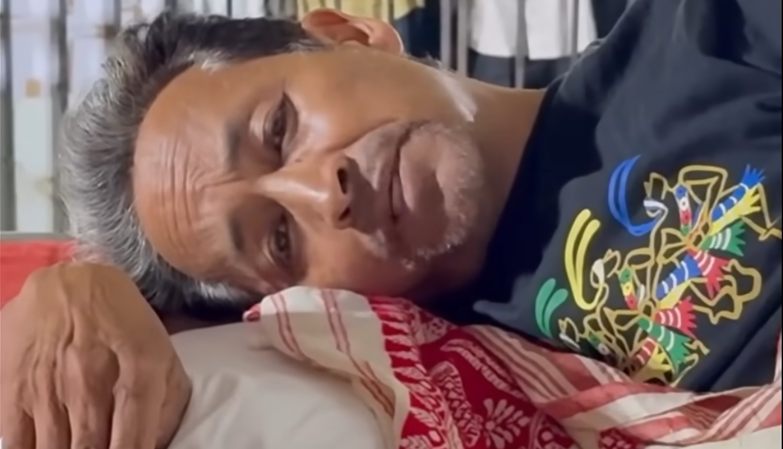
Then, in June and July of 2026, there was a 26-day hunger strike in protest of the NEET paper leak. When he broke his fast at Gurugram’s Medanta Hospital, medical professionals expressed grave concerns about his health. Observing someone repeatedly jeopardize their health over public policy is enlightening, regardless of one’s opinion of hunger strikes as political tools. That kind of commitment is difficult to balance with a quiet investment portfolio or a covert offshore account. It doesn’t match the profile.
Therefore, it is probably best to view Sonam Wangchuk’s net worth as a consequence of decades of decisions that consistently put creating something long-lasting over creating something personally lucrative rather than as a gauge of financial success. Depending on what you believe wealth is truly for, that may seem commendable or just unfeasible.
