

Cobra Kai was intended to be a play about nostalgia. A popular 1984 movie served as the basis for a streaming series that brought back characters that most people thought were dead. It seemed like one of those truly unexpected victories when it debuted on YouTube Red in 2018 and received a perfect 100% on Rotten Tomatoes for its debut season. something that hardly ever occurs with legacy intellectual property. In those early episodes, it was astute, self-aware, and prepared to challenge viewers’ preconceived notions about the original plot.
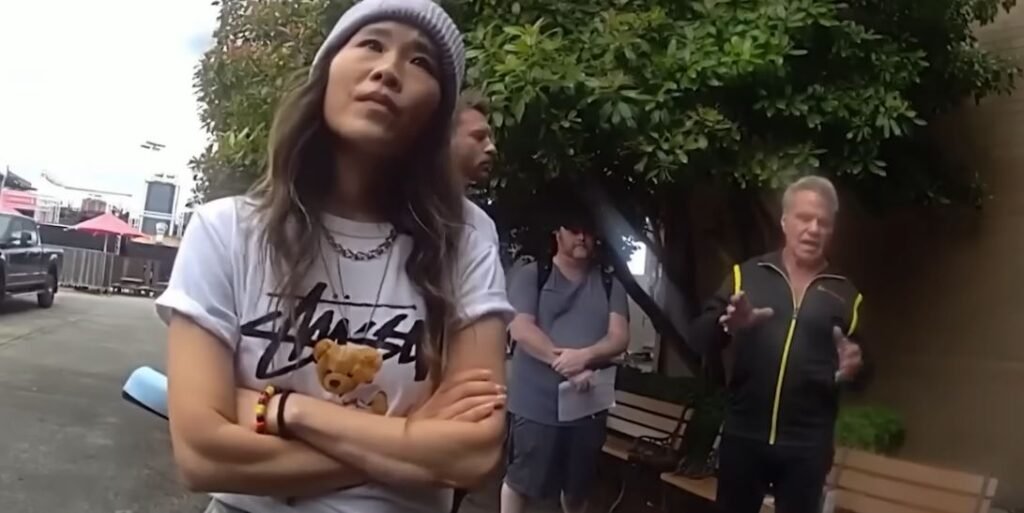
After that, things became more difficult. both on and off the screen. The most startling off-screen incident occurred at Summer Con, a fan gathering in Puyallup, Washington, in June 2025. During a VIP meet-and-greet, Martin Kove, who portrayed the menacing John Kreese in the first Karate Kid movies and all six seasons of Cobra Kai, allegedly bit co-star Alicia Hannah-Kim on the arm so forcefully that blood was drawn. Kove allegedly started kissing the area where he had bitten Hannah-Kim when she let out a cry.
He reportedly lost it when she and her husband confronted him about it, asking how they dared to confront him. Later, Kove admitted to police that he was attempting to be humorous and that he and Hannah-Kim “play fight all the time on set.” At the scene, he expressed regret. He was told to leave the venue by the officers. Hannah-Kim requested that a report be recorded in case the behavior persisted but declined to press charges. At the time of the incident, Kove was 78 years old.
It’s difficult to ignore how neatly the incident seemed to reflect Kreese himself, a character characterized by cruelty he insists is discipline and aggression he disguises as toughness. It’s really unclear if that parallel has any significance or if it’s just bad timing. However, the plot moved quickly, and it came at a time when the show’s reputation was already being strained by its own artistic decisions.
There was controversy surrounding the series finale. In the show’s last season, Pat Morita’s character, Mr. Miyagi, who passed away in 2005, was digitally recreated and appeared inside Daniel LaRusso’s head using computer-generated imagery and artificial intelligence.
Daniel’s actor, Ralph Macchio, later admitted that he pushed for the scene despite anticipating the negative reaction. Fans’ opinions were mixed, and the criticism went beyond esthetics. The entertainment industry has yet to fully resolve the issues raised by digitally resurrecting a deceased actor, including consent, legacy, and whether the technique is justified by the emotional payoff. Cobra Kai entered the argument without finding a solution.
For several seasons prior to that, the writing on the show had been criticized. Around season four, many fans who had enjoyed the first three seasons began to notice a change. The rivalries began to cycle. characters who appeared to have turned upside down.
The conflict between Johnny and Daniel, which had been genuinely intriguing when the show challenged the moral framework of the first movie, began to feel repetitive. Aisha, a heavyset Black girl who joined Cobra Kai after being publicly humiliated and became legitimately formidable, was one of the show’s most compelling characters in season one. However, when a new character, Tory, was introduced in season two, many viewers on fan forums noted that Aisha was subtly sidelined. After that, Aisha pretty much vanished. That might have been a production decision rather than a writing one, but the loss was evident in any case.
The show’s handling of violence is another more general issue. High school fights that would normally lead to police intervention, lawsuits, and expulsions instead result in short-term suspensions before continuing. Most viewers extend the required suspension of disbelief because it is a genre convention. However, Cobra Kai created a world where physical conflict has virtually no long-term institutional repercussions, which runs counter to the show’s declared themes of responsibility and restraint. This is a common grievance in fan communities and occasionally in mainstream criticism.
What the show did well is not diminished by any of this. In particular, the first three seasons provided something truly unique: a follow-up that challenged its own original material, gave the antagonist a cogent viewpoint, and gave secondary characters due consideration. Cobra Kai was well-deserved. Additionally, there was enough genuine conflict in the writers’ room, on the convention floor, and in the final season’s creative choices to make that reputation more nuanced than it appeared in 2018.
