

Television occasionally succeeds in creating a certain type of character—someone who shouldn’t work on paper, who exists just a little bit outside of the main drama, and who somehow becomes the person that viewers remember the most. That character in Cobra Kai is Raymond “Stingray” Porter, and Paul Walter Hauser is the reason it succeeds.
There is a compelling tale about Hauser’s journey to the position. After the Cobra Kai creators noticed him in I, Tonya, he received the call. His first reaction, which he later described as “some schlocky revival idea,” was something akin to skepticism because he had not yet seen the show. He began watching on his iPad while driving to the lunch meeting. He was so engrossed in an episode that he arrived ten minutes late. They shared a love for John Goodman in The Big Lebowski, ate Mexican food, and made references to the movie Dirty Work. He was given nachos by the creators. He was inside.
A man in his late thirties or early forties, Raymond Porter works at a hardware store, lives with his mother, and aspires to join a teenage karate dojo. That essentially sums up the character; in less capable hands, it would be a joke. Hauser portrays it with a certain level of authenticity that prevents Stingray from turning into a farce. Raymond is aware of how people see him. He simply doesn’t care, or perhaps more accurately, he is willing to put up with the humiliation because he cares so much about being a part of something. Even when it’s done for laughs, there’s something real about it.
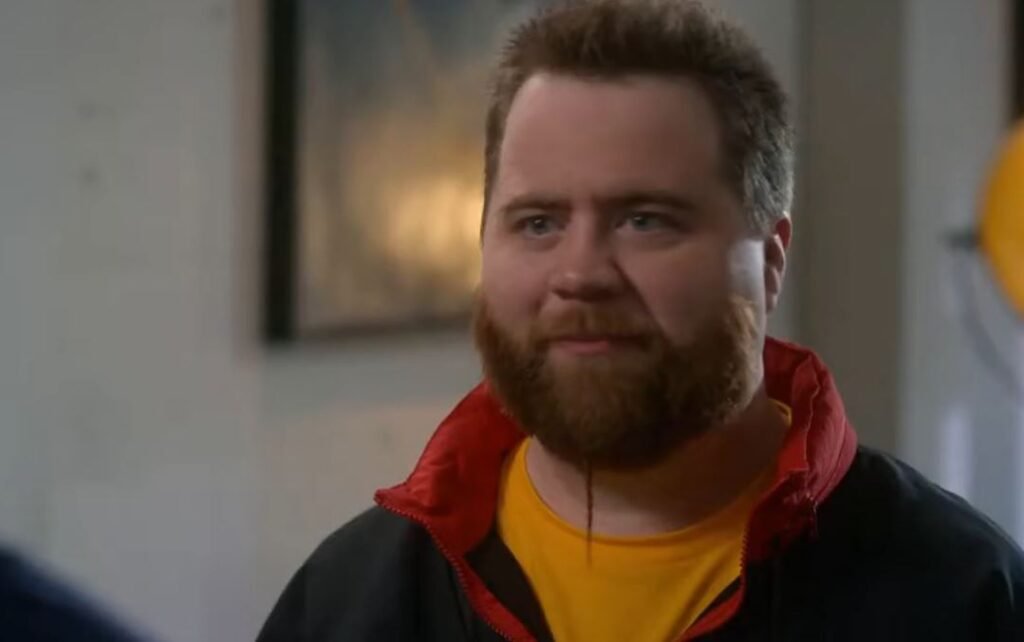
Stingray becomes more than just comedic relief in the fourth season arc. Raymond goes straight to Terry Silver and requests reinstatement after Kreese bans him from Cobra Kai. He is so severely beaten by Silver that he is admitted to the hospital. Then Silver offers him a place in the dojo, but only if Raymond informs the authorities that Kreese was the attacker. Raymond concurs. Silver tightens his hold on the dojo, Kreese is arrested, and he lies. Later, Raymond sobs by himself in the hospital. He is fully aware of what he did and why; he was so desperate to get in that he completely compromised himself.
Perhaps that was the most sincere thing Cobra Kai ever did with Stingray. He had been portrayed in the show as comic relief for two seasons before it became clear that, beneath it all, he was a man who was so desperate to fit in that he would lie about being beaten in order to obtain a karate membership. It’s not amusing. It’s really depressing.
In addition to the Cobra Kai appearances, Hauser had developed a significant career. His portrayal of Richard Jewell garnered significant attention for awards. He received a Primetime Emmy and a Golden Globe for Black Bird. In Pixar’s Inside Out 2, he provided the voice of Embarrassment. Since then, he has made appearances in a number of films, including The Fantastic Four: First Steps. According to him, none of that is mentioned at airports. He observes that they yell “Stingraaaay” with a cheeky grin, and he appears genuinely thrilled by it.
Raymond gets what he’d been dreaming of for years in the series finale: a real job at the dojo as a beginner-level sensei under Johnny Lawrence. It’s a minor issue. However, it carries more weight than it probably should for a character whose entire arc revolved around the need to fit in.
Looking back at all of Stingray’s appearances, there’s a sense that the show used him to convey a message that it was unable to fully convey thru its more main characters: that the need to fit in can lead people to act in ways that are actually harmful, but that doesn’t mean the need isn’t real. Raymond desired a dojo. He desired a sense of youth, competence, and belonging. Even tho they wouldn’t acknowledge it over nachos at a pitch meeting, most people are aware of that.
