

Once you hear it, there’s a moment that’s difficult to forget. October of 2023. In Manhattan, a motorcade is parked outside Trump Tower. Somewhere in the lobby, an argument has broken out that, by all accounts, qualifies as a screaming match while Donald Trump is on his way to court. Natalie Harp is informed by a staff member that there isn’t space for her. She claims that Trump personally invited her to attend. No one moves. She then gets into the trunk of an SUV.
That isn’t a metaphor. According to two people who spoke with CNN and a picture that seems to support it, that did indeed occur. A hundred policy briefings would never be able to convey the power dynamics in Washington in the same way as that one episode.
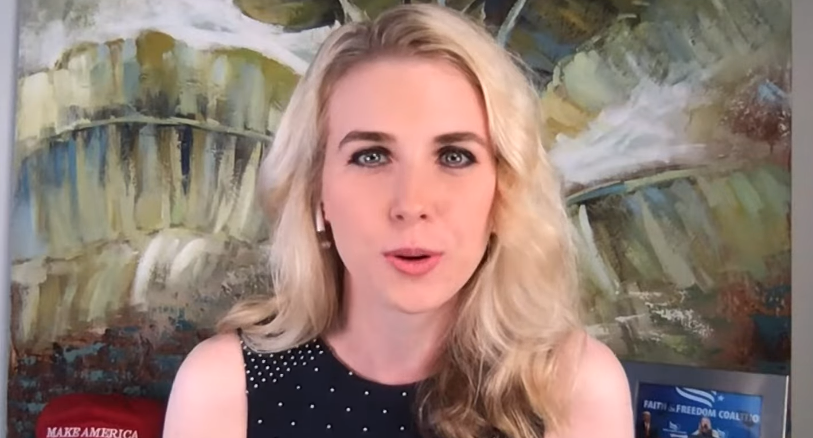
Currently 35 years old, Harp is the President’s Executive Assistant. It’s a humble title for what seems to be one of the more unique positions in this White House. Throughout the day, she provides Trump with positive news articles, prints content for his social media accounts, transmits messages from Republican lawmakers, and attends meetings that senior advisers occasionally thought would be private. According to reports, one assistant made a joke about how she works like a “human printer”—always close by and producing something the president wants to see.
It’s not exactly its strangeness that makes the trunk story worthwhile. It’s what it implies about how power access actually functions as opposed to how it should. White House hierarchies are obvious on paper. In motorcades, there are seat assignments, protocols, and chains of command. In reality, being close to the top person tends to change everything. Perhaps more intuitively than most, Harp seems to have grasped that.
How exactly her relationship with Trump evolved to this extent is still unknown. After what she has described as Trump’s policies saving her life, she began working for him in 2022. Despite not having a formal campaign title, she followed the candidate across states. Everything that came after seems to have been influenced by the intensity of that early commitment. She was a mainstay by the time Trump came back to the White House.
That hasn’t been acceptable to everyone. Tension with senior aides who requested private time with the president and discovered Harp in the room is described in a number of sources. Over the years, there have reportedly been attempts to restrict her access, but none of them appear to have been successful. According to multiple accounts, she has directly informed coworkers that she reports only to Trump, not to them or the chain of command. In institutional settings, such a statement tends to irritate people. Additionally, it usually works if the person you report to continues to grant you access to the room.
Reading about Harp’s behavior gives the impression that what Trump values about her is exactly what makes her challenging for others to deal with. She doesn’t hesitate. She doesn’t resist. She appears in a way that seems to register with him as evidence of something, both physically and otherwise.One White House adviser told CNN, “He likes the attention and the fact that she is 100% committed and loyal.” That provides a fairly clear window into what determines one’s standing in this specific orbit.
This week, the trunk moment was brought back into the public eye when Senator Jon Ossoff specifically mentioned Harp at a campaign rally, citing her involvement on a flight Trump took covertly out of Turkey in July. In an unusually forceful response, the White House called Ossoff a number of derogatory names. It’s difficult to say whether that response was deliberate or reflexive, but it made Harp more visible rather than less.
When all the details are taken into account, what remains is more difficult to define than straightforward ambition or loyalty. It appears that Harp made the early decision that being indispensable was worth the expense. A seat on a flight out of Turkey, a ride in a trunk, or a screaming match in a lobby are not accidents. They follow a pattern. Furthermore, patterns in politics usually have a purpose.
