

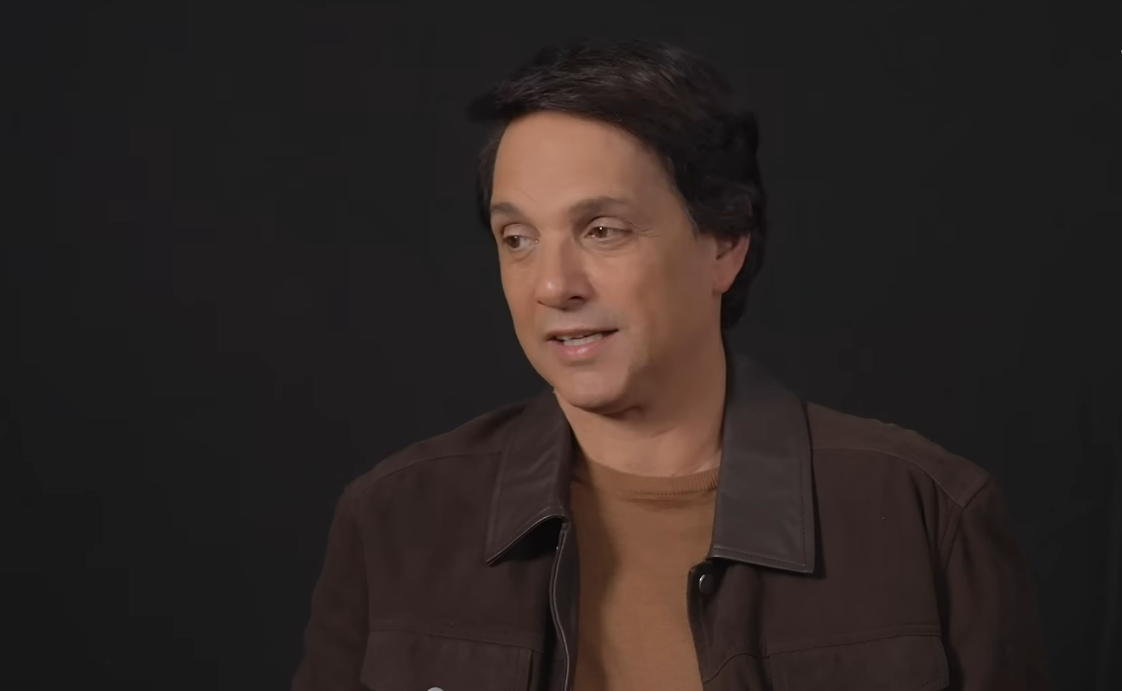
Ralph Macchio frequently leaves doors open. When Rolling Stone questioned him about whether Karate Kid: Legends would be his final role as Daniel LaRusso in 2025, he remained silent. Instead, he posed a query. “Might I do my Gran Torino version?” Then he told the interviewer that he would have laughed at the thought of reprising his role as Daniel in 1995. He said, “Never say never.”
Although it’s a throwaway line, it has persisted and should be taken seriously. 2008 saw the release of Gran Torino, which appeared to be Clint Eastwood’s farewell to acting on screen. He portrayed Walt Kowalski, a retired autoworker and veteran of the Korean War who glares at the immigrant families who have moved in around him while spending his days fixing his house and drinking beer. Despite having a small budget, the movie made about $270 million worldwide. It also turned into a subdued standard for how a seasoned screen veteran might bid farewell.
What, then, is Macchio really picturing? He hasn’t outlined a plot, and it would be unjust to act as though he had. However, it is easy to guess the idea’s shape. Years from now, an older Daniel in a smaller story. No competition, no broad rivalry. Just a man with fighting skills who chooses not to.
The strongest case for it might be found in that final section. Gran Torino succeeds because Walt, who appears prepared for a decisive confrontation, decides to defend a teenager he has come to like in a different way. It’s an action setup disguised as an anti-violence conclusion. That coincidentally aligns with what Mr. Miyagi advocated from the beginning: karate as defense, never as hunger. Daniel’s transformation into the seasoned mentor Pat Morita portrayed in 1984, completing a circle that started on a California street, has an almost poetic quality.
Whether it fits the man is the more difficult question. Walt is prejudiced and resentful. By nature, Daniel is an optimist, a fixer, a car salesman, and a regular attendee of local events. For him to be lonely or haunted, writers would need a plausible explanation, and that explanation might be what makes or breaks the movie. It would feel like cosplay to have a grumpy Daniel just for the sake of it.
Then there’s exhaustion. Legends came after Cobra Kai, which ran for six seasons and concluded its plot. It’s possible that some viewers believe Daniel has already said goodbye. Real time would most likely need to pass in order for the audience to miss him in the final movie. In a hurry, it could seem like a continuation of a lengthy farewell.
The other trap is nostalgia. Eastwood’s film remained modest, almost obstinately so, and never relied on old cameos. That closeness could be lost in a Daniel LaRusso finale full of well-known characters and callbacks. Of course, there will be temptation. Reunions are adored by fans.
Still, it’s difficult to dislike the idea’s underlying instinct. Macchio, who is in his sixties and has inhabited this role for over forty years, appears to comprehend the significance of the role to others. He frequently states that the narrative should remain “rooted in some form of genuine truth,” and that is likely the true litmus test. A final film may merit its spot if it can be open about growing older, about what you can and cannot pass on.
It’s unclear if it will ever be produced, and no announcement has been made. For now, it’s a casual hope expressed with a shrug and a smile. However, that’s how some of the best endings begin.
