

Shelley Fabares is hard to put into a single sentence. She sings and acts. Stay alive. TV is an institution. A woman died in Los Angeles on a Saturday at the age of 82. She was all of those things, and the labels still don’t do justice to someone whose career spanned six decades with a quiet persistence that most entertainers can’t match.
She was born in Santa Monica in 1944, and by the time she was ten, she was already on TV. It wasn’t because someone forced her, but because she looked like she belonged there. She got her start on “The Loretta Young Show,” with a small role that hinted at nothing but led to everything. Within a few years, she was in a Producers Showcase production of “Our Town” with Paul Newman and Frank Sinatra. Take a moment to think about that. A teen who is sharing a screen with those names and seems to be doing fine.
In 1958, she made her big break when she was cast as Mary Stone on “The Donna Reed Show.” She was 14 years old. She grew up in front of a whole generation of American viewers over the next five years. She says those years changed her more than anything else that happened afterward. She told the Los Angeles Times that Donna Reed, a woman of “kindness, integrity, and compassion,” had “the most profound influence” on her life. It seems like Fabares meant every word. She didn’t say things she didn’t mean.
This was the time, in 1962, when she recorded “Johnny Angel.” It surprised almost everyone, maybe even Fabares herself, when the song went to No. 1 on the Billboard Hot 100. After that, she made more records and albums, but none of them came close to that moment. One No. 1 in pop music is pretty big. She had it. It shows that she has a good sense of proportion because she didn’t chase it around like crazy afterward.
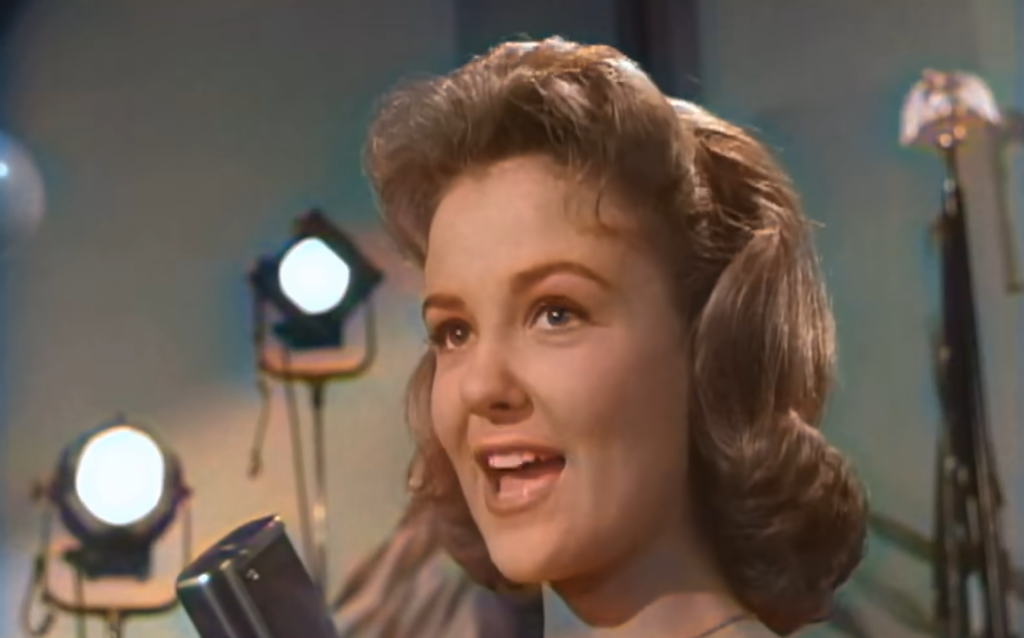
When she left the show, she went into movies. She was the only actress to star opposite Elvis Presley in three different movies: “Girl Happy,” “Spinout,” and “Clambake.” Those movies weren’t high art; they were just fun, light entertainment. But being Elvis’s go-to co-star has a cultural weight to it. It was important back then, and it still is. It marks her place in a certain part of American pop history.
The TV kept calling her back. In the late 1970s, she made a name for herself with “One Day at a Time.” Then, in 1989, she played Christine Armstrong on “Coach,” the smart, down-to-earth TV reporter who married Craig T. Nelson’s football coach. This role made her famous to a whole new generation. The show slowly built a following, but it did. At least two Emmys were given to Fabares for her work on it, and it ran until 1997. Eight years. It’s not luck. That’s art.
In early 1999, a trip to the emergency room showed that the liver was failing more and more. She was on a list for a liver transplant for twenty-two months before she got one in October 2000. Even though it saved her life, it pretty much ended her regular acting career. She called the experience life-changing and said it “changed” her. What was important to her now was very different from what it was before. She was with her husband, MASH actor Mike Farrell, through it all. They got married in 1984. She made sure to say that.
It’s not just the hit song, the Elvis movies, or the Emmy nominations that make Shelley Fabares memorable. There’s a career built on steadiness, on showing up and doing the work without expecting the world to make too much of it. That’s how the whole thing looks. When I think back, I feel like she knew something about longevity that most people in her field try to figure out for their whole lives.
Her family said she had “amazing skills for making people feel welcome, important, and cared for.”” If you can believe it came through on the screen, that trait might say more about her career than any chart position or list of credits.
