

Carlos Telmo didn’t appear to be a slow-moving person. For many years, he was the type of person who, simply by entering a room, made it feel bigger. His name was on every significant guest list, and his number was recorded in every society journal worth its ink. When news broke this Monday that he had passed away in Ronda at the age of 75 following a protracted illness, the city experienced the unique kind of grief that comes when a city loses someone who was not only well-known but truly felt.
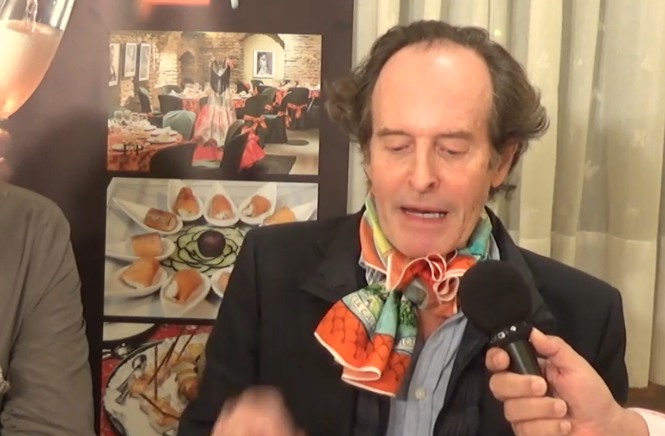
Although his illness hadn’t been completely concealed, it also hadn’t been overly dramatic. It was, in a subtle way, very him because of that. In videos he posted in the first few months of 2026, Telmo was seen at the Hospital Virgen del Rocío in Seville, joking with doctors and discussing his treatment with his usual warmth, maintaining a tone that was more inquisitive than scared. He talked candidly about his medical team with the kind of affection most people save for old friends, and he brought up nanothermia, an unconventional method. It’s difficult to tell if his candor was a sign of courage or just his character. Most likely both.
One brief video at a time, Carlos Telmo’s illness turned into a silent narrative that his fans followed in real time. It was neither performance nor martyrdom that emerged. It was the same man, maybe a little slower but still identifiable. Perhaps the most noteworthy aspect of his last public chapter was his consistency and refusal to transform into a different, diminished version of himself.
Before the illness made him retreat, he had lived a full life. Telmo traveled widely, studied tourism, and eventually realized that people were his actual area of expertise. He was employed in Canada. He oversaw the VIP operations for Seville’s Expo 92, which changed the city’s perception of itself. In 2010, he oversaw the Spanish pavilion at the Shanghai World Expo. He arranged Eugenia Martínez de Irujo’s first marriage to bullfighter Francisco Rivera and later oversaw the Duchess of Alba’s third marriage to Alfonso Díez. These events carried great social significance in Andalusia and were handled with the kind of grace and discretion that takes a lifetime to cultivate.
He seemed to have a deeper understanding of trust than many public figures do. It was difficult to enter the Duchess of Alba’s world, but Telmo did so as a true presence rather than as an outsider with permission. He was acquainted with Jacqueline Kennedy, Sara Montiel, and Lola Flores. The variety of his life—the decades, the worlds, and the rooms he traveled through—can be inferred from that list alone. However, his coworkers at Canal Sur Radio, where he frequently collaborated on shows like Los Fantěicos, describe him as a humorous, honest, and devoted man who was less glamorous and more human.
For someone who was meant to be active, his illness forced a sort of stillness. He had been withdrawing from new endeavors, turning down requests that he would have normally accepted. What his calendar had never told him was what his body was telling him. Only he would know if that withdrawal hurt him. However, from the outside, it appeared that he accepted it without resentment.
José Luis Sanz, the mayor of Seville, referred to him as the city’s ambassador and pledged to pay him a formal tribute. It’s a gesture that can seem hollow, but in this instance, it’s difficult to disagree with. Carlos Telmo introduced Seville to the world thru thousands of interactions, events, and handshakes while carrying it around in his pocket for decades. He was slowly affected by the illness. It appears that the city is just starting to comprehend the significance of that.
