

Ryanair hired pilots for years based on a simple but legal idea: they weren’t really employees of the company. They worked as contractors. Work for yourself. Working through personal service companies set up by agencies and run by accountants that the pilots didn’t talk to much. The deal was good because it kept costs low and freed the airline from having to pay sick days and holidays. Everything was neat until it wasn’t.
This system became very clear again last week when a group claim was brought to London’s Commercial Court. Richard Phillips, a former pilot for Ryanair, filed a lawsuit against the company along with 261 other people. The lawsuit also named aviation staffing firms Storm Global and Brookfield Aviation International, as well as a tax firm in Dublin called Scanlon Associates. The pilots say they were owed holiday pay and pension contributions while working as agency pilots for Ryanair but never got them. This is what the claim is about.
It had been getting harder for Ryanair to follow the law for a while. Last year, the Court of Appeal ruled in the case of Jason Lutz, another pilot who worked for Ryanair as a contractor from 2018 to 2020. Lutz was actually employed by his agency while working for the airline. There was a clause in the contract that said he could send someone else to do his job. The courts said that clause wasn’t real. It was said that the personal service company he was put with was made up. Ryanair and Storm Global both put in requests. Both appeals were turned down. After that, Ryanair was not allowed to take the case to the Supreme Court.
It wasn’t just the outcome of the Lutz case that was important; it was also what the court said about the word “temporary.” Employees hired through an agency have the same basic rights as employees hired directly after twelve weeks, according to rules for agency workers. Ryanair had said that a contract for five years couldn’t be thought of as short-term. The Court of Appeal didn’t agree, making it clear that “temporary” means “limited in duration,” not “brief.” This difference is very important for any airline (or business, for that matter) that relies on long-term agency agreements to avoid having to hire people.
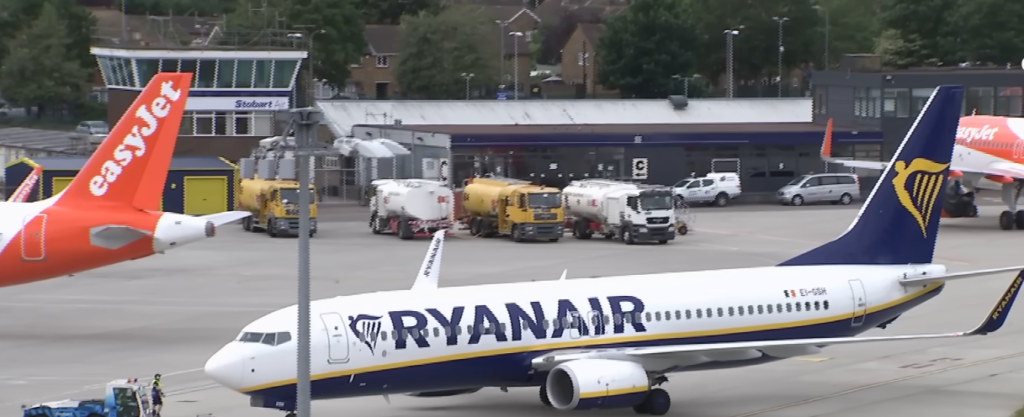
Phillips and the other claimants are now being represented by Claims Compensation Group. They said that the Lutz ruling pretty much shut the door on the agency defense in aviation. They make a strong claim, and I think they might be right. Cases like this have been reported all over Europe. In January, a German court said that Ryanair pilots based in Germany were employees and had to pay into social security. The court also said that Ryanair’s business structure was just a legal trick to hide the real employment relationship. This kind of legal fiction language keeps showing up in these rulings. It’s important to note.
It’s already a bad time for the Irish carrier because of the lawsuit. Higher prices for jet fuel and lower demand during the summer caused the airline’s profits to drop by 34% to €593 million in the April–June quarter. In order to get more people to book flights, Ryanair has been lowering prices. However, its stock price has dropped more than sixteen percent on the year. Adding a big lawsuit to that picture probably won’t make investors feel better.
There is more to this story than just Ryanair. In 2021, the UK Supreme Court made a big decision about Uber. They said that drivers were employees with basic rights, not self-employed contractors. This showed that courts are becoming more open to looking past the paperwork and into how work relationships really work. The written contract is important, but so is what really happened. It was official: pilots who flew Ryanair routes, wore Ryanair uniforms, followed Ryanair procedures, and reported to Ryanair supervisors worked for Ryanair. Courts have been taking apart piece by piece the legal framework that was built around that reality.
It’s still not clear how much the current claim is worth all together. CCG hasn’t given it a public number. But with 262 claimants and years of back pay for vacations at stake, it’s not likely to be small. Anyone who worked as a pilot for Ryanair or another company with similar agency arrangements has been asked to come forward.
It’s becoming clearer that the contractor model Ryanair relied on so heavily for a long time is much more legally vulnerable than it first seemed. This is true whether this case succeeds or fails. Now the question is how much that exposure costs in the long run.
