

A house collapsing into the ground has a subtle, unsettling quality. There was only the ground collapsing beneath something that was meant to be permanent—no explosion, no warning siren. That type of disappearance has been the subject of years of research by Missouri State University geology professor Doug Gouzie. He tracks the flow of water by sending fluorescent dye into subterranean waterways, walking along stream banks, and wading through caverns. He is one of about a hundred doctorate-level researchers in the nation. And what he’s discovering, methodically and slowly, relates to something far bigger than sinkholes.
The majority of Missouri is made up of limestone and other carbonate rocks, which landscape geologists refer to as karst. Rain’s inherent acidity gradually dissolves the rock beneath the surface. Gouzie’s explanation, “imagine a marshmallow dropped in water,” sticks. It softens first, then becomes mush, and finally vanishes. From street level, the soil above those dissolving formations may appear fine until it doesn’t. According to Gouzie, it’s not insignificant if you see areas of lighter soil in your yard while the rest remains a deep brown. The lime has been removed. Somewhere deeper is where the water is going.
It’s difficult not to interpret this as a metaphor for something more general. Over the past few years, Missouri has experienced weather events that deviate from the established patterns. More than a million acres were too wet to plant at all in 2019. Long-submerged shipwrecks reappeared on the Mississippi and Missouri rivers’ bottoms by the summer of 2022. More than ten years ago, Josh Payne, a farmer who oversees 300 acres outside of Kansas City, abandoned commodity crops because the climate was no longer predictable. He now cultivates specialty crops and raises sheep and cattle. Even so, fluctuations between heavy rain and protracted dry spells cost him up to $75,000 annually in feed that he ought to have been able to produce on his own.
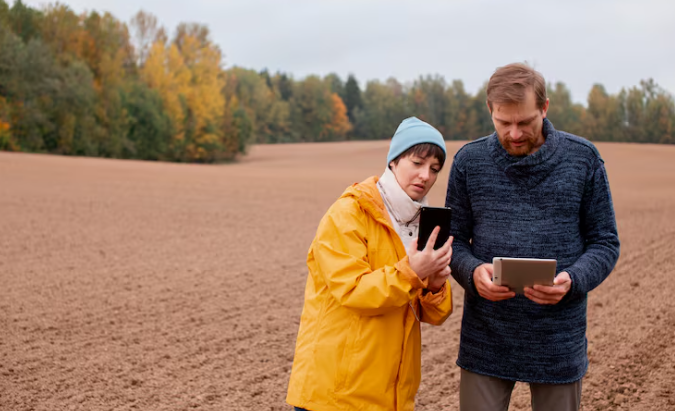
The picture of a water system under actual stress is what the scientists are piecing together, both above and below it. Ryan Smith, a geological engineering researcher at Missouri S&T, collaborated with colleagues at Stanford to model how groundwater extraction in the Central Valley of California is causing the land to sink—in some areas, at a rate of almost eight inches annually in recent decades. According to his model, some sites may drop an additional 13 feet over the next 20 years if pumping methods are not significantly altered. The model predicts continued settling even if pumping were brought into balance with current recharge rates. Due to a lag in the system, previous overdrafts continue to have an impact long after the behavior that led to them has changed.
The most sobering aspect of this research is probably the time-delay issue. Before the damage becomes apparent, it builds up silently and covertly, and by the time it does, most of the simple solutions have been eliminated. The current situation in Missouri and California may be the beginning of a longer reckoning with how American land use, agriculture, and infrastructure were all predicated on the idea of stable water. Maintaining that assumption is becoming more difficult.
Following the floods in Missouri in 2022, NOAA scientist Tom Di Liberto stated unequivocally that extreme precipitation events are precisely what models predict in a warming world. According to EPA estimates, the region lost over $275 million due to slowed barge traffic alone during a single drought in Missouri in 2012. By 2050, heat-related illnesses and deaths in the Midwest are expected to cost $10 billion, according to a federal climate assessment. These figures are not conjectural. Thirteen federal agencies provide them.
Gouzie is unsure if he will be able to accomplish his ultimate goal—accurate, dependable sinkhole prediction—during his lifetime. It felt strangely more serious than if he had said it urgently because he said it simply and without seeming frustrated. Nevertheless, the work goes on. The stream receives the dye. The water travels underground and emerges in an unexpected location. And the ground continues to tell the tale in a methodical and slow manner.
