

The way Jackson Lahmeyer’s political career fell apart in a single, perplexing twenty-four-hour period rather than gradually over weeks of damaging revelations is almost cinematic. He was on his way to a congressional runoff in Oklahoma’s 1st District on Tuesday night. He was a well-known figure in MAGA circles, the creator of Pastors for Trump, and a man who had repeatedly cultivated Donald Trump’s personal endorsement. It ended by Wednesday morning.
Over a number of years, Lahmeyer meticulously developed his public persona. He oversaw a sizable congregation and a platform that went far beyond Sunday sermons while serving as the senior pastor of Tulsa’s Sheridan Church. He had a deeper understanding than most of the relationship between evangelical politics and national aspirations. He established the Pastors for Trump coalition, which was an organizational endeavor that assisted in energizing religious communities during Trump’s 2024 campaign rather than merely a symbolic gesture. Trump took notice. He publicly praised Lahmeyer, increased his visibility in conservative media, and, just four days prior to the collapse, referred to him as a “MAGA Warrior” in a lengthy online endorsement.
Presidential loyalty of that caliber is not insignificant. It can be anything in Republican politics in Oklahoma.
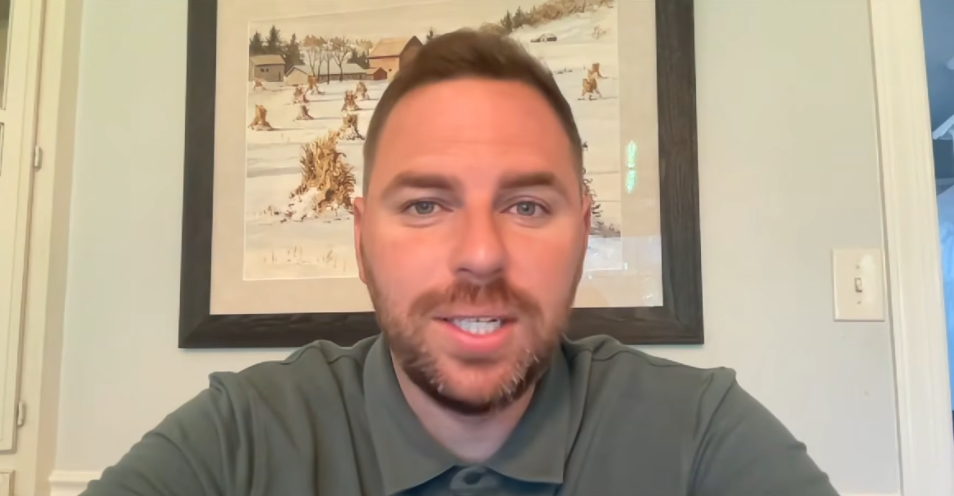
However, the Daily Mail reported on Sunday that Lahmeyer allegedly sent thousands of romantic texts to Caitlin Simmons Key, a former Miss Oklahoma USA who served as a campaign fundraiser. The outlet purportedly received a message in which Lahmeyer told her, “I enjoyed those lips.” An invitation to his hotel room was purportedly included in another. These accusations are not ambiguous. They are precise, well-documented, and the kind of information that sticks.
In response, Lahmeyer acknowledged “crossing a boundary line through text messaging” in a social media post over the weekend, but he insisted that the issue had been resolved in private between him and his wife, Kendra. Soon after, he erased his accounts. Even though he wasn’t ready to acknowledge it in public just yet, there’s a feeling that he knew what was going to happen right away.
The events that followed happened quickly. Trump shared what seemed to be an encouraging message praising Lahmeyer’s performance in the primary early on Wednesday morning. A few hours later, that same morning, Trump thanked Lahmeyer for his “hard work under difficult circumstances” and endorsed state Representative Mark Tedford, his opponent in the runoff. There was a certain finality to that phrase. It’s the political equivalent of a firm handshake at the conclusion of an unwelcome relationship.
Minutes after Trump’s post, Lahmeyer’s withdrawal statement reached inboxes. He mentioned his church, his family, and his wish to avoid becoming “a distraction.” It was a measured, almost pastoral language. There’s a certain weariness that’s difficult to ignore.
A pastor who supports Trump has encountered similar situations before. After admitting to engaging in “sexual behavior” with a child, Robert Morris, the founding pastor of Gateway Church in Texas and a former spiritual advisor to Trump, resigned in 2024. Uncomfortable questions are raised by the pattern, not only about personal character but also about what happens when political aspirations and religious authority merge to such an extent that both sides’ accountability systems deteriorate.
What Lahmeyer’s story reveals almost seems more important than whether Mark Tedford goes on to win the August runoff. The question of how faith-based political identity is created, who gains from it, and how quickly it can disintegrate when the leader turns out to be flawed in ways that his platform specifically denounced remains unanswered. Lahmeyer spoke about Christian principles in public for many years. Even though he is no longer in the race, that context still exists. It travels with the narrative.
