

Human memory is frequently idealized as a devoted archivist, a dusty library where each experience is captured on a brand-new reel of film and is just waiting to be viewed again. However, contemporary psychology contends that our minds are more like Wikipedia entries than archives—always being updated, vulnerable to vandalism, and sometimes altered by the consensus of strangers. The “Mandela Effect,” a phenomena where millions of individuals share a strong, detailed recall of something that simply never happened, is the clearest example of this fragility.
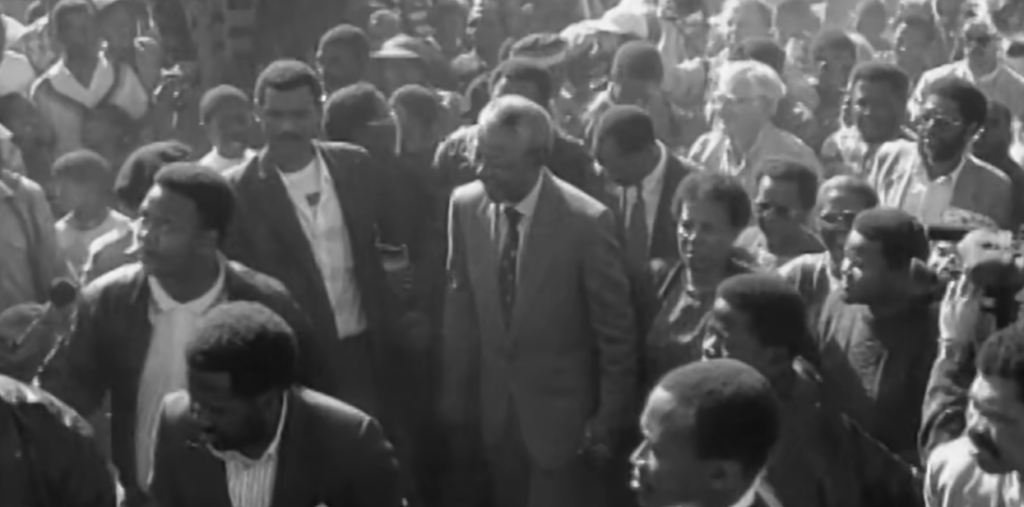
Fiona Broome, a paranormal researcher, first used the word in 2009. She was shocked to learn that she and thousands of other people remembered Nelson Mandela’s death in jail in the 1980s. They might talk about his widow’s speech, the riots, and the funeral. Mandela was, in fact, still alive and well. He eventually became president of South Africa until dying in 2013. This was a collective delusion of history, not a straightforward mistake.
The examples have since proliferated and are now commonplace in online culture. We firmly believe that the “Berenstein” Bears (it’s Berenstain) were the bears from the children’s books. The cornucopia, which never existed, is depicted in the Fruit of the Loom emblem. Darth Vader utters the words “Luke, I am your father” (in reality, he says, “No, I am your father”).
| Feature | Details |
| Definition | A phenomenon where large groups share a consistent, vivid, but false memory. |
| Origin | Coined in 2009 by Fiona Broome after misremembering Nelson Mandela’s death. |
| Psychological Basis | False Memory, Confabulation, and Schema Theory (brain fills in gaps). |
| Famous Examples | “Luke, I am your father” (False) vs “No, I am your father” (True); Monopoly Man’s monocle (False). |
| Role of Internet | Accelerates misinformation and social reinforcement of false narratives. |
| Alternative Theory | Parallel Universes / Multiverse (scientifically unfalsifiable/unsupported). |
So why does our brain so strongly deceive us? The solution can be found in “schema theory.” Our brains are cognitive misers; they value speed above precision. Not every pixel in a memory is saved during storage. We store a sketch as a compressed file. Our brain uses “schemas”—mental blueprints of how things should appear—to fill in the blanks when we recall it. Our brain automatically pulls out a monocle whenever we think of the Monopoly Man, a wealthy, elderly capitalist from the early 20th century, because it makes sense that he should have one. We remember a tail that isn’t there since Curious George is a monkey and monkeys have tails. +1
Observing a group of friends argue passionately about the color of Pikachu’s tail tip—half of them were willing to wager money that it was black—in a pub, I recently came to the realization that objective fact frequently loses the battle against a self-assured, collective narrative.
The Mandela Effect is fueled by this “social reinforcement” phenomenon. These misleading recollections are amplified on the internet. Others comment, “validating” the memories, when someone posts about the “Shazaam” movie, which is a nonexistent film starring Sinbad. Because of this feedback cycle, the mistake seems more real than it actually is. This is a type of “collaborative confabulation,” in which we as a species deceive ourselves.
The psychological explanation is much more realistic, albeit a little more unnerving, than the parallel universe or timeline shift theories that some ardent supporters hold onto, claiming that we have entered an alternate realm where Mandela lived. It demonstrates how shaky our hold on the past is. Our memories are reconstructive activities that are impacted by reasoning, persuasion, and the individuals in our immediate environment rather than being set recordings. The Mandela Effect is a characteristic of the human operating system and serves as a reminder that humans are storytellers who occasionally allow the narrative to override the facts. It is not a bug in the matrix.
