

A camera is set up on a pole along a quiet part of a road in Franklin Township, New Jersey. A lot of drivers don’t even look at it twice. But that camera records every car that goes by, writing down the make, model, color, and license plate number. This data is then sent to a law enforcement database that can be searched. We call that a Flock camera. And it’s either a responsible way to keep the public safe or a quiet way to spy on everyone that no one voted for.
The technology comes from Flock Safety, an Atlanta-based company that makes automated license plate reader systems for police departments, homeowner associations, and cities. An officer doesn’t have to be there for the cameras to work. They are always working, logging information about vehicles and making it searchable. Police can look up records linked to a license plate, compare them to movements, and figure out where a car has been, often in more than one state.
The business has grown quickly. The most recent annual audit for the state of New Jersey shows that 523 of the state’s 530 police departments now use some kind of automated plate reader technology. A $339,000 state grant pays for Franklin Township to run 22 Flock cameras. Township officials say the system has helped them solve burglaries and armed robberies and has linked cars to shootings and murders. That could happen, and it’s hard to completely rule it out.
But people who went to a recent Franklin Township council meeting weren’t ignoring the worries either. Leslie Primo said it straight out: “We can police without stalking.” A software engineer named AJ Hoffman said the system is the same as mass surveillance without a warrant. Someone who works with victims of domestic violence brought up the idea that the technology could be used as a weapon by the wrong person in the wrong position. A petition on Change.org with more than 800 signatures asked officials to end the township’s Flock contracts. That’s not a reaction from the fringes; that’s a community that is really split.
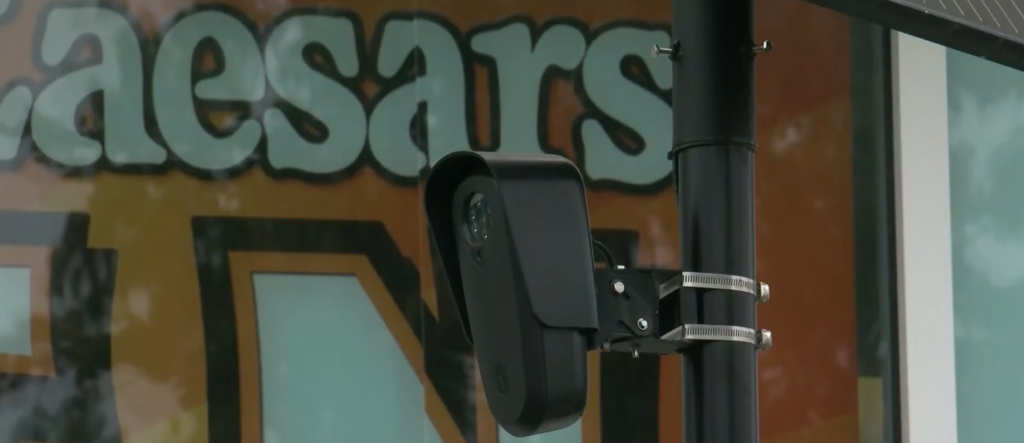
Size and ease of use are what set Flock cameras apart from older plate readers. The data can be searched, shared between agencies, and kept for a long time. Records were kept for 30 days until not long ago. Because of public pressure, Flock Safety said it would shorten that window to seven days. However, current customers can keep the longer retention setting unless they choose to change it. The company also said that searches would be stopped until a supervisor signs off on automatic lockouts when the system detects possible misuse.
Those changes did not just happen. Jason Hunyar, who lives in Dunwoody, Georgia, started asking local governments for open records when he started to doubt how the cameras were being used. He helped make the website “Have I Been Flocked,” where drivers can enter their license plate number and check public audit logs to see if any Flock-connected agency has run that number. The site isn’t finished yet because it relies on public records, but the idea worked. People were interested.
Some have gone even further. Crowd-sourced maps have been made by open-source projects like FlockHopper and DeFlock so that users can report where cameras are. FlockHopper even comes up with new routes that completely avoid known Flock cameras. It’s possible that the people who use these tools care about privacy. Some of them might also be dishonest people. That tension is exactly what makes it hard to settle this argument easily.
This is a good place to sit down and think. Since 2010, Franklin Township has used plate readers in some way. The idea hasn’t changed; what has changed is the depth, complexity, and reach. Now the cameras are not as loud. They don’t flash. It’s easy to miss them. And maybe that’s what’s making people less calm than anything else. It’s more likely for people to talk about surveillance later, after the infrastructure is already in place, when it’s no longer obvious.
