

The current state of affairs at the Supreme Court is almost paradoxical. In an urgent appeal, the Trump administration has asked the justices to approve new mail-in voting restrictions for the midterms in November. These restrictions are practically impossible to implement in time for the election. Nevertheless, the case is crucial for 2026 and beyond.
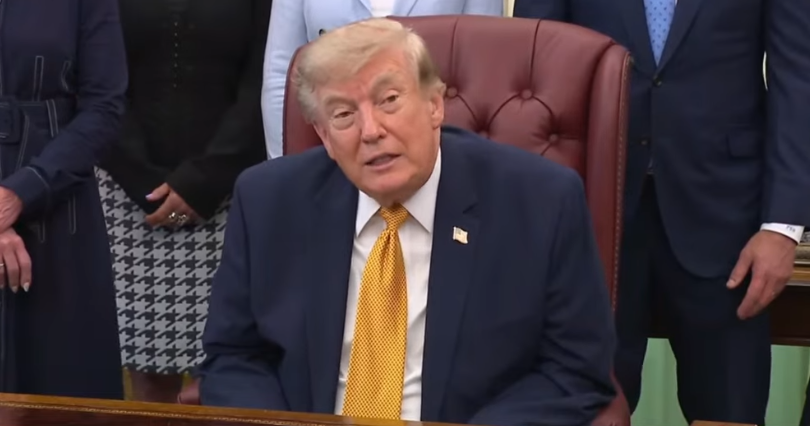
An executive order that Trump signed back in March is at the heart of this. This broad directive would require states to provide the U.S. Postal Service with voter eligibility lists. The U.S. Postal Service would then have the authority to prevent mail-in ballots from being delivered to anyone who is not on those lists. monitoring ballot envelope barcodes. Election officials who send ballots to non-citizens are “prioritized” for federal prosecution. The executive branch’s unprecedented attempt to involve federal agencies in a traditionally state-run process is reflected in this order.
The order’s main provisions were blocked by federal courts in Boston. The First Circuit then maintained the block. The Trump administration thus petitioned the Supreme Court for emergency relief, focusing on the more specific issue of whether the lower courts acted prematurely rather than the order’s overall merits. In essence, the administration argues that nothing concrete has yet to be blocked because the agencies are still figuring out how to implement everything. The justices will actually make a decision on that procedural argument, most likely later this month.
The “Purcell principle,” a theory developed by the Supreme Court in a 2006 case that cautioned federal courts against altering election regulations too soon before an election, is what truly complicates this. It was intended to keep things from getting out of control. Ironically, Trump is now effectively requesting that the court apply the same principle in reverse, lifting a block on new regulations, which would add a great deal of uncertainty to an election that is already less than 100 days away.
How the court will thread that needle is still up in the air. Over time, the Purcell doctrine has been applied inconsistently. In 2022, the court used it to uphold dubious congressional maps in Alabama and permitted Louisiana to switch back to a Republican-friendly map even after absentee voting had already started under a different one. At the time, Justice Ketanji Brown Jackson criticized the court for precisely that inconsistency. Critics have long maintained that the doctrine is applied when it is convenient and disregarded when it is not.
In court documents filed in July, the U.S. Postal Service admitted that it is running out of time to put the changes into effect before November. Most election experts appear to concur. According to Notre Dame election law professor Derek Muller, implementation in 2026 is practically out of the question from a logistical perspective. “The logistics are so horrific,” he said.
Democratic states that are against the order submitted their response on Monday, cautioning that even a hasty rollout would probably deny voters their right to vote as officials rush to create unproven systems from the ground up. One could legitimately argue that if the executive order were somehow put into effect this autumn, chaos rather than order would result.
The real issue here is not so much November as it is the legal architecture that will be developed in 2028. A Supreme Court decision that upholds the executive order’s premise—that the president can order federal agencies to change the way mail-in ballots are processed—would create previously unheard-of opportunities. And a 6-3 conservative majority would be making that decision on a court that has been extending executive authority in case after case in recent years.
As this develops, it’s difficult to avoid the impression that the emergency appeal is more about setting precedent than it is about achieving any tangible results this election cycle. The number of votes cast in November may not be the true midterm in this case. Whatever the Supreme Court decides to do with this case before summer ends could become the legal code.
