

Executive orders usually settle into a rhythm by the second year of most administrations. They set policy, direct agencies, and give new instructions to the bureaucracy slowly. That’s not quite how things are going in the White House right now. As of the end of July 2026, President Donald Trump had signed 271 executive orders during his second term. Many of these orders are being fought in federal courts. Not looked over. In dispute. The difference is more important than it looks.
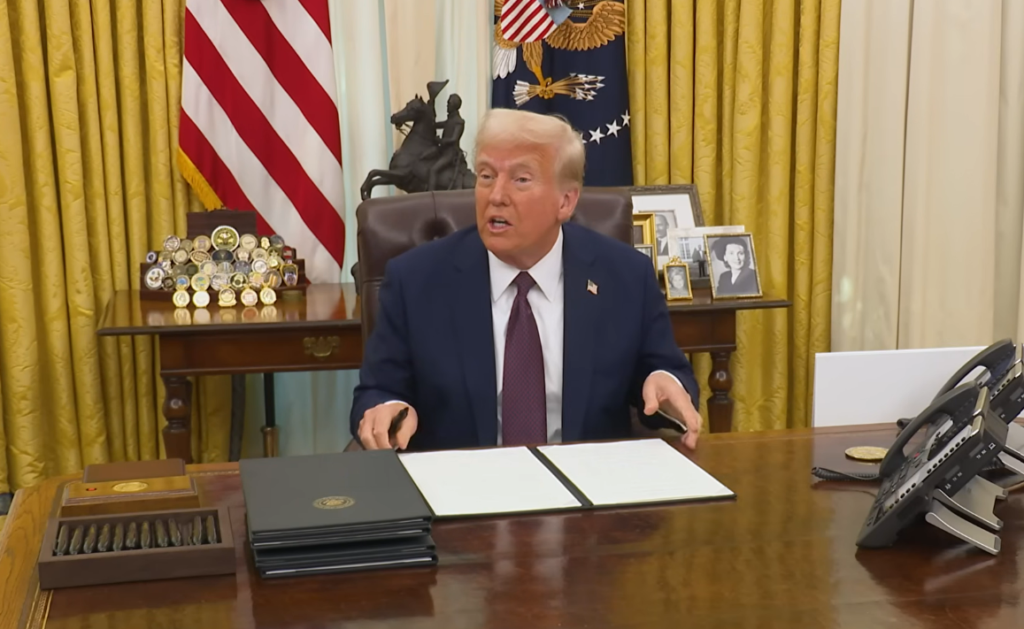
Right now, the fight that everyone can see is over voting. In March, Trump signed an order telling the federal government to make its own list of people who are eligible to vote and telling the U.S. Postal Service to only send mail ballots to people on that list. Legal challenges came quickly and have grown since then. This year’s elections couldn’t go ahead because of the order because of a federal judge in Massachusetts. An appeals court in Boston upheld that decision, and the Trump administration went straight to the Supreme Court. At the same time, a different panel of three judges in the D.C. Circuit—two Obama appointees and one Trump appointee—did not block the order because they thought the case was not ready to be looked at yet. The executive order was the same, but the two courts came to different conclusions. It’s a very strange case, and the Supreme Court will almost certainly make the final decision.
At the heart of all of this is a pretty straightforward legal argument. The Constitution of the United States lets each state hold its own elections. Congress has the power to change the way federal elections are run, but it hasn’t done so yet. That reading has been a big part of why the courts have blocked the order. For example, they pointed out that the Constitution says the president has “no express authority over the conduct of elections.” That was the view that the D.C. Circuit panel didn’t really disagree with; it just said it was too early to decide the case. Being sure that something is legal is not the same as being sure that it can still be challenged. As November draws near, that gap is shrinking quickly.
It’s possible that the government already knows the order will have a hard time in court. Trump has been through this before. During his first term, he issued a number of voting-related orders that were either thrown out in court or did not have the desired effect. There have been many attempts to change how Americans vote, especially through mail-in ballots. This is because people have been saying for years that there will be fraud in the 2020 election, but courts and election officials have found no proof to back these claims. Critics look at each new order through the lens of that past, even if the order itself is written in more procedural language.
Most of the attention is on the fight over voting, but it’s not the only one. Trump signed an order on July 20 that focused on defense supply chains. The order told the government to limit certain waivers for foreign materials and make a plan for how to make critical security parts in the United States. That one is less controversial, at least in public, and it fits with what both parties have said about industrial policy over the past few years. Then, four days later, the White House sent an order telling officials to fix what they called “reported problems” at the Smithsonian’s National Museum of American History and put up informational signs that explained what was wrong. That last one made people react in a different way. A column in the Washington Post called the order “laughable” but warned people not to throw it out too quickly. It’s not really about museum signs that people are worried about. It’s about the bigger question of who gets to choose which version of history is shown in a federal building.
Trump’s Executive Orders Are Running Into Courts — and Running Out of time
As I watch this all happen, I get the sense that the speed is part of the point. Having 211 orders in about 18 months is not the same thing as governing by consensus. It runs on speed and volume, which means that voters, courts, states, and federal agencies are always having to catch up. It is still not clear whether that is a good long-term policy. It’s less clear that November is coming up, and it’s possible that Americans won’t decide how they will vote until the very last minute, if they decide at all.
| Detail | Info |
|---|---|
| Total Executive Orders (2nd Term as of July 28, 2026) | 271 executive orders, 82 memoranda, 164 proclamations |
| Most Recent EO | EO 14416 — Smithsonian Institution (July 24, 2026) |
| Defense Supply Chain EO | EO 14415 — Signed July 20, 2026 |
| Mail-In Voting EO | Signed March 31, 2026; currently in Supreme Court appeal |
| Key Legal Challenge | Federal appeals courts issued conflicting rulings; SCOTUS weighing in |
| Courts Involved | D.C. Circuit, 1st Circuit (Boston), U.S. Supreme Court |
| States Opposing | 23 Democratic states + D.C. filed suit in 1st Circuit |
| SCOTUS Deadline | Justice Ketanji Brown Jackson requested briefs by Aug. 3 |
| Election at Stake | November 2026 Midterm Elections |
| Other Recent Orders | Voter ID requirements, federal voting eligibility lists, domestic defense manufacturing |
