

When someone first sees a Sealyham Terrier puppy, they often do a certain kind of double-take. Something in between, neither recognition nor confusion. Most people think they know enough about dog breeds. Then all of that confidence vanishes as Rosie enters the room, her ridiculous tuft of hair falling over her forehead and those tiny black spots dotting her ears. In the comments, someone says, “Oh my gosh.” One person simply types, “Oh my goodness.” To be honest, there are no better words.
One of those breeds that seems to come from a different era is the Sealyham Terrier, and in a sense it does. These dogs were created for work at Captain John Edwardes’ estate, Sealyham House, in 19th-century Wales. Hunting foxes, otters, and badgers is the grim, unglamorous task of maintaining a functional property. In order to achieve the desired combination of small but tough, fearless but manageable, Edwardes probably crossed Dandie Dinmonts, West Highland Whites, Wirehaired Fox Terriers, Corgis, and possibly Bull Terriers. In 1910, the Kennel Club in England officially recognized the breed; a year later, the American Kennel Club did the same.
Following World War I, an unforeseen event occurred. Almost immediately, the Sealyham Terrier transformed from a working dog to a status symbol. Hollywood was enamored with them. One owned by Elizabeth Taylor. Agatha Christie, Bette Davis, Cary Grant, and Humphrey Bogart also did. Alfred Hitchcock was so devoted to his two Sealyhams that he incorporated them into his movies; they co-starred with him in The Birds, and one of them even made it into Suspicion. Imagining Hitchcock, the master of suspense and terror, returning home to a pair of fluffy little terriers with folded ears and beards has a certain allure.
They were also show ring winners. Four Westminster Best in Show awards. A victory at Crufts. Most recently, the 2023 AKC National Dog Show Best in Show award. These are some of the world’s most competitive dog competitions; these aren’t marginal victories. Nevertheless, the Sealyham Terrier was among the world’s most threatened dog breeds by the early 2000s. The reason is still unclear. Maybe changing tastes. Working terriers are in lower demand. a general shift toward more modern, fashionable breeds. There were just 49 Sealyham Terrier puppies registered with the AKC as of 2011. Ninety-nine. For a whole year. There were about 500 registered in the US overall as of 2016. It’s challenging to comprehend that figure.
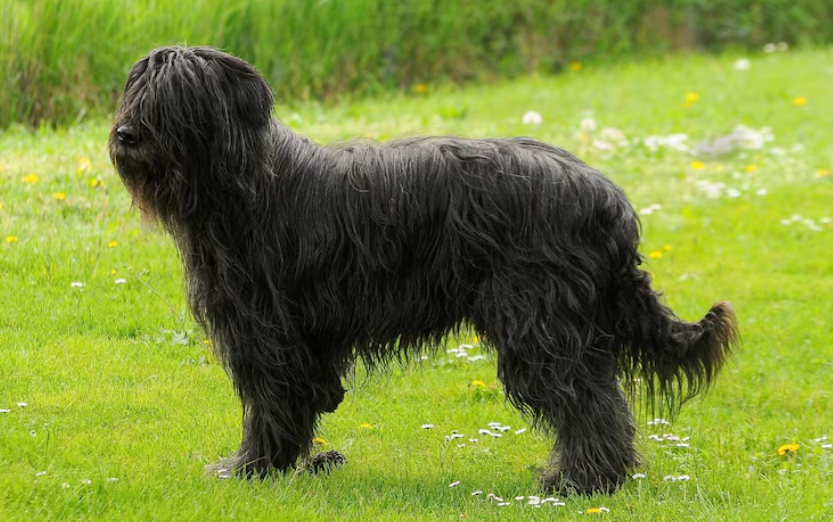
This gives a puppy like Rosie a sense of true significance. She is small—Sealys usually weigh between 23 and 24 pounds and are about 10.5 inches tall—but she is compact and muscular in the manner that working dogs are, even when they are no longer used for their intended purpose. Her coat is weather-resistant, wiry, and made for Welsh countryside rather than carpets in apartments. Still, she adjusts. Because of their size and temperament, Sealyham Terriers make surprisingly useful pets in both urban and rural settings. They are funny without being tiresome, loving without being needy.
Perhaps the breed is gradually regaining its footing. The most recent show gets support. With nothing more than spotted ears and an unlikely forehead, a puppy goes silently viral and stops people in their tracks. That seems almost fitting—a breed with so much history and so many well-known admirers, gaining new followers one comment section at a time. The puppy, a Sealyham Terrier, nearly vanished. Now that it hasn’t, it’s worth paying attention.
