

For most of the last 100 years, most stories about where modern apes came from pointed to East Africa. There are well-known fossil sites there, as well as places where the Leakeys worked and where evidence gathered. In contrast, North Africa had monkeys since the Early Miocene, but no apes. That absence shaped the way a generation of scientists thought. Then some people from Mansoura University dug in the desert of Egypt and found a jawbone.
The fossil was found in Wadi Moghra in northern Egypt in 2023 and 2024 while working in the field. It is from a species that has never been described before. The name Masripithecus moghraensis comes from the Arabic word for Egypt, “Masr,” and the Greek word for “ape.” The name also refers to the Wadi Moghra site. The study came out in Science in early 2026 and has been quietly messing with people’s ideas ever since.
It’s not just the age that makes this find interesting, though 17 to 18 million years is a very long time. In the tree of apes, this is where the species seems to fit in. The research team used Bayesian analysis to compare fossil ages, anatomical data, and DNA from living apes. They found that Masripithecus was more closely related to living apes like gibbons, orangutans, gorillas, chimpanzees, and humans than to any other Early Miocene species from East Africa that was known at the time. That’s a big claim, and the researchers seem to know how to make it land.
A paleontologist at Mansoura University and the study’s lead author, Hesham Sallam, said that his team spent five years looking for this type of fossil because, if you look closely at the early ape family tree, he thinks that North Africa has that missing piece. This kind of statement sounds bold, but it’s based on years of work in the field in an area that paleontologists had mostly forgotten about when looking for ape bones.
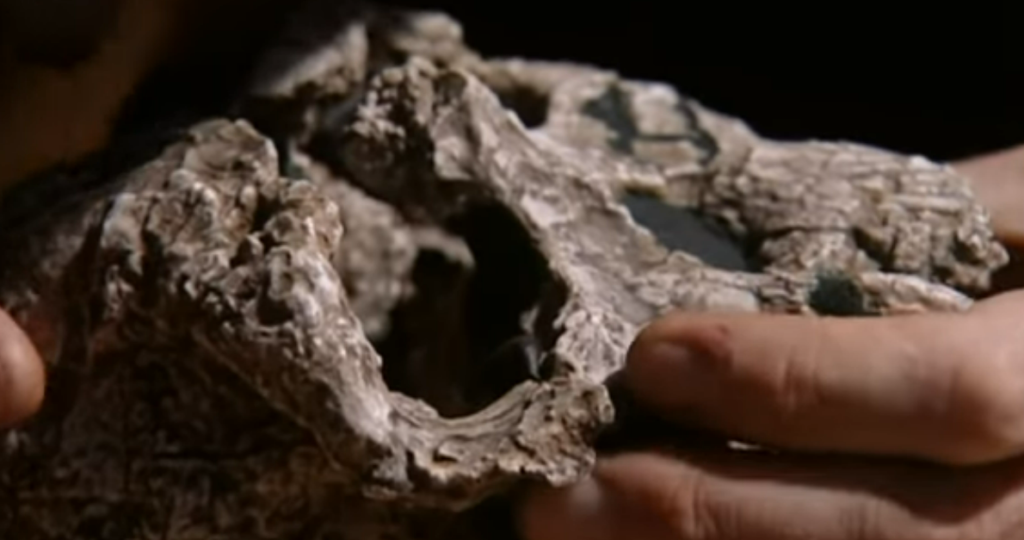
The specimen is only partly complete, with only pieces of the lower jaw and a few teeth sticking out. But those teeth say a lot. The canines are bigger than usual. The chewing surfaces of the molars are round and have a rough surface. The jaw is very strong. The study’s first author, Shorouq Al-Ashqar, a researcher at the Mansoura University Vertebrate Paleontology Center, thinks that these traits show that the animals ate a variety of foods, mostly fruit but also hard foods like nuts and seeds when fruit wasn’t available. Having the ability to change what they ate would have been helpful in the Early Miocene, when seasonal changes in the climate of northern Africa and Arabia were getting stronger.
Geography is also an issue that comes up in all of this. It was around the time of Masripithecus, and the African and Arabian tectonic plates were almost done crashing into Asia. Marine barriers that used to separate areas are getting smaller or going away. The area that is now northern Egypt and the Middle East as a whole was literally in the middle of everything. It was a place where animal populations from Africa and Eurasia could mix, split up, and become more diverse. Based on the new biogeographic analysis, this area, not East Africa, may be where the ancestor of all living apes first lived.
Paleontologist Erik Seiffert, who works at the University of Southern California and co-wrote the study, was honest about how the discovery changed the way he thought. He had always thought it was likely that the last common ancestor of all living apes lived in or near East Africa. This new finding, he said, makes that idea very unlikely.
It is hard not to be shocked by that admission. This conclusion wasn’t just thrown together by these researchers. The fossil ape found at Mansoura University has made the old map look noticeably incomplete. Of course, one jawbone can’t change everything; more fieldwork will be needed in North Africa and the Middle East.
