

At first, it was something that many sailors dream about. A crossing by one. A 32-foot sailboat. There was nothing else to do but look out at the Pacific Ocean. Kai Sato, 39, from California, left Catalina Island on June 7 with Hawaii as his goal. Depending on who you ask, this kind of plan sounds either crazy or totally reasonable.
The mast broke after two weeks.
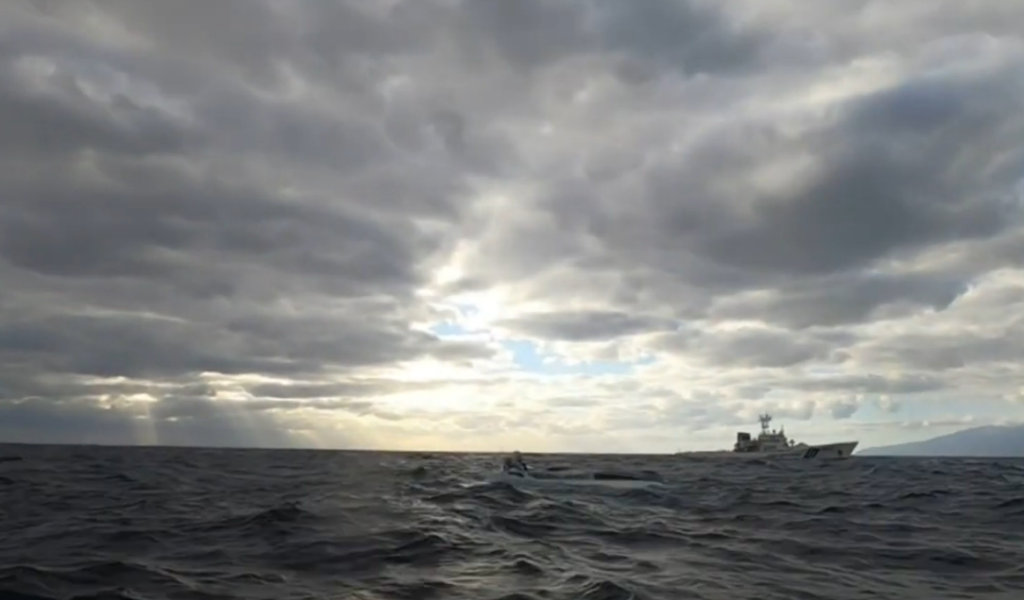
What happened next was about as bad as a month can be by itself. Sato had lost the three most important things for a solo sailor: direction, communication, and fuel. He also had no mast, no gas, and a dead phone. The ocean current was pushing him steadily south away from the shipping lanes. He was more than just lost. He was going the wrong way and was outside the main passageways where ships go. This is a more lonely place to be than most people think.
His own words say that he just sat with it for five days, doing nothing but being aware of what had happened. “I cried for a whole week, just drifting south, like miserable,” he said later. There’s something real about how he talks about that time. Not brave and not calm. A man on a broken boat who isn’t ready to give up but is also not ready to keep going. Something changed after five days, and he went to work.
The fixes he made on the spot would look silly on a marina dock. PVC pipes. The kayak paddles. Whatever he had on board that could be used as a base. He put them together in a way that made them look like a sail, or at least something that could work to slowly steer the boat back north toward the shipping lanes. He did it in almost a month. It turns out that the Pacific doesn’t really want to work together.
Fish and squid that fell into the boat were used as food, along with any oatmeal that was still in storage. The water was rougher. When he ran out on July 11, he started putting seawater in buckets, covering them with plastic bags, and waiting for condensation to form inside. “I was just licking that to survive,” he said. It’s hard to read that detail without feeling dry—weeks of thirst, quenched by a few drops at a time from a plastic bag. He also caught some rainwater, but not a lot. As a result of the rescue, the Seafarers International Union wrote that he was “severely dehydrated and severely depressed” when help arrived.
About 900 miles from Hawaii, on July 21, the M/V George III, a Pasha Hawaii container ship on its way to the islands, saw a small sailboat in trouble. Watchers saw the ship without a mast and called for everyone to help. To get a rope ladder down to Sato, they had to try twice. It took about 90 minutes from the time they saw him to the time he climbed on. He got clothes, fruit, and water. “Oh my God, yeah, I was so happy,” he replied. “They were so good to me, those guys.”
It’s possible that the most amazing thing about this story isn’t that the people survived (people have been through worse at sea), but the unique set of events that made rescue even possible. Sato’s painfully slow return to the shipping lane was what made the difference. Without it, there would be no container ship close enough to see a 32-footer that isn’t working. There’s no ladder made of rope. It’s not the fish, the condensation, or even the makeshift sail that makes the story interesting. It’s the choice to try after five days of feeling hopeless.
Sato is now in Hawaii staying with a family member. The Philippines are already in his mind. He says this time it will be a bigger ship. It’s not clear if that’s confidence or just the way some people are made—the kind of people who sail alone into the Pacific in the first place and are already planning their next adventure after only a month of schooling there.
