

Historically, Indefinite Leave to Remain has been more than just a formality. For years, it has served as a pledge, an acknowledgment that an individual merits permanence for their contributions to society. ILR’s symbolism, which provides both rights and a sense of belonging, became remarkably similar to that of the US Green Card over the course of several decades. That symbol has now become a point of contention in the current political debate, with Reform UK attempting to destroy it and substitute rolling contracts of residency for stability.
Table
| Category | Information |
|---|---|
| Immigration Status | Indefinite Leave to Remain (ILR), UK |
| Purpose | Grants migrants the right to live, work and study in the UK without time limit |
| Eligibility | Usually after 5 years on a qualifying visa (work, family, etc.) |
| Pathway to Citizenship | Often required before applying for British citizenship |
| Risks Under Reform Proposals | Abolition of ILR; replacement with 5-year renewable visas |
| Social Impact | Security for families, home ownership, community investment, civic trust |
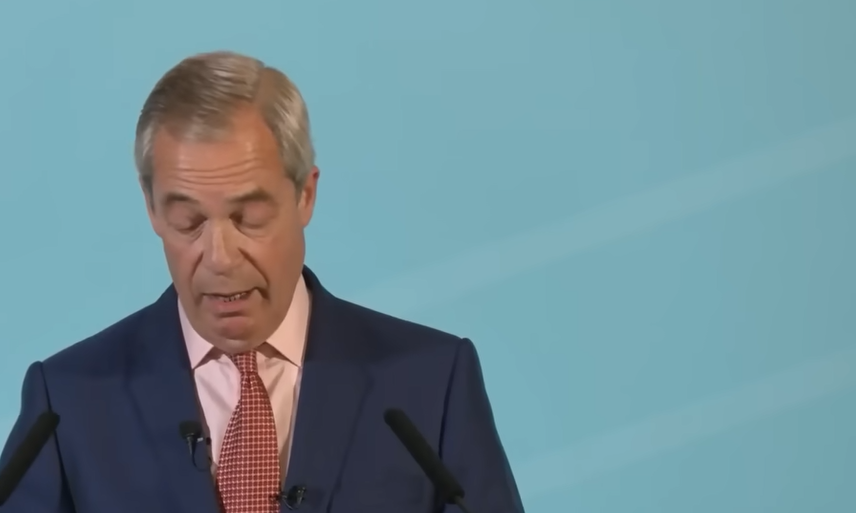
| Political Debate | Reform UK and Nigel Farage propose ending ILR |
| Authentic Reference | GOV.UK – Check if you can get ILR |
For innumerable families, this is not a theoretical discussion. It’s the difference between living in limbo and putting roots down. ILR is essential to the futures of people like a Nigerian family raising British-born children, a Polish businessman reviving a small town’s high street, and a Mumbai doctor who has worked for the NHS for five years. In its absence, permanence turns into a condition, and trust in community investment is severely diminished. One cannot undervalue the psychological toll that treating long-term residents as temporary residents takes.
ILR’s roots can be found in the Immigration Act of 1971, which was put into effect to stabilize immigration laws during a contentious political period. The concept struck a striking balance between national authority and equity for immigrants who had already integrated into society. That balance, however, could be upset by Reform UK’s proposal. The policy’s insistence on visa renewals every five years runs the risk of creating a population that is never fully integrated but is constantly awaiting approval. It would leave homeowners permanently insecure, akin to requesting that they reapply for their mortgage deeds every few years.
The financial consequences are very evident. ILR holders are frequently confident when starting businesses, obtaining mortgages, and making long-term investments. Banks could treat them as higher-risk customers and restrict their access to credit and loans if they were to lose their permanent status. Families may continue making mortgage payments without receiving guarantees that they will be permitted to remain, which can lead to instability, which is especially detrimental for kids who require continuity in their education and social lives. What ILR subtly made possible—civic engagement and settled growth—could be undone almost immediately.
The security it provided to migrants has always been a source of cultural strength for Britain. Businesses, scientists, and artists whose families once depended on ILR have influenced the nation’s standing internationally. The origins of Rita Ora’s family lie in migration. Only because Freddie Mercury’s family had a stable home life was his extraordinary contribution possible. These illustrations show how resilience fosters innovation, cultural impact, and patriotism. If ILR is abandoned, those future voices could be silenced before they have a chance to grow.
Housing, healthcare, and social service pressures are frequently cited as justifications for ending ILR. Although the suggested remedy is frank, these worries are legitimate. The strain is more caused by short-term migration spikes, inadequate planning, and inadequate infrastructure than it is by ILR holders. A significantly better strategy would be to make sure overstayers are enforced, adjust salary thresholds, and improve entry pathways. Such actions would specifically target numbers without upsetting those who have already demonstrated their dedication. ILR elimination, on the other hand, would be equivalent to tearing down the entire house to replace a leaky roof.
Unquestionably, political theater also has a role. Reform UK portrays ILR as a loophole, making it appear as though it gives benefits to unworthy migrants. In actuality, residency, means-testing, and contribution histories determine welfare eligibility. Instead of securing entitlements, ILR merely protects settlement rights. The toughness narrative, however, is persuasive. Farage’s campaign against ILR thrives on its symbolism rather than its administrative logic, much like Donald Trump’s wall proposal achieved resonance despite having little real-world impact.
At the societal level, the repercussions might be extremely damaging. Growing up in homes without stable housing can cause children to feel alienated and constantly erode their sense of belonging. Previously inclusive communities may start to fall apart. A system that views long-term neighbors as perpetual applicants could further erode already strained civic trust. History forewarns of the perils: the Windrush affair demonstrated the devastating effects of bureaucratic decisions, and the injustice’s echoes are startlingly evident in the current discussion.
Business executives are also concerned. The promise of stability underpins Britain’s appeal as a destination for international talent. Hospitals, universities, and tech companies all face competition from overseas counterparts. Berlin, Paris, and Dublin become much more appealing to highly skilled workers if ILR is eliminated. Soft power is based on policies that reassure aspirational minds that they will be accepted as well as on culture. In the long term, an uncertain Britain could suffer greatly from losing out in ways that are not immediately apparent.
