

With shifts flowing through the community like a continuous tide and paychecks discreetly supporting food stores, cafés, and school fundraisers, the Crofton mill has always felt less like a factory and more like a living system. As if many had anticipated this moment long before it came, the response to Domtar’s confirmation of the permanent closure was quite similar throughout the Cowichan Valley: disappointment mixed with resignation.
Because it operated so consistently, the mill supported Crofton’s economy for decades with an efficiency that was nearly undetectable. Through its gates, generations learned skills, accumulated pensions, and organized their lives around revolving shifts that came naturally to them. Uncertainty is now replacing that stability, but panic has not been the reaction. Rather, a cautious, forward-thinking resolve is emerging.
The closure’s justifications are remarkably obvious. The cost of energy and chemicals has continuously increased, British Columbian fiber supplies have become more limited, and global pulp prices have stayed stubbornly low. The math no longer supported long-term operations, despite the fact that Crofton staff had produced amazingly successful cost reductions during the previous 18 months. It is a confrontation with structural reality rather than a failure of effort.
Key Facts About Crofton Mill
| Aspect | Description |
|---|---|
| Mill Name | Domtar Crofton Pulp and Paper Mill |
| Location | Crofton, British Columbia, Canada |
| Owner | Domtar (subsidiary of Paper Excellence Group) |
| Founded | 1957 by B.C. Forest Products |
| Employees Affected | Approximately 350 workers |
| Closure Date | Pulp operations ceased December 15, 2025; site employment until February 2026 |
| Main Products | Pulp for hygiene products, absorbent packaging, molded food packaging |
| Cause of Closure | Lack of fibre supply, high operational costs, and weak global pulp prices |
| Economic Impact | $5 million annual loss in municipal taxes, regional job loss ripple effect |
| Reference | CBC News – https://www.cbc.ca/news/canada/british-columbia |
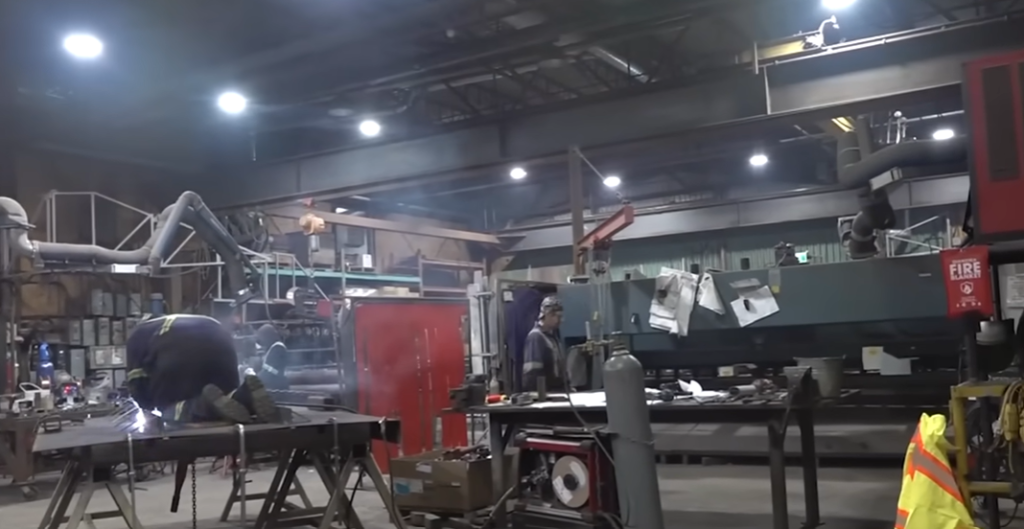
The timing is still painful. Originally scheduled to conclude in mid-December, production was moved to early January, and employees stayed on until February to ensure a safe shutdown. That extension is important because it gives individuals time and dignity, but it doesn’t change the fact that about 350 people will soon be looking for new opportunities in a labor market that struggles to hire seasoned industrial workers.
Many of those employees are in their fifties, a stage of life where early retirement is not financially feasible and retraining can be quite difficult. Years of intricate, safety-critical work have sharpened their talents, which are still incredibly dependable, but the businesses that respect them are shrinking. The human cost becomes very apparent at this point.
The impacts are already spreading beyond Crofton itself. Local shop owners discuss cancelled orders and reduced foot traffic with caution but candor. Due to a significantly smaller tax base, the municipality loses millions of dollars a year that were formerly used to provide necessary services. These are not arbitrary numbers; they result in harder discussions at council tables, tighter budgets, and postponed maintenance.
Simultaneously, there is a subdued will to resist being defined exclusively by loss. Knowing that the waterfront site’s size and location make it extremely adaptable if the right investment and vision coincide, provincial officials and local leaders are aggressively investigating potential applications for the site. Although redevelopment is never easy, the foundation is being set with a remarkable sense of urgency.
Years ago, I recall thinking on how permanent everything appeared as I stood by the harbor and watched steam drift above the mill at twilight.
It is impossible to overlook the background provided by the larger timber industry. Due to limited timber supplies, changing markets, and regulatory forces that have changed harvesting over decades, mill closures in British Columbia have followed a remarkably similar pattern. Although the Crofton closure is part of that broader arc, the town’s size and history make its effects seem more focused.
There are, nonetheless, grounds for cautious optimism. When handled carefully, industrial transitions can eventually produce noticeably better results. In other places, former mill sites have transformed into clean manufacturing zones, logistics centers, or mixed-use projects that promote diverse employment instead of depending on a single firm. That change is possible, but it takes time.
Conversations among employees are shifting away from abrupt endings and toward bridging strategies. With a focus on practicality and dignity, compensation, financial support, and targeted retraining are being proposed. Even partial routes can be especially helpful for senior workers, making the transition easier without deleting decades of contributions.
The actual Crofton mill won’t go overnight. Decommissioning is a meticulous, extremely effective procedure that prioritizes environmental responsibility and safety. This prolonged presence allows the society to adapt both economically and emotionally, and it keeps individuals working for a little longer.
The locals’ tone is the most notable aspect. Grief is undoubtedly present, but years of witnessing the forestry industry change have also produced a sense of collective realism. Instead than discussing what should have been done differently, people discuss what will happen next, which feels both practical and beneficial.
Whether decision-makers view this closure as a pivot or as an ending will determine how well Crofton’s transition goes in the upcoming years. The area offers an opportunity to draw in sectors that are far more resilient to fluctuations in the market by utilizing the site’s infrastructure, coastline accessibility, and highly qualified labor.
