

The sight of a house centipede evokes a certain, primordial fear. A blur of thirty legs ripples across the wall like a fallen eyelash that has suddenly learned to sprint, and it moves with a seamless, scary pace. Most people have the instinct to stop the invader with severe prejudice by grabbing a shoe, a rolled-up magazine, or a vacuum cleaner. However, you should be aware that you are going to use the most potent, non-toxic pesticide in your house before you attack.
The enemy of your adversaries is the house centipede (Scutigera coleoptrata). It is a nocturnal, ravenous predator that is uninterested in your blood, food, or furnishings. Its whole life is devoted to getting rid of the things you really hate. They eat ants, silverfish, bed bugs, termites, and cockroaches. The centipede goes on patrol while the spider sits idly in its web, waiting for a fly to stumble in. Using its speed and poisonous front legs (forcipules), it is the insect world’s special forces operator, lassoing and neutralizing prey that could actually inflict structural damage or spread illness.
Once, when I woke up at three in the morning to discover one of these monsters still on the ceiling above my bed, I felt like setting the house on fire because of how prehistorically incorrect its silhouette was. Understanding that it was up there serving as a sentry rather than a threat required a great deal of determination.
| Feature | Details |
| Scientific Name | Scutigera coleoptrata |
| Primary Diet | Cockroaches, bed bugs, termites, silverfish, ants, and spiders. |
| Behavior | Nocturnal active hunter; does not build webs or nests. |
| Risk to Humans | Negligible. Venom is too weak to harm humans/pets; rarely bites. |
| Damage Potential | None. Does not eat wood, clothing, or pantry food. |
| Prevention | Reduce moisture (dehumidifiers) and seal cracks to deter them naturally. |
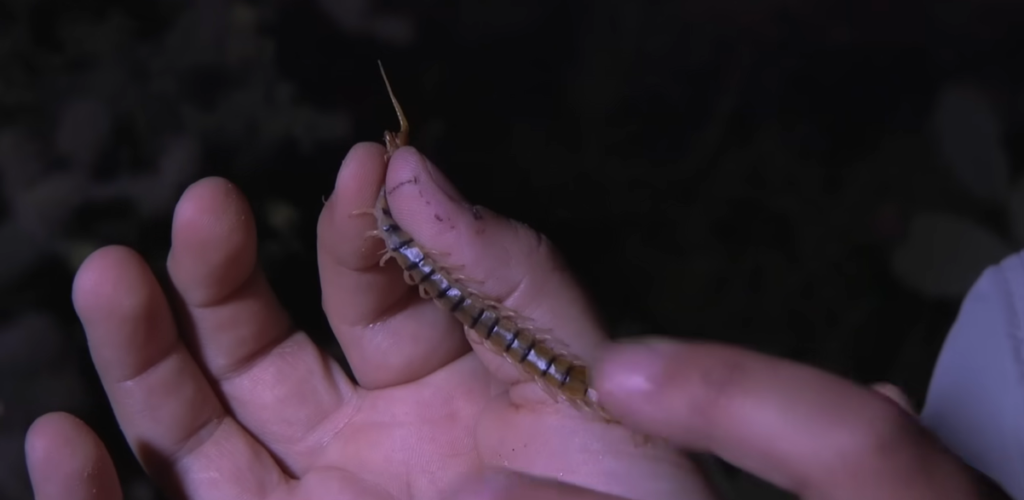
House centipedes do not spread illness or consume your home’s structural wood like termites or roaches do. Their numerous legs are continuously cleaned by these meticulous groomers. More significantly, they usually pose no threat to people. They have weak jaws that would make it difficult for them to break human skin, and even if they did, their venom would only irritate a person somewhat, like a bee sting.
A house centipede’s presence is frequently a warning sign that there is some underlying problem with your residence. They only congregate in areas with food since they are predators. They are probably feeding on a colony of other insects if you encounter them often. When the centipede is killed, the predator is eliminated, which permits the prey—the termites gnawing your beams or the silverfish devouring your wallpaper—to proliferate uncontrolled.
Controlling the atmosphere is a better option than using violence if you can’t stand their presence. Centipedes are attracted to dampness. Due of their propensity for dehydration, they are frequently seen in restrooms and basements. Your house will be uninhabitable for them without a shoe if you fix leaking pipes, cover foundation cracks, and run a dehumidifier.
Take a deep breath the next time you spot that line of legs scurrying behind the washing machine. Set the sneaker down. It’s there to tidy up the mess you can’t see, not to haunt you. Give it a chance.
