

Families are frequently caught off guard when flu season strikes without warning. By midmorning, pediatricians are taking more calls than they can handle, and a youngster wakes up hot, hurting, and glassy-eyed. A prescription for Tamiflu appears somewhere amid that chaos, along with some inquiries. Is my kid safe to use this? Does it actually make a difference? Is it too late?
Although it has been used for years in pediatric flu prevention, tamiflu is not without criticism. One of the few antiviral treatments that truly stops the flu virus from proliferating, it has been approved for use in infants as young as two weeks. It is incredibly effective at reducing the length of illness and easing symptoms when taken early—ideally within 48 hours.
The timing is crucial. The goal of starting Tamiflu early is to help the immune system catch up before problems arise, not only to eliminate a day’s worth of symptoms. For kids with neurological issues, heart problems, or asthma, that is a medical necessity rather than a luxury.
Tamiflu’s ability to prevent the flu virus from spreading throughout the body is what makes it so effective. It targets the enzyme neuraminidase, which is essential for the virus to leave infected cells and spread to other cells. Tamiflu basically aids in quarantining the virus inside the body by blocking that exit door early, allowing the immune system to clear the mess more quickly.
Tamiflu for Kids – Key Facts
| Detail | Description |
|---|---|
| Medication Name | Tamiflu (Oseltamivir phosphate) |
| FDA Approval | Approved for children as young as 2 weeks old |
| Form | Available as liquid suspension and capsule |
| Ideal Timing | Works best when started within 48 hours of symptom onset |
| Common Side Effects | Nausea, vomiting, mild abdominal upset |
| Rare Side Effects | Neuropsychiatric symptoms (hallucinations, confusion, abnormal behavior) |
| Pediatric Guidance | Strongly recommended for high-risk children under age 5 |
| Authority Links | CDC: https://www.cdc.gov/flu/highrisk/children.htm |
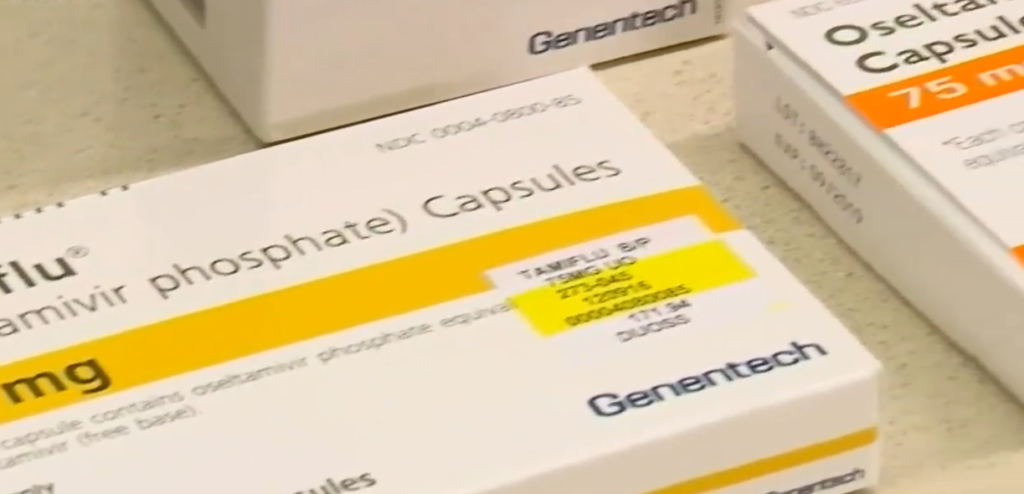
The advantages are especially noticeable for kids who are at high risk. Serious flu-related complications are more likely to occur in children under five, particularly in infants under two. Pediatricians frequently reach for Tamiflu without thinking in these situations. Even so, the same physicians could be reluctant to treat a healthy older child who has just minor symptoms.
Sitting in pediatric waiting rooms with nervous parents arguing whether to fill the script, I have personally witnessed this difficult balance. “She puked twice the last time we used Tamiflu,” one mother said to another. I’m not sure if it was helpful. “If it helped her avoid pneumonia, you may never know it,” said a neighboring nurse.
Although they do occur, the adverse effects are typically tolerable. The most common side effect is nausea, but taking Tamiflu with food usually lessens upset stomach. Although vomiting is possible, it usually passes quickly. More severe adverse effects, like agitation, disorientation, or hallucinations, are hardly recorded. Although these are troubling, the FDA and pediatric experts continue to believe that the medicine is safe when taken as directed and under strict supervision.
Practically speaking, parents value the flexibility. For smaller children who are unable to take pills, capsules can be opened and combined with syrup or pudding. Even though the liquid solution is simpler to administer, it can be challenging to locate amid flu epidemics. When supplies are scarce, pharmacists will occasionally make their own compounds.
Age and weight affect dosage. It is typically administered twice a day for five days. It changes to once daily for 10 days when used for prevention, such as following a sibling’s positive test result. This preventive approach can be highly helpful, particularly in homes with young children or children who are immunocompromised.
To be clear, though, Tamiflu is a therapy rather than a vaccination. This is emphasized by every pediatrician I’ve spoken to. The most effective defense is still the flu shot, which is advised for kids six months and up every year. Since Tamiflu is a fire extinguisher rather than a fireproof wall, it plays catch-up.
Although the generic version of oseltamivir has made therapy much more accessible, cost can still be an issue. Even without insurance, many families find it surprisingly reasonable with pharmacy apps or discount programs.
It’s acceptable that some parents continue to exercise caution. Each youngster reacts in a unique way. Some recover rapidly with just rest and drinks. Others require the additional assistance that Tamiflu may offer, particularly those who are already at risk. The goal is to have a well-considered, timely option when the flu strikes hard, not to rush into taking medication.
I’ve seen friends reconsider their choices until it was too late to begin. The 48-hour window is quickly closing. You can wait and see if you have a fever, exhaustion, or sore throat. However, Tamiflu’s efficacy significantly decreases by day three. Having it on hand throughout flu season is therefore advised by several pediatricians if your child is at high risk or if there is a known exposure.
The Tamiflu conversation ultimately comes down to trust. Trust the advice of your pediatrician. In your role as a caretaker, follow your gut. Make the appropriate inquiries and carefully consider the timing. Tamiflu can be a very useful tool for treating children’s flu when used properly. It may even be able to keep a five-day illness from becoming a two-week misery.
Last year, my own niece contracted the flu; by breakfast, she was terrible, and by noon, she was taking Tamiflu. Her vitality returned the following day, her fever subsided, and by the third day, she was once again controlling her brother. Was it the medicine, the time, or the luck? Most likely all three.
