

The occasional flutter in the chest usually goes away as soon as it appears. Others, however, may experience the same feeling as a sign of something much more serious: tachycardia, a condition in which the heart suddenly beats faster than 100 beats per minute even when at rest. The frequently asked question, “Can you die from tachycardia?” refers to medical urgency rather than hyperbole.
Because it can result from both benign and potentially fatal causes, tachycardia is incredibly complex. For some, it’s just an adrenaline-fueled rhythm that naturally settles as a reaction to stress, caffeine, or emotional strain. In others, it’s an indication of a cardiac electrical problem that could lead to cardiac arrest. Ventricular forms of tachycardia can “significantly reduce blood flow,” depriving vital organs of oxygen and, if left untreated, causing sudden death, according to the Mayo Clinic.
The heart is frequently compared by doctors to an orchestra of precisely timed electrical signals. Rhythm disruption occurs when those signals malfunction, firing too quickly or in erratic patterns. Mild forms of this rhythm, like sinus tachycardia, are transient and generally benign. However, it becomes a dangerous performance that is out of sync with life itself when the disturbance starts in the ventricles, the lower chambers of the heart.
Table: Key Medical and Professional Information
| Item | Detail |
|---|---|
| Subject | Tachycardia (rapid heart rhythm) |
| Medical Specialty | Cardiology / Electrophysiology |
| Common Symptoms | Palpitations, dizziness, fainting, shortness of breath |
| Notable Risk Types | Ventricular tachycardia, ventricular fibrillation |
| Treatment Options | Medications, ablation, implantable defibrillators |
| Clinical Authority Reference | Mayo Clinic – Tachycardia overview (mayoclinic.org) Mayo Clinic |
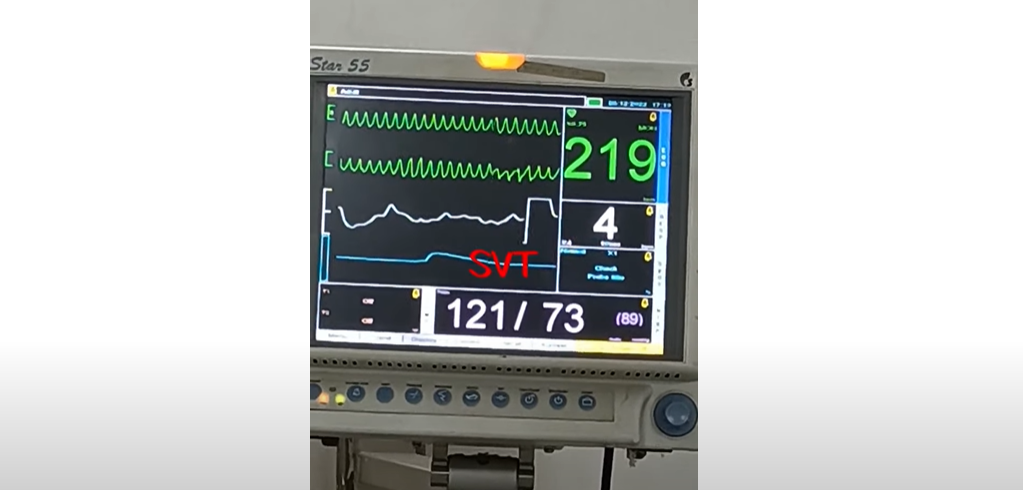
One of the most dangerous of these conditions is ventricular tachycardia, or VT. The body is deprived of oxygen-rich blood as the heart starts to beat so quickly that its chambers never fill. A prolonged episode can result in sudden cardiac death, while a brief episode may cause lightheadedness or fainting. According to the Cleveland Clinic, VT is considered medically dangerous if it lasts longer than thirty seconds.
In severe situations, VT may progress to ventricular fibrillation, a disordered rhythm in which the heart beats erratically rather than pumping. The blood flow stops in a matter of seconds. Survival is unlikely unless rhythm is restored by rapid defibrillation. The accounts of patients who unexpectedly collapse while performing their daily tasks—some athletes, some office workers—often without a prior diagnosis are remarkably similar.
However, tachycardia does not always manifest as severe symptoms. For many, a slight uneasiness or an accelerated pulse serve as the only warning signs. Ignoring these indicators can be especially risky. Untreated episodes can cause tachycardia-induced cardiomyopathy, a condition that weakens the heart muscle over time and can lead to chronic heart failure. This type of damage is encouragingly frequently reversible with appropriate treatment, demonstrating the heart’s extraordinary adaptability once its rhythm is restored.
Other, less fatal, but disruptive types include supraventricular tachycardia (SVT), in which electrical impulses in the upper chambers of the heart malfunction. Although SVT is not usually fatal, frequent episodes can result in fatigue, fainting, and anxiety. It can also cause pounding heartbeats and lightheadedness. Sometimes people confuse their symptoms for panic attacks, which causes them to put off getting the help they need.
Physical factors are not the only source of risk. When chronic stress is combined with lifestyle factors like excessive caffeine, alcohol consumption, or stimulant drug use, it can create a dangerous environment for tachycardia. Unquestionably, emotional triggers also have an impact. Cardiologists frequently remind their patients that stress hormones have the capacity to push an already tense heart into dangerous territory.
Over the past ten years, there has been a notable advancement in treatment. Beta-blockers, calcium channel blockers, and other medications aid in rhythm regulation, and minimally invasive catheter ablation can identify and block aberrant electrical pathways. Implanted cardioverter-defibrillators (ICDs) serve as internal guardians for high-risk individuals, prepared to shock them to death the instant a fatal rhythm appears. Once large and frightening, these devices have significantly shrunk, become more dependable, and are now less intrusive—an illustration of how technology is continuing to make cardiology a highly effective, patient-focused field.
However, awareness—rather than treatment—is where some of the most compelling advancements can be found. Automated external defibrillators (AEDs) have been shown to be incredibly successful in saving lives from ventricular fibrillation when used in public places like gyms, airports, and schools. The odds of survival decrease by about 10% for every minute that defibrillation is not performed. Community initiatives to install AEDs throughout cities have been sparked by that statistic alone, teaching regular people how to act swiftly and confidently.
