

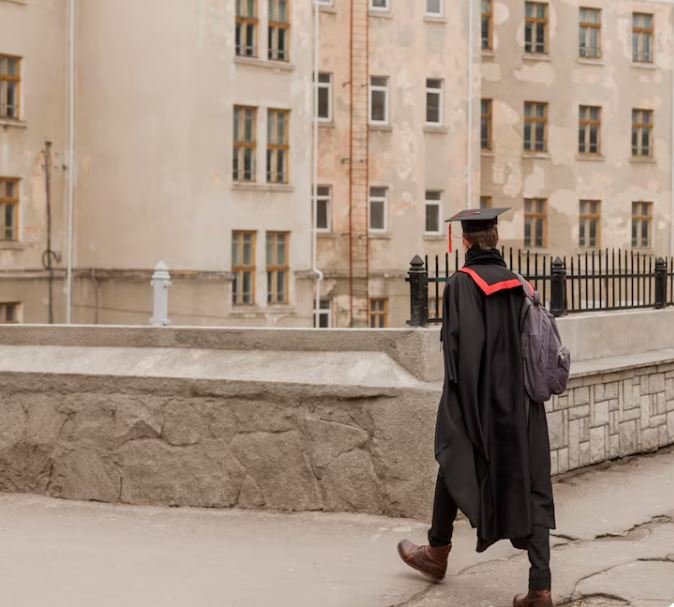
The front lawn of Blue Springs High was still freshly mowed, trimmed as if preparing for something celebratory. But this year, no stage was set, no folding chairs unfolded. Graduation was canceled, and that decision landed with unexpected force.
Not due to a storm or scandal, but a complicated combination of health protocols, space constraints, and administrative hesitation. The announcement, relayed through a district bulletin, explained the ceremony couldn’t proceed safely under current venue limitations. While that may sound procedural, the impact felt deeply personal to many.
| Detail | Information |
|---|---|
| School | Blue Springs High School, Missouri |
| Event Status | Graduation ceremony canceled |
| Initial Reason Stated | Health and safety protocols, facility limitations |
| Other Contributing Issues | Venue capacity, equity concerns, community expectations |
| Student Response | Mixed—some organized informal gatherings, others expressed disappointment |
| Parent Reaction | Split between understanding and frustration over transparency |
| Broader Context | Post-pandemic safety norms, budgetary strain, access considerations |
| Future Outlook | Discussions of alternate celebrations and more inclusive planning |
For students, the change meant a disrupted farewell to a formative chapter. Several seniors had planned photo shoots and parties around the event. Instead, many found themselves sitting at home, re-reading the email from the district with the same quiet disbelief you feel when an anticipated guest cancels last minute.
One father compared the cancellation to “pulling the curtains down just before the final act.” And in a way, it did feel like that. The play had been long, the scenes intense, and the cast had grown together—only to watch the curtain freeze halfway.
District representatives pointed to logistical risks tied to large gatherings, especially with rising flu numbers in the region and concerns around indoor ventilation. They emphasized their commitment to safety, noting the decision was made “out of an abundance of caution.”
Over the past four years, such phrases have become familiar, almost automatic. But for many seniors, this wasn’t just another pandemic-era pivot. It was their first real step into adulthood—delayed or, at least, reshaped.
Parents voiced frustration at school board meetings and online forums. Some questioned whether alternate solutions were explored thoroughly. Could the event have moved outdoors, even with a risk of rain? Could smaller ceremonies have been staggered across several days? Those asking weren’t demanding perfection—just effort.
One mother said, “We had more people gathered at last fall’s homecoming game. If we could do that, surely there was a path for graduation.” Her point wasn’t just logistical. It spoke to a broader desire for consistency and clarity—two things that feel increasingly elusive in school planning.
Students responded in their own way. A group of seniors organized a symbolic “parking lot walk.” They wore their caps, played music from their cars, and clapped for one another as they crossed a painted line in the lot behind the gym. It wasn’t elaborate, but it was remarkably effective in lifting their spirits. One graduate said, “It felt honest. Like we were claiming the moment for ourselves.”
I stood near the edge of the lot, watching them exchange elbow bumps and phone numbers, and I thought about how ceremony often finds a way, even when institutions falter.
From an administrative standpoint, officials also acknowledged budget pressures. Venue rentals, crowd management, and compliance with ADA access laws had grown significantly more complex and expensive. They explained that the district’s priority was to ensure any event would be equitable—accessible for all students and their families, not just the ones who could manage long walks or open-sun seating.
That lens—of inclusion and access—was notably clear in how they framed their rationale. And while it didn’t erase disappointment, it did highlight how public education is increasingly shaped by competing mandates: emotional significance, logistical feasibility, and financial sustainability.
Some educators suggested that the situation could lead to particularly innovative future formats. “We’ve learned that celebrations don’t have to follow a template,” one counselor said. “We’re considering hybrid events, personalized acknowledgments, even student-led recognition moments.”
By collaborating across departments, they’re already discussing how next year’s ceremonies might look different—potentially more flexible, more intimate, and more attuned to what students actually want.
Many families took the moment into their own hands. Driveway barbecues, backyard slide shows, and makeshift photo booths began appearing across neighborhoods. Some even hired local photographers to recreate diploma hand-offs on front porches. These efforts, though small in scale, carried a kind of emotional precision that large events sometimes miss.
The class of 2026 didn’t just lose a formal gathering. They gained something uniquely reflective—a reminder that not every milestone arrives gift-wrapped. And still, it counts.
Through strategic adaptation and community effort, what began as a cancellation may, in hindsight, mark the beginning of a new tradition—one defined less by formality and more by authenticity.
Graduation may have been postponed, but meaning, it turns out, is incredibly versatile. Sometimes it shows up not under spotlights, but under string lights. Not in stadiums, but in front yards. And it can be just as unforgettable.
