

The goal of Kansas City’s leaders’ vote to rename The Paseo in Dr. Martin Luther King Jr.’s honor was to address a long-standing omission by granting a national hero his rightful place on a major thoroughfare. However, the answer was far from straightforward. The civic tug-of-war that ensued was based on people’s desire to be heard before decisions affect the streets they walk on a daily basis, not just on issues of race or remembrance.
The Paseo, which is lined with residences, schools, and churches, transports not only people but also memories. It passes right through the center of historically Black neighborhoods and is modeled after Mexico City’s Paseo de la Reforma. The renaming felt personal because of that history. However, many locals felt that the sudden change was forced upon them, especially those who had lived along the boulevard for decades. No one consulted them. They weren’t questioned. And they wouldn’t keep quiet.
| Event | Year | Decision | Public Response | Result |
|---|---|---|---|---|
| Paseo renamed to MLK Blvd | 2019 | Council voted to rename historic boulevard after Dr. Martin Luther King Jr. | Residents felt excluded, led by “Save The Paseo” group | 70% voted to reverse it in November 2019 |
| Reinstatement of The Paseo | 2019 | Petition placed issue on ballot; name reversed | Widely supported by local voters | Paseo signage reinstalled; MLK signs removed |
| Removal of J.C. Nichols name | 2020 | Nichols’ name taken off plaza fountain and street | Activists praised move; others saw it as symbolic only | City approved renaming during nationwide protests |
Door-to-door, the “Save The Paseo” campaign collected signatures with resolute consistency, demanding inclusion in the process rather than erasing Dr. King’s name. Their efforts resulted in a public vote by November 2019. Nearly 70% of voters chose to support the group and restore the boulevard’s original name, making the outcome conclusive. Although the city swiftly changed its mind and reused the outdated signage to save money, the emotional and political harm persisted.
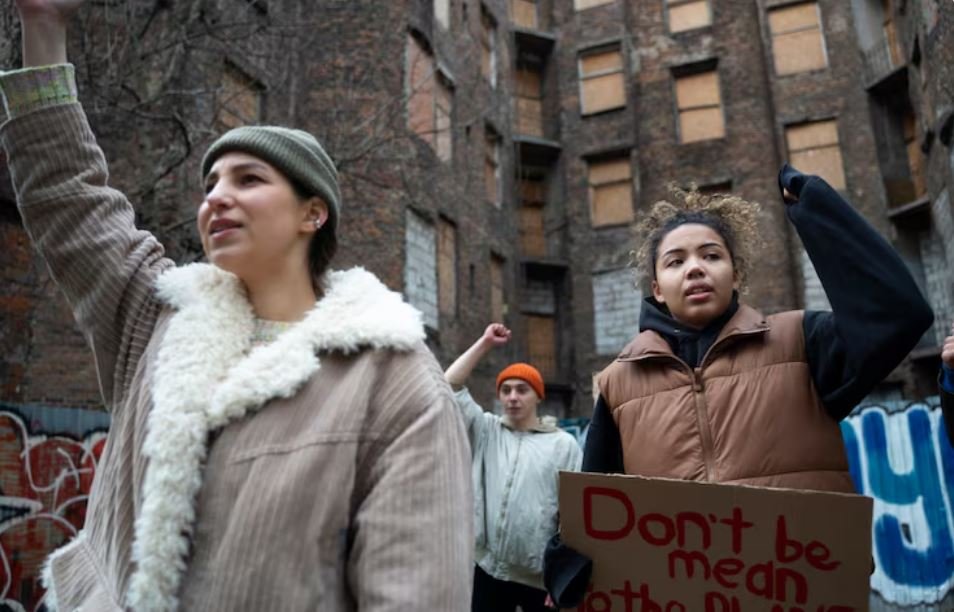
The council caused more than just a name dispute by ignoring community input. They brought about a broader discussion about legacy, trust, and who gets to define civic memory. Despite the good intentions, many felt ignored by the way it was carried out. During a protest on Sunday, one pastor subtly told a reporter, “This isn’t about disrespecting Dr. King.” It has to do with honoring ourselves.
I recall stopping when I read that. That statement had a subtle power, a purposeful clarity that politics frequently lacks.
Then came another obstacle, this time involving J.C. Nichols, a real estate tycoon in Kansas City whose projects greatly influenced the urban shape of the city. Additionally, Nichols was a pioneer of racially restrictive covenants that prohibited Jews and Black people from buying homes in numerous neighborhoods. His name, which is displayed on the fountain at Country Club Plaza and the neighboring Parkway, became a focal point of the 2020 protests that followed the murder of George Floyd.
Change was demanded by activists. They wanted the past to be recognized rather than forgotten. They demanded that signs of inclusion be used in place of symbols of exclusion. The city concurred. The name of Nichols was called. Even so, there were conflicting responses to the move. It was praised as progress by some. Others asked out loud, “What’s next?” Where is the boundary between harm and history?
The naming dispute in Kansas City is remarkably similar to other conflicts. These are more than just street markers or signs. They represent belonging and identity. Many locals have stories associated with a name that span generations. It feels like losing a piece of a shared inheritance when it is changed without discussion.
The fact that both sides frequently concur on the necessity of justice adds complexity to these discussions. The point of contention is how it’s accomplished. Swift, symbolic acts may appear brave from a distance, but if the community isn’t involved in their development, they may come across as hollow up close.
Cities can find respectful and forward-looking paths by incorporating community voices early on. It’s important to ask the right people the right questions before making decisions on their behalf; it’s not always about adopting the new or preserving the old.
Kansas City is gradually learning how to strike a balance between momentum and memory as a result of these street fights. It’s discovering that real progress isn’t merely declared from a platform. It is constructed block by block, involving the locals rather than ignoring them.
Kansas City’s story could serve as a warning model in the years to come as more cities reconsider the names engraved on their landscapes. When leaders stop, listen, and include rather than just act, change is more likely to be remarkably effective.
The signs may be reversed for the time being, but the discussion is far from finished. And maybe that’s a good thing. Because naming involves more than just deciding what to call a street. It has to do with what we decide to stand for and who we include in that decision.
