

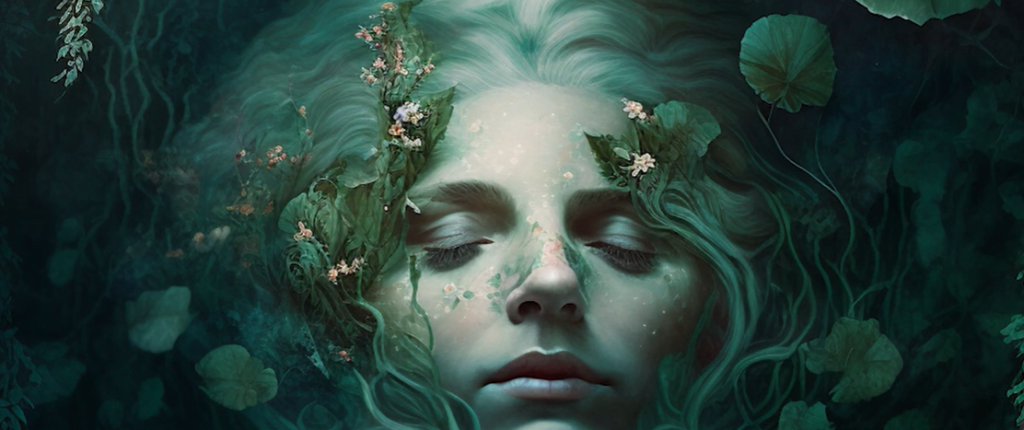
In human memory, water has always evoked a primordial feeling. Therefore, it is not surprising that the Greeks gave it shape. Not only is there divine form, but there is also a personal, local presence. Every neighboring spring and shaded stream was inhabited by the shameful, sentimental, and occasionally vindictive Naiads. Naiads remained close, unlike oceanic deities who had infinite reach. They didn’t wander. They observed. They recalled.
Every Naiad resided in the same place as her water. A clear river bend, a marsh, or a wellspring weren’t merely famous spots. They were living manifestations of a spirit whose surface ripple was its breath. The Naiad disappeared if the water stopped flowing. They felt extremely genuine because of that basic link.
Scholars and storytellers have revisited the Naiads for their emotional variety as well as their beauty during the past century. They could be deadly beguiling or fiercely loyal. One moment, a Naiad might utter a prophecy, and the next, they might drown an intruder. Because of their intricacy, they resembled the forces they stood for quite well—calm one moment, chaotic the next.
They were frequently classified according to their habitat in Greek mythology, which gave their tales a very grounded feel. While limnades stayed close to quiet waters, pegaeae were born in natural springs. Potameides followed the curves of the rivers, and Crinaeae sang through fountains. Quieter and frequently disregarded, the swampy Eleionomae were equally important.
In the Peloponnesian highlands, I recall strolling beside a creek where moss and wild mint clung to old stone. Although there was no statue left, the stream was named after a forgotten nymph according to local folklore. Still, there was a noticeable difference in the quiet surrounding the location. As though the earth itself had stopped.
Some Naiads were known for their audacity, such as Salmacis. There is considerable controversy over the myth of her merging with Hermaphroditus. Was it lust, love, or something larger? Form and identity were changed by her desire, which was astonishingly powerful in its endurance. Just that narrative changed the way Greek philosophers saw dualism and change.
| Category | Information |
|---|---|
| Mythological Figure | Naiads |
| Greek Name | Ναϊάδες (Naiades) |
| Origin | Ancient Greek mythology |
| Nature | Freshwater nymphs, minor goddesses |
| Domains | Springs, rivers, lakes, fountains, marshes |
| Parents | River gods (Potamoi), sometimes Zeus |
| Lifespan | Extremely long-lived, not always immortal |
| Symbols | Water pitchers, springs, flowing hair |
| Cultural Role | Protectors of water sources and communities |
| Reference | https://www.theoi.com/Nymphe/Naiades.html |
Then there was Minthe, whose tale developed with a more subdued melancholy. Once adored by Hades, Persephone transformed her into a protective and envious mint plant. Crushed into both ceremonies and memories, the plant itself came to represent both mourning and rebirth.
These figures were especially potent because of their intimacy as well as their closeness. Naiads lived close to you, unlike Olympians on mountaintops. You doused their feet with water. You gave your daughter their name. Beside them, you dreamed. Before anyone called it such, it established a cycle of respect that was quite effective in protecting the local ecological.
Villagers would donate milk or hair to a neighboring Naiad during significant life milestones, particularly for females. These subdued actions had their origins in generations of respect. The relationship between nature and human feeling was not merely symbolic; rather, it was the rule.
The Greeks incorporated behavioral rules into their environment by strategically creating myths. You angered a Naiad in addition to contaminating a stream. You upset the home of a fragile spirit, not carelessly chopping down trees. Surprisingly, this narrative effectively reinforced ecological boundaries.
Naiads were never merely picturesque landscapes in stories. They served as moms, lovers, victims, and even founders. Some gave birth to heroes after marrying kings. Others carried divine offspring across empires or doomed bloodlines. Contrary to what one might think given the calm seas they guarded, their effect extended farther.
Additionally, naiads may be extremely erratic. Men were enticed to watery graves by some. Others defended holy waters with a fierceness that is uncommon among kind-hearted gods. Long before psychology gave them a name, their unpredictable nature made them especially inventive representations of emotional states.
Their deaths were potent symbols because their lifespans were dependent on the natural world. When a spring dried up, a Naiad would be silent. She stopped singing. Her enthusiasm diminished. That loss felt, in poetic retellings, like grieving for a family member rather than merely a tale. Water was finite, and this was a lesson learned early on.
To avoid unwelcome attention, some Naiads, like Daphne, changed into trees. Turning into laurel rather than giving up was not merely a whimsical feature from mythology. It was nature-veiled resistance. Their narratives were strategic rather than passive. They reflected decisions that are still relevant today.
Their recollection stays to this day. Their shape is still borrowed by literature, their appeal is reimagined in film, and fantasy art envelops them with movement and light. Naiad muses continue to be extraordinarily adaptable. They provide an emotional depth that is connected to location and framed by loss, something that many contemporary icons do not.
