

Cobra Kai can be found in most offices. It can be heard in the Monday message that demands results by Friday or in the all-hands meeting where the loudest voice prevails. In many places, “strike first, strike hard” still qualifies as a management philosophy. It’s quick, appears decisive, and usually leaves people updating their resumes in silence.
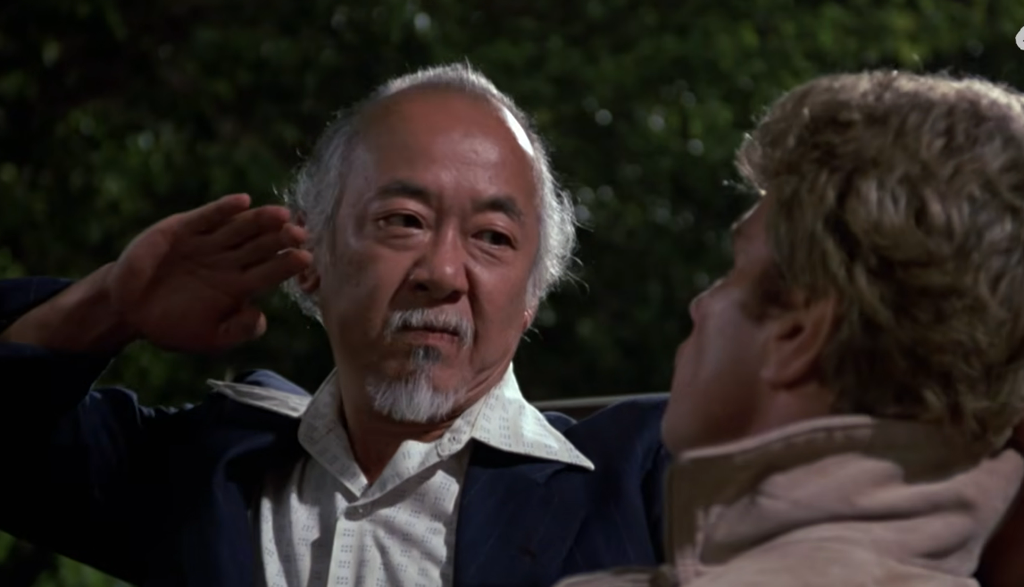
Mr. Miyagi operated in a different manner. A garage, a backyard, and a few vintage cars served as his training area. Daniel LaRusso came with the intention of learning karate, but instead he spent days painting, sanding, and waxing. It’s understandable why he was irritated. Daniel’s arms then moved on their own when Miyagi punched him.
If you are in charge of people, you should consider that scene. On their first day, new hires frequently receive a comprehensive strategy deck and very little time for daily tasks. This could be in reverse. Miyagi’s version appears slow at first because it involves tedious repetition until the fundamentals become second nature. People who don’t freeze under pressure are also produced by it. The ostentatious abilities can wait. “First learn stand, then learn fly” is more of a staffing strategy than a quote.
Article Details Table
| Detail | Information |
|---|---|
| Film | The Karate Kid (1984) |
| Central Subject | Management lessons drawn from Mr. Miyagi and Miyagi-Do |
| Main Characters | Mr. Miyagi, Daniel LaRusso, John Kreese |
| Key Actor | Pat Morita |
| Contrasting Philosophy | Cobra Kai: “Strike first, strike hard, no mercy” |
| Lesson One | “Wax on, wax off”: master the basics through repetition |
| Lesson Two | “First learn stand, then learn fly”: sequence growth in the right order |
| Lesson Three | “Whole life have balance”: protect sustainable output and rest |
| Lesson Four | “Karate is for defense only”: use authority to shield the team |
| Lesson Five | “Don’t forget to breathe”: stay calm when a crisis hits |
| Lesson Six | The bonsai tree: create room for each person to grow |
| Memorable Line | “Why break boards? What boards ever do to you?” |
| Core Idea | “No such thing as bad student, only bad teacher” |
Sequencing is equally important. If you elevate someone to a senior position before they have established a solid foundation, you are setting them up for failure while claiming to have faith in them. It is preferable to provide clear instructions, allow confidence to grow at each step, and grant high-stakes freedom only after the individual has earned it. It moves more slowly. It’s also more gentle.
The bonsai comes next. The reason Miyagi’s trees are small is not because they are designed to be small, but rather because the pot restricts the roots. For managers, it’s a subtly unsettling image. How many teams are trapped in a pot that was selected by someone else? Budgets are sometimes the limiting factor, but other times it’s a boss who won’t let anyone go. When you observe a good manager in action, you frequently see the opposite: room for experimentation, room for a small amount of failure, and feedback that is tailored to the individual rather than taken from a template.
The lesson that is practiced the least and repeated the most is balance. “Whole life have balance” sounds like a wellness office poster. However, teams that are constantly high on adrenaline do eventually falter, and this rarely occurs when the manager anticipates it. Whether they intend to or not, a leader who sends emails at midnight is instructing. People are aware of the boss’s Sunday activities.
Balance is easier to fake than calm. The room looks at the person in charge when a client escalates or a launch goes awry. Miyagi’s advice to Daniel to remember to breathe is almost comically straightforward. Even so, a manager who takes a moment to gather information prevents panic from spreading, which is more valuable than a well-thought-out recovery strategy.
Ego is the subject of the final lesson. Once, Miyagi asked a boy who was smashing boards why he did it. “What boards ever do to you?” Many offices have their own boards with vanity metrics, eye-catching slides, and seemingly progressive activity. According to Miyagi, leadership entails directing your people toward actual issues while protecting them from needless conflict.
All of this is nothing new, and some of these concepts are easily discounted because they are difficult to quantify. There’s a sense that management guidance derived from a 1984 film should be absurd. However, the main idea of the movie remains relevant. Bad pupils are the result of a bad teacher. The Cobra Kai children weren’t cruel from birth. Someone who mistook skill for force trained them.
Thus, the question is simple for any manager. What dojo do you run, and if you asked your team, what would they say?
