

In Karate Kid: Legends, William Zabka does make an appearance. For those who watched six seasons of Cobra Kai, the brief, low-key cameo at the very end of the movie carries a weight that a two-minute scene probably shouldn’t be able to. The problem with these characters is that. They still have significance after forty years.
It is easy to set up. Following the conclusion of the main plot, Daniel LaRusso returns to California and visits the former dojo owned by Mr. Miyagi. When the camera pans back, Johnny is seen standing in that well-known area, smiling, and proposing a restaurant idea.
The concept: Miyagi-Dough, a pizzeria. The pizza riff was both scripted and improvised, according to director Jonathan Entwistle, who also acknowledged that Zabka had some leeway in the production. “We just kind of let Billy go,” Entwistle remarked. It is evident. In that scene, Zabka and Ralph Macchio have an ease that can only be attributed to years of real collaboration and, by all accounts, genuine affection for one another.
Everything that came before the moment—not in this movie, but in Cobra Kai—makes it work. Over the course of six seasons, the Netflix series transformed Johnny Lawrence from an unredeemable bully into something far more nuanced and, in the end, subtly admirable. When Legends debuted, viewers weren’t looking for nostalgic antagonists. They were witnessing a man who had truly transformed, having a lighthearted conversation with the person he had once tormented. That’s a completely different kind of scene.
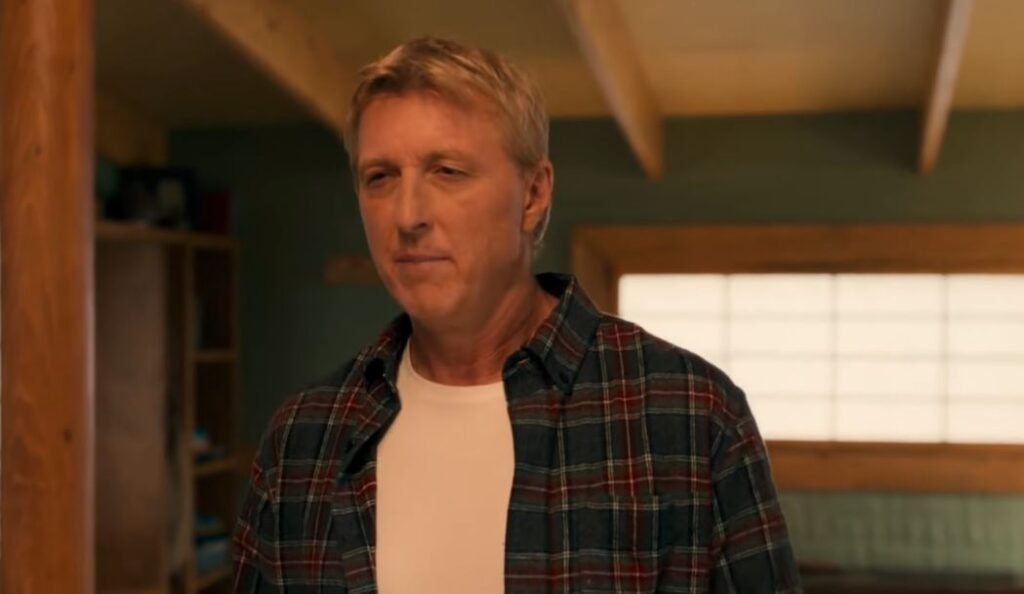
The way Legends manages Zabka’s presence is noteworthy. He didn’t attend the movie’s premiere. The press tour did not include him. Early viewers were genuinely surprised by the cameo because it was kept quiet. That seemed strange to some. Others thought it was the right decision to keep the attention on Jackie Chan and the new cast while letting viewers learn about Zabka’s appearance rather than expect it. It’s possible that the filmmakers were simultaneously attempting to preserve the emotional payoff of the previous story and the novelty of the new one.
It’s also important to comprehend the characters’ backgrounds. In the end, Cobra Kai and Miyagi-Do shared students, each covering what the other lacked, and Johnny and Daniel ran their dojos together rather than against each other. Three years after those events, Legends takes place. As a result, Johnny successfully holds down the fort at home while Daniel travels to New York for the main story. The final appearance isn’t a chance reappearance. It makes sense given where these two ended up.
Zabka’s career as an actor has been genuinely fascinating. Having never practiced karate, he left college at the age of eighteen to make the movie The Karate Kid. For the majority of the next ten years, he was primarily known for being a bully on screen. He was writing and directing by the 2000s, and in 2004 he was nominated for an Academy Award for the short film Most. He received something unique from Cobra Kai: a second act that was based solely on a reanalysis of the first. And he took full advantage of it.
The Miyagi-Dough scene is warm, humorous, and slightly ridiculous in the best way. It makes no attempt to be a grand finale. It’s two old friends chatting foolishly about pizza in a familiar setting, and for some reason it feels like something. It’s more difficult to pull off than it seems.
