

Dallas Winston spends more time in a room than he enters it. Dally’s eyes are described by Ponyboy Curtis in S.E. Hinton’s The Outsiders as “cold with all the hatred in the world,” and that description, along with the platinum-blonde hair falling in wisps, the 6’2″ frame, and the sharp animal teeth, tends to stick.
He is the type of character who unnerves other characters, even those who support him. Ponyboy acknowledges that he makes him uncomfortable. It’s not a small detail. It reveals something about Dally’s demeanor and the impact years of living on the streets of New York had on his instincts.
The difference between Dallas Winston’s outward appearance and his true nature is what makes his personality worth investigating—really investigating, beyond the superficial “troubled bad boy” interpretation. At the age of ten, he was arrested for the first time. Ten. By the time the book is set, he is seventeen years old, has already served time in prison, accumulated a criminal record that would follow most people for the rest of their lives, and developed a worldview that is almost entirely based on mistrust.
He tells the gang that his own father doesn’t give a damn if he’s rotting in a cell or dead in a car accident. With a tone that suggests he has long since given up on expecting anything different, Dally says it. That isn’t toughness. That person was taught at a young age that caring about things only causes suffering.
However, his relationship with Johnny Cade is the most revealing aspect of his character, not the violence or defiance. Dally acts in ways that run counter to nearly everything else the book reveals about him when he is around Johnny. Dally pays attention when Johnny tells him to stop bothering Cherry Valance at the movies. In that exact manner.
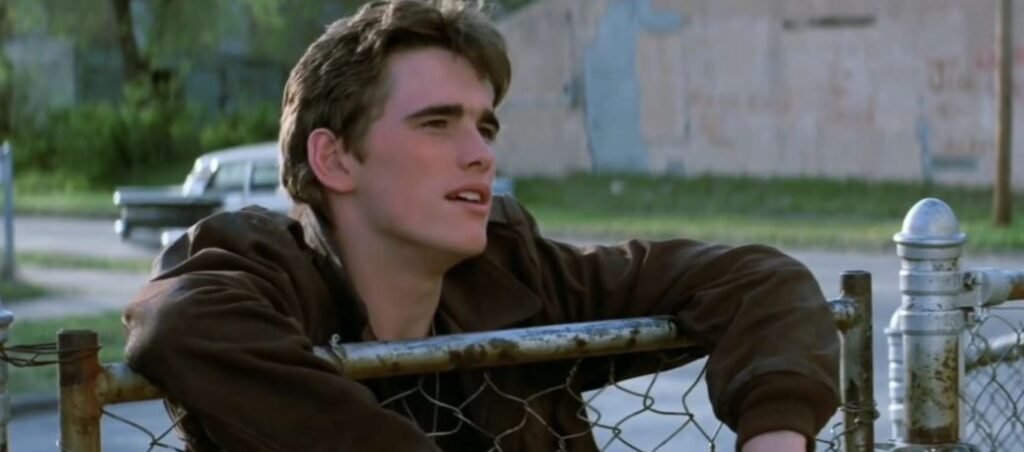
No disagreement. If it had been anyone else, it might have ended badly. However, Johnny connects with him in a way that no one else can. Dally recognizes something in Johnny: a child who is still pure, sensitive, and potentially able to break free from the life that engulfed him. He tells Johnny, “I just don’t want you to get hurt,” and it’s one of the few times in the book that his tone completely softens.
It’s difficult to ignore how purposefully Hinton created that dynamic. To save Johnny, Dally dashes into a burning church. To get Johnny to the hospital, he drives quickly through Oklahoma. The world just doesn’t understand the gentleness with which he speaks to him. The novel leaves open the question of whether that is understood as paternal instinct, brotherly love, or something more complex, but the emotional reality of it is indisputable. Dally had no intention of protecting anything other than Johnny.
If you’ve been paying attention, what happens after Johnny passes away makes perfect sense. Dally doesn’t disintegrate silently. He calls the gang after robbing a grocery store with an unloaded gun, then he enters the street and points the empty weapon at the police.
It’s a police suicide, and Ponyboy says the expression on his face afterward was one of “grim triumph.” This is not an accident or a hasty decision. This was Dally’s choice. He had come to the conclusion that nothing was worth clinging to without Johnny, and he pursued that decision with the same directness he applied to everything else in his life.
Here, there’s a more general point to be made. Being “bad” or “violent” by nature isn’t the only factor contributing to Dallas Winston’s personality. It is the result of a system that consistently let him down, leaving him without a caring parent, a community that stepped in, or a path that even remotely seemed possible.
When S.E. Hinton wrote The Outsiders at the age of sixteen, she somehow grasped concepts that take most adults years to express: that tenderness and rage can coexist in one person, that the hardest exterior frequently reveals the deepest wound, and that society’s disposable children continue to require care even after they have learned to stop asking for it.
The story of Dally Winston does not serve as a warning against delinquency. He is a picture of what happens when a child is left to grow up in situations that most adults would find difficult. Beneath the leather jacket, cigaret, and icy blue eyes lies a personality that is far more complex and human than the term “villain” would imply.
