

Seeing someone who was considered Hollywood’s favorite villain for decades finally receive his just desserts is somewhat satisfying. William Zabka, who played Johnny Lawrence in The Karate Kid in 1984 and truly unnerved teenagers, is thought to be worth between $3 and $4 million. For a career that almost completely stalled in the 1990s, it represents something more intriguing than just a dollar figure, even though it’s not the kind of figure that makes tabloid headlines.
Zabka was born in 1965 in New York, the son of film industry professionals. During Johnny Carson’s early seasons as host of The Tonight Show, his father, Stan Zabka, was an assistant director and production manager. The younger Zabka’s exposure to production sets gave him a sense of the industry that would eventually matter more than most people anticipated. He wasn’t a naive youngster who happened to wander into Hollywood. From a distance, at least, he could understand the machinery.
He was famously trapped in the role that created him. Zabka created one of the most iconic antagonists of the 1980s film industry as Johnny Lawrence, the karate bully who torments Ralph Macchio’s Daniel LaRusso. On a $8 million budget, the movie made over $100 million domestically, effectively starting a worldwide karate craze that summer.
Zabka was a wrestler at the time and had no actual karate training. However, Macchio reportedly told producers that Zabka “scared the shit out of me” because he was so convincing during auditions. That’s either the most unintentionally helpful or the best audition feedback in Hollywood history.
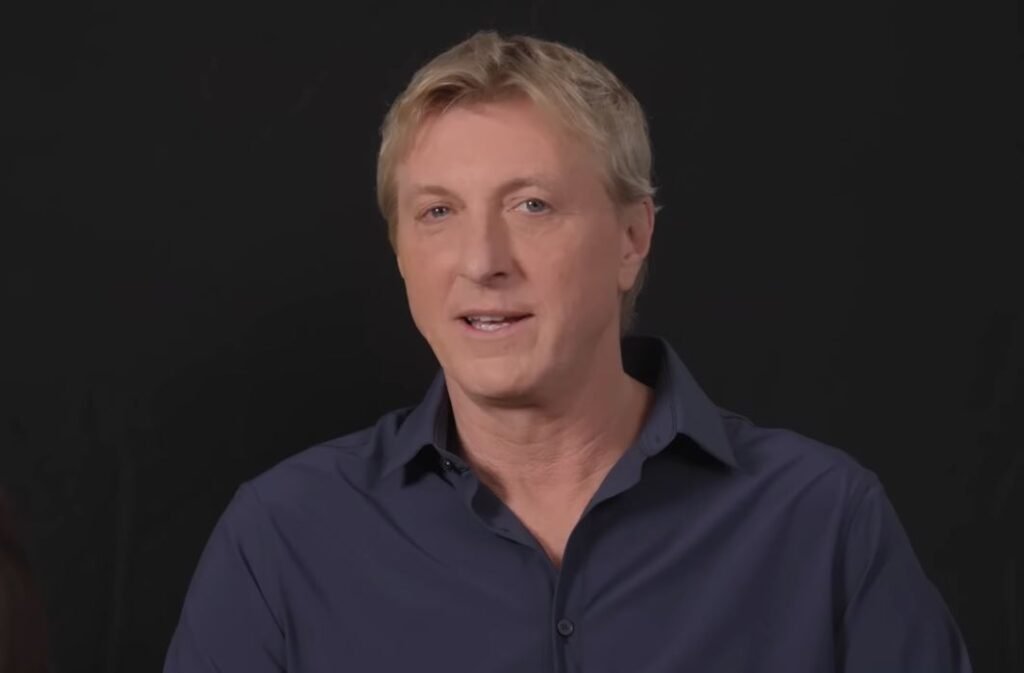
He continued to work in the 1980s in roles that were variations on a theme, such as Just One of the Guys, Back to School, National Lampoon’s European Vacation, and The Karate Kid Part II. The decade came to an end, along with the specific cultural moment that had made him a familiar face. He subtly transitioned to production work during the 1990s, acting sporadically in smaller independent films while consciously learning the craft of filmmaking. He might have been irritated by this time. It might also have influenced him in ways that wouldn’t become clear for a long time.
His versatility as a filmmaker did emerge, albeit somewhat unexpectedly. Zabka wrote and produced the 2003 short film Most, which was filmed in Poland and the Czech Republic. In the Live Action Short Film category, the movie was nominated for an Academy Award. It’s important to take a moment to consider that fact because it’s often overlooked. As a writer-producer, the man known as a teen movie bully was on the verge of winning an Oscar. It’s not a footnote. Most actors never get that second act.
Everything changed when Cobra Kai arrived. Both Zabka and Macchio reportedly made $100,000 per episode for the first two seasons of the show when it debuted on YouTube Red in 2018, a platform that, let’s face it, hardly anyone was actively using. That equates to about $1 million per season, with ten episodes per season. In addition to their acting pay, both actors had a creative and financial stake in the show’s success as co-executive producers. Viewership skyrocketed after Netflix purchased the series in 2020, making Cobra Kai one of the most popular shows on the network.
All of this results in a financial picture of gradual accumulation rather than unexpected wealth. Zabka also owns real estate. He bought a house in Burbank for $256,000 in 1996, which is now worth much more, and a house in Brentwood, Tennessee, for slightly more than $1 million in late 2020. In January 2025, he lost a house in the Palisades fires in the Los Angeles area, serving as a reminder that even a career comeback cannot shield a person from life’s harsh realities.
Influencer tracking platforms estimate that his Instagram presence alone brings in between $400,000 and $570,000 annually, though there are clear methodological limitations to those numbers.
Zabka’s net worth reveals more than just financial information. It’s about a career that defied Hollywood’s expectations. It’s noteworthy that the young man who was cast as the bully went on to become a filmmaker in secret, receive an Oscar nomination, and then return to the bully role, making it the most complicated aspect of his career. Although the dollars are real, the backstory is more fascinating than the actual amount.
