

The fact that you missed the northern lights is quietly humbling. Not really because they’re rare, but because they’re hard to predict in a way that feels almost personal. The aurora does not put up a sign to let people know about it. It comes into being somewhere above the Arctic, dances for an hour or two, and then goes away before most people even notice they’re looking up.
That’s the main problem with any aurora borealis prediction: it only gives you a chance, not a guaranty. The NOAA OVATION model and real-time Kp index readings are the main tools that forecasters use. They can make predictions for 30 to 90 minutes. Not a lot of time. You will need clear skies, the right latitude, some time, and dark skies. If you miss any of those, you’ll just be staring at a blank sky and wonder what everyone else saw.
The Kp index is likely the first number that people who watch the aurora see. On a scale from 0 to 9, it shows how strong a geomagnetic storm is. A Kp of 0 or 1 means it is quiet. On these nights, the aurora might only be visible from cameras in northern Norway or Canada. If the Kp is 5 or higher, it means there will be storms. People in the northern US or central Europe might get to see a real show. Since the number goes up, the lights can reach farther south. People as far south as Cuba have said they caught glimpses of the most intense events, but that’s more of an exception than the rule.
Serious aurora watchers also keep an eye on something called Bz, which is the magnetic direction of the solar wind. If Bz goes negative, it means that the solar wind is lining up to hit the Earth’s magnetic field and send energy into the air. The better the Bz, the worse it is. While it may sound complicated, the main point is very easy to understand: a strong negative Bz along with a rising Kp is the best signal you can get.
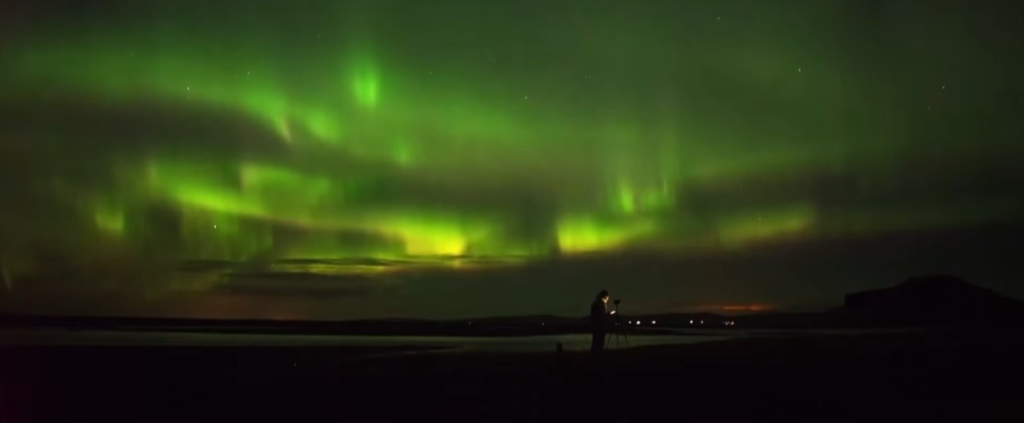
The OVATION model adds one more thing. The OVATION map shows you where the aurora is over Earth at any given time, while the Kp index tells you how big the storm is. A thick, colorful band on that map, especially one that leans yellow, orange, or red, means that the intensity is real. If you see a thin, clear green ring around the lights, they’re there, but it probably isn’t worth the three-hour drive.
Most of the time, plans fail because of bad weather. The aurora starts in the upper atmosphere, way above any clouds. No amount of geomagnetic activity will help if the sky is cloudy that day. Northern Lights hunters want cold, clear nights, and clear skies often mean cold. Light pollution is also important. A full moon can make fainter displays hard to see, and city lights can make even a moderate aurora almost impossible to see. It makes a big difference to be even forty or fifty kilometers away from urban sprawl.
People don’t always think about the timing part. The aurora is usually brightest and widest when the sun is directly on the other side of the Earth from us. This means that it usually shows up in the middle of the nite, not just after sunset. Observations in the late evening may catch something, but the oval is usually widest and conditions are best around midnight in the area.
As of now, it’s still really hard to say when the lights will come on in your area. Over the past ten years, the tools have gotten a lot better, but the solar wind is still very chaotic in ways that models can’t fully explain. The most useful thing that anyone can do is probably set up location-based alerts, which are services that watch real-time data and send a message when conditions reach a certain level. If you don’t, the aurora will keep doing what it always does: it will show up out of the blue, amaze anyone who is outside, and no one else will know about it until the next morning.
