

Four samples of water. That was all it took to warn people in Utah who work with wildlife. Out of the 22 samples taken near the Potash Boat Ramp, which is about 14 miles downstream from Moab, zebra mussel environmental DNA was found in four of them. The study was done by the U.S. Geological Survey. The news came from the Utah Division of Wildlife Resources. A line that had never been crossed before was crossed in a quiet way that almost no one noticed.
DNA from a zebra mussel had been found in the Colorado River in Utah for the first time. It doesn’t prove that there are real mussels swimming around. DNA in the environment can move; pieces drift downstream, carried by the current, leaving only a hint of what might be upstream. However, pieces don’t just appear. People who study aquatic invasive species think that a positive eDNA result is more of an early warning that should be taken seriously than a false alarm.
There’s a reason why zebra mussels have a bad name. Since the late 1980s, when they came from European ships in ballast water and spread from the Great Lakes, they have been destroying freshwater systems in North America for decades. No matter where they settle, the consequences are bad because once they do, it’s almost impossible to get rid of them. They clog intake pipes, make boat hulls smell bad, cover rocky shores with sharp shells that can cut bare feet, and completely change the food chain below the surface of the water. They filter out huge amounts of plankton, which kills off native fish and upsets ecosystems that were balanced hundreds of years ago.
In 2025, Utah started testing the Colorado River for invasive mussels by putting an environmental DNA autosampler in a new spot near the Potash Boat Ramp. During June and July, samples were taken every day. The sampling stretch went from the state line to Moab. This is a part of the river that gets a lot of recreational use during the summer, with rafters, kayakers, motorized boats, and paddleboarders moving between bodies of water. Government officials have said that this is exactly how mussels move. In water trapped in bilges or hulls of boats, or on equipment that is moved from one body of water to another without being properly cleaned. Not by themselves.
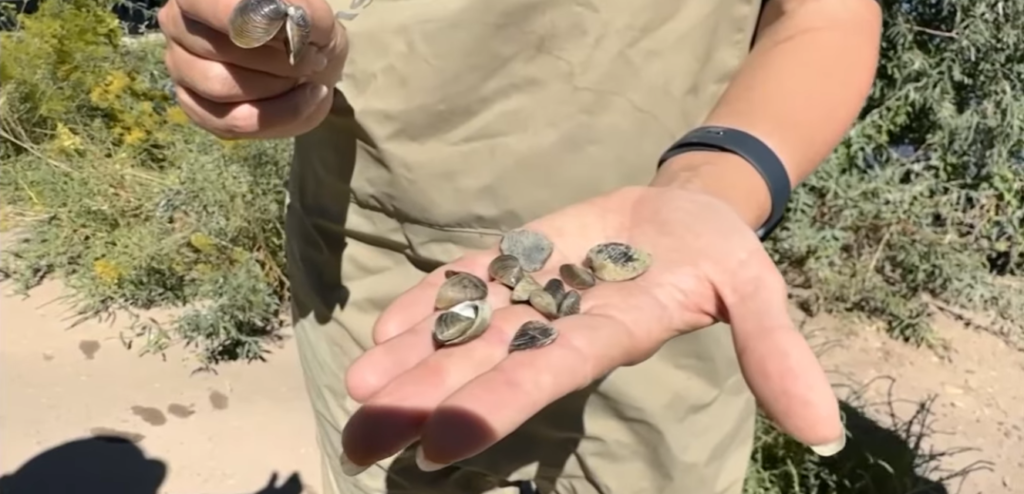
Lt. Bruce Johnson of the Utah Department of Natural Resources Law Enforcement made it clear: zebra mussels can damage whole ecosystems, clog pipes and other infrastructure, and make rocks and beaches dangerous. While the language is measured, the meanings behind it are not. The Colorado River basin’s water infrastructure, like intake facilities, irrigation systems, and hydroelectric operations, depends on pipes and channels that zebra mussels are very good at blocking.
It’s still not clear where the DNA upstream came from. Other places along the Colorado River in Utah that were sampled in the spring and summer did not yield positive results. This leaves an interesting geographical question unanswered. Some thing or more than one thing went through or near the Potash area. The investigation keeps going.
It’s interesting to see how seriously Utah is already taking this—not as a confirmed infestation, but as a strong enough sign to act on. In Utah, everyone who owns a motorized boat has to pay an annual fee to be registered as an aquatic invasive species. Every boater, even those on canoes, rafts, and paddleboards, has to take a mussel-aware boater course once a year. For years, the message of “clean, drain, and dry” has been pushed hard. Trina Hedrick, who is in charge of sportfishing for DWR, said that nonmotorized boaters are the first line of defense because they use the Colorado River the most. How you frame it matters. It puts the responsibility on the people who are on the water.
On paper, this detection may not seem like much, but people will remember it as a turning point in the future. It could be the moment a threat was caught early enough to be handled, or it could be the start of something much harder to unravel.
