
Close Menu
Kbsd6Kbsd6
    Facebook X (Twitter) Instagram
    Facebook X (Twitter) Instagram
    Kbsd6Kbsd6
    Subscribe
    • Home
    • News
    • Trending
    • Kansas
    • Celebrities
    • About
    • Privacy Policy
    • Contact Us
    • Terms Of Service
    Kbsd6Kbsd6
    Home » South Africa’s Anti-Immigration Movement Is Tearing the Continent Apart
    News

    South Africa’s Anti-Immigration Movement Is Tearing the Continent Apart

    Sierra FosterBy Sierra FosterAugust 19, 2026No Comments3 Mins Read
    Facebook Twitter Pinterest LinkedIn Tumblr Email
    Share
    Facebook Twitter LinkedIn Pinterest Email

    For months, the streets of South Africa have been filled with rage. A movement known as March and March has been planning demonstrations, marching through city centers, and giving the government deadlines since early April in an effort to force undocumented foreigners to leave the nation. The most recent deadline occurred in August, during a regional summit of African leaders in Durban. The timing wasn’t coincidental.

    The loudest protests to date took place on June 30. Across the nation, tens of thousands of people marched. That day alone, the government spent about R600 million, or $35 million, on security operations. Regarding that figure, Parliament had something to say. A number of members contended that the funds could have been used for infrastructure or education. Though the government believed it had little option given how unstable the situation had become, it’s reasonable to question whether they have a point.
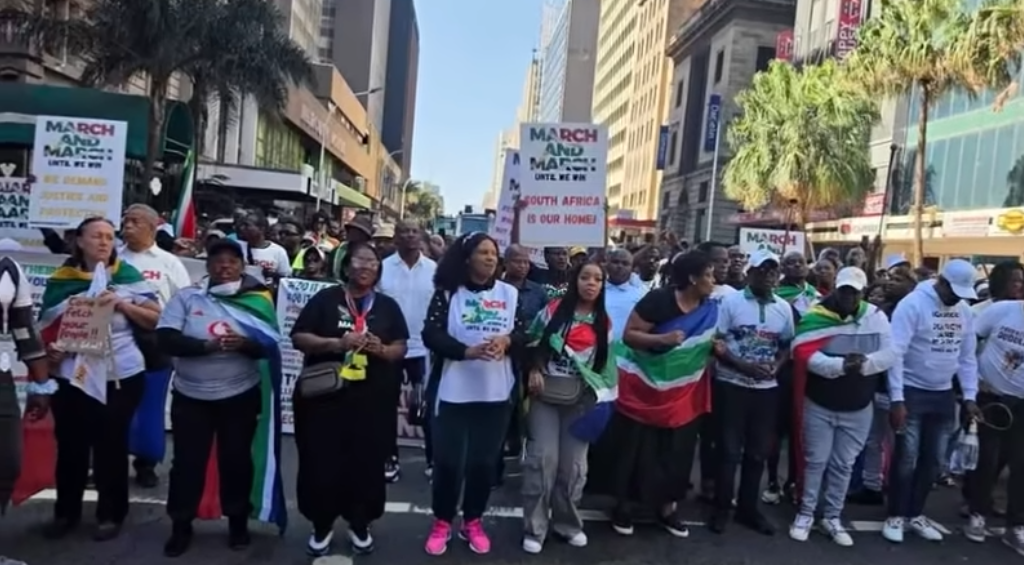
    South africa anti-immigration movement
    South africa anti-immigration movement

    What transpired after June 30 was meant to be a sort of resolution. It wasn’t. Since the protests started, over 160,000 immigrants from Mozambique, Nigeria, Zimbabwe, Malawi, and other nations have left South Africa, according to official statistics. A minimum of 54,000 were officially deported. There have been at least four fatalities. Marches weren’t the end of the movement. Armed groups started robbing immigrant homes in townships like Thembelihle, south of Johannesburg, at nite. They also told scared families to return home, sometimes in Zulu, as if the language was intended to emphasize the threat.

    On June 29, Eibraheem Hussein, a 60-year-old Malawian who has resided in South Africa since 2000, was assaulted at home. His tale is not unique. It is part of a pattern that has been developing for a long time; it briefly erupted in 2008 when 62 people were killed, flared up again in 2015, and is now making a comeback with what seems to be more organizational force than before.

    It’s worthwhile to sit with this tension. After Nelson Mandela’s government opened South Africa’s borders in 1994 with a spirit commensurate with the moral gravity of the time, the country’s population of foreign-born people increased dramatically. However, the rate of unemployment never truly decreased. Inequality persisted. Over time, resentment began to focus on those who appeared alien, spoke a different language, or operated small businesses that the locals believed should be theirs. It hardly matters anymore if that annoyance is justified. It is now a political reality.

    On August 15, President Cyril Ramaphosa addressed the situation and essentially apologized to foreigners for what they had gone through. He claimed that South Africa could not practice exclusion in its streets while preaching integration at summits. It was the appropriate thing to say. The speech didn’t seem to be intended to address the question of whether it has any bearing on the individuals who are excluded.

    The citizens of several African governments have been evacuated. Ghana, Nigeria, and other countries have reacted with a mix of fatigue and indignation. Police in South Africa have started looking into the deaths of immigrants, but they haven’t made many arrests yet.

    This is not just a law enforcement issue. It is a nation under intense economic strain that is projecting that strain onto individuals who have traveled abroad in search of what all South Africans seek: a means of making ends meet. It is simple to place the blame on immigrants. They don’t always cast ballots. Often, they are unable to. And that says more than anything else about who is shielded when a nation begins to crumble under the weight of its own unsolved issues.

    Anti-Immigration South Africa
    Share. Facebook Twitter Pinterest LinkedIn Tumblr Email
    Sierra Foster
    • Website

    Born in Kansas City, Sierra Foster writes about politics and serves as Senior Editor at kbsd6.com. She was raised paying attention to this city, not just living in it. Sierra has a strong, deep connection to Kansas City, from the neighborhoods east of Troost to the discussions that take place in the city hall halls. Sierra, who is presently enrolled at the University of Kansas to pursue a degree in Political Science, applies the rigor of academic study to her journalism. She writes about politics in Missouri and Kansas as someone who genuinely cares about what happens to the people in these communities—the policies that impact them, the leaders who represent them, and the civic forces influencing their futures—rather than as an outsider watching from a distance. Her editorial coverage encompasses state-level policy, local government, and the national political currents that permeate bi-state regional life. Whether it's a city council vote or a Senate race, she has a special gift for turning complex policy language into writing that feels urgent, relatable, and worthwhile. Sierra seldom sits still off the page. She claims that playing soccer on a regular basis has sharpened her instincts for political reporting because of the sport's teamwork, strategy, and requirement to read a changing game in real time. She's probably somewhere in Kansas City with her friends when she's not writing or on the pitch, discovering new reasons to adore a city she already knows so well.

    Related Posts

    Sydney Swans Sanctions Send a Message — But Is Anyone Actually Listening?

    August 19, 2026

    Sara Bejlek Interesting Facts: The 5-Foot-2 Czech Who’s Quietly Rewriting the Rules of Women’s Tennis

    August 19, 2026

    Marie Bouzková Cincinnati Open 2026: How the Czech Veteran Refused to Lose

    August 19, 2026
    Leave A Reply Cancel Reply

    You must be logged in to post a comment.

    News

    Sydney Swans Sanctions Send a Message — But Is Anyone Actually Listening?

    By Sierra FosterAugust 19, 20260

    Every sporting scandal has a point at which the official statements’ controlled language begins to…

    Sara Bejlek Interesting Facts: The 5-Foot-2 Czech Who’s Quietly Rewriting the Rules of Women’s Tennis

    August 19, 2026

    Rob Thomas Mic Stand Flies Into Bandmate’s Head — And the Aftermath Was Pure Matchbox Twenty

    August 19, 2026

    Marie Bouzková Cincinnati Open 2026: How the Czech Veteran Refused to Lose

    August 19, 2026

    South Africa’s Anti-Immigration Movement Is Tearing the Continent Apart

    August 19, 2026

    SAFA and Pitso Mosimane Finally Agree on Salary — But the Numbers Tell a Bigger Story

    August 19, 2026

    Sara Bejlek Cincinnati Tennis Open 2026: How a Young Czech Is Turning Heads in Mason

    August 19, 2026

    Hayden Panettiere Toxicology Testing Could Take Weeks — Here’s What We Know So Far

    August 19, 2026

    SASSA Grant Payout September 2026 – What Every Beneficiary Needs to Know Before the Month Begins

    August 19, 2026

    Hayden Panettiere’s Gaming Career: A Tribute to the Voice Behind Kairi

    August 19, 2026
    Disclaimer

    KBSD6’s content, which includes financial and economic reporting, local government coverage, political news and analysis, and regional trending stories, is solely meant for general educational and informational purposes. Nothing on this website is intended to be legal, financial, investment, or political advice specific to your situation.

    KBSD6 consistently compiles and disseminates the most recent information, updates, and advancements from the fields of public policy, local and regional affairs, politics, and finance. When content contains opinions, commentary, or viewpoints from business executives, politicians, economists, analysts, or outside contributors, it is published exactly as it is and reflects the opinions of those people or organizations rather than KBSD6’s editorial stance.

    We strongly advise all readers to seek independent advice from a certified financial planner or qualified financial advisor before making any financial, investment, or economic decisions based only on information found on this website. Economic conditions, markets, and policies are all subject to change; your unique financial situation calls for individualized expert advice.

    Facebook X (Twitter) Instagram Pinterest
    • Home
    • News
    • Trending
    • Kansas
    • Celebrities
    • About
    • Privacy Policy
    • Contact Us
    • Terms Of Service
    © 2026 ThemeSphere. Designed by ThemeSphere.

    Type above and press Enter to search. Press Esc to cancel.

    You're halfway through ✦

    Enjoying the read?

    Share it with someone who'd love it too.

    WhatsApp X / Twitter Facebook Reddit
    ✓

    Thank you for Sharing!

    Continue reading — we write important stories with in-depth research.