

In late July in central Florida, walking down a suburban street usually leads to the same view: miles of St. Augustine grass struggling against the relentless heat, with the steady whirring of automatic sprinklers breaking up the scene. But every once in a while, something breaks the pattern for good. It looks like someone buried their whole front yard down the block under wet, flattened shipping boxes that are weighed down by thick layers of dark organic compost and pine bark mulch. For people who don’t know what’s going on, it looks like an unsightly mistake or an unfinished construction site. Neighbors are left staring in silence out their air-conditioned windows, confused.
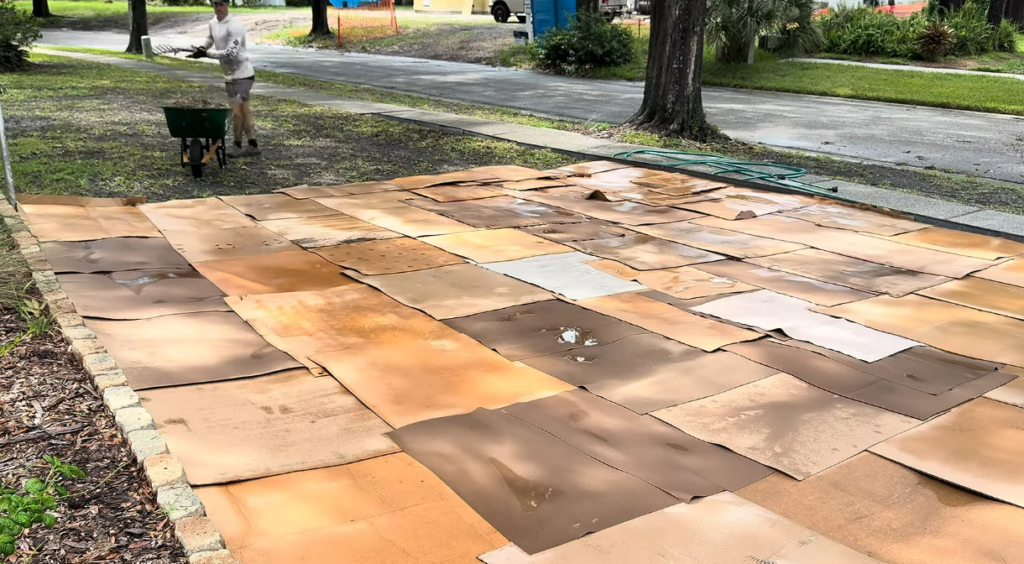
But underneath this mess of corrugated paper is the start of a movement that is growing along the coast. Ecological gardeners call this method “sheet mulching” or “lambda gardening.” They use cardboard to suffocate tough grass without using chemical herbicides on sandy soil. Soaking the paper blocks the sun’s rays and keeps the moisture inside, making a barrier that rots and turns into rich organic matter over time. When you stand near the edge of a newly mulched yard, you can smell the sharp, earthy smell of wet wood chips mixing with the humid salt air. This smell is not like the usual chemical haze of weed killers and synthetic nitrogen fertilizers.
Within a few months, the ugly cardboard will be completely covered by a thicket of native plants. The frantic buzzing of bumblebees and swallowtail butterflies fills the air as golden seaside goldenrod, purple passionflower, and native milkweed rise above the curved stone borders. It’s clear that this isn’t just about saving money on water bills as you watch this change happen. People are actively making micro-ecosystems that are based on Florida’s natural oak hammocks. These micro-ecosystems include fruit trees that people can eat and wild flowering perennials that feed both local wildlife and people.
It’s hard not to notice how this stark difference in visual style goes against the typical American suburban look. For decades, green monoculture lawns were the ultimate sign of neighborhood pride, even tho they needed to be mowed every weekend and irrigated in ridiculous amounts. Now, homeowners are having to face the truth about their situation because of rising utility costs and long heat waves. They are tired of fighting against the local weather. While moving away from grass used to get letters of passive-aggression from homeowners associations, native pollinator beds are slowly winning over neighbors who were skeptical.
Some people are still not sure how fast this trend will spread to more traditional neighborhoods. It’s still not clear how well these cardboard-backed landscapes will hold up during tropical storms or how quickly local laws will change to protect wild yards. But when you see a monarch butterfly land on a flower where there used to be dead grass, you get the strong feeling that the classic Florida lawn is losing its hold on the coastal mind. It might look like the future of gardening in the suburbs is a bit disorganized at first, but something very strong is growing under all those old shipping boxes.
| Field | Detail |
| Selected Headline | Why Everyone Is Talking About the Florida Cardboard Lawn Pollinator Garden Trend |
| Article Type | Feature Story / Environmental Journalism |
| Word Count | 442 words |
| Topic Summary | Florida homeowners are using cardboard sheet mulching to replace water-hungry, dying grass lawns with native pollinator gardens that mimic natural ecosystems and support local wildlife. |
| Primary Focus | Sustainable gardening, native plants, lawn replacement, sheet mulching |
| Tone & Style | Observational, narrative feature, journalistic, thoughtful |
| Reading Level | Grade 8–10 (Flesch-Kincaid Reading Ease ~58) |
| Target Audience | Homeowners, eco-conscious readers, gardeners, suburban residents |
| Key Takeaways | Cardboard sheet mulching smothers turf naturally without chemicals; native gardens conserve water and support pollinators; suburban lawn standards are shifting toward ecological resilience. |
