

Samantha Miller had only been married for a couple of hours. On Folly Beach, the golf cart carrying her and her new husband was hit from behind while she was still wearing her wedding gown. Jamie Lee Komoroski, the driver who struck them, was going 65 mph in a 25 mph speed limit. It was approximately ten o’clock in the evening on April 28, 2023. At the scene, Samantha was declared dead.
There is a certain weight to the case that is difficult to lose. Perhaps it’s the picture of the white dress. Perhaps it’s the unfortunate timing—not just a death, but a death that occurs on a wedding nite, just hours after the exchange of vows. Samantha’s husband, Aric Hutchinson, and two other family members who were in the cart also made it out alive. They were traveling to a rental house. There had just been a celebration. Then everything did.
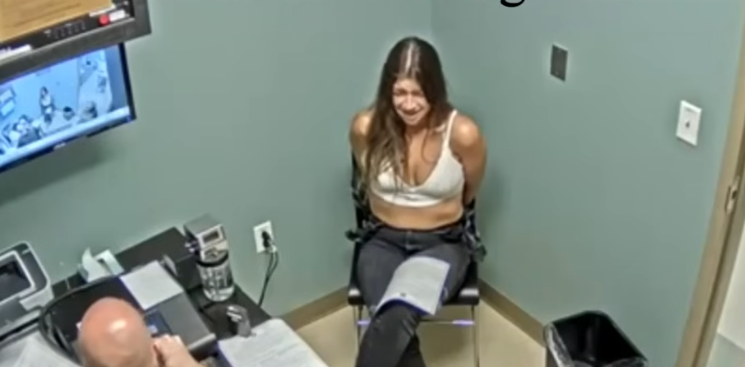
After Komoroski was brought to the Medical University of South Carolina for a blood draw, her blood alcohol content was measured and found to be 0.261 percent, which is more than three times the legal limit of 0.08. At the scene, she had rejected a breathalyzer. Her repeated requests to call her father after being brought in are captured in recently released bodycam footage; this detail seems strangely insignificant in comparison to the scope of what had just transpired. She gave officers an eight when asked to rate her own impairment on a scale of one to ten. About an hour prior to the crash, she claimed to have had one beer and one tequila drink.
Jamie Lee Komoroski entered a guilty plea in a Charleston County courtroom in December 2024. She was given a 25-year sentence by Judge Deadre Jefferson for felony DUI resulting in death, along with additional concurrent sentences for two counts of reckless homicide and DUI causing great bodily injury. Komoroski will essentially serve 25 years, which is the maximum sentence allowed by South Carolina law for a felony DUI charge.
Lisa Miller, Samantha’s mother, stated it clearly following the sentencing. “She won’t be able to resurrect herself in ten or twenty years. In 20 to 25 years, we won’t be able to resurrect ourselves. This is a lifetime. Even tho legal systems are predicated on the idea that sentences can somehow explain what occurred, it is difficult to disagree with that reasoning.
For her part, Komoroski admitted in court that she was addicted to alcohol. She expressed her feelings as “devastated, deeply ashamed, and sorry.” She pledged to use her life, even while incarcerated, to raise awareness about drunk driving and expressed her desire to assist others battling addiction. It’s genuinely hard to say whether those remarks have actual weight or were influenced by the circumstances of a plea hearing. In times of crisis, people have different meanings.
The story that followed was of a different kind. Days after she was sentenced, her lawyers filed a 77-page motion to have the sentence lowered, claiming it was “unwarranted and grossly disproportionate” in comparison to cases of a similar nature in the area. The motion referenced similar cases nationwide and cited felony DUI sentences in Charleston County ranging from six to eighteen years. They pointed out that in South Carolina, judges hardly ever give sentences longer than twenty years.
On paper, the legal argument might make sense. However, a motion of that length coming so soon after the sentencing—after Komoroski had just finished apologizing—is a bit startling. Such appeals are permitted by law, and defense lawyers are acting in accordance with the law. It still sits awkwardly next to everything else.
Another layer is added by Aric Hutchinson’s wrongful death lawsuit. It claims that Komoroski spent a large portion of the day prior to the collision drinking and going from bar to bar, and that a number of establishments failed to serve her alcohol with reasonable caution. The restaurants and bars listed in the lawsuit will face legal challenges of their own.
After three years, the case continues to come up. New video is made available. Motions are submitted. The public can once again see the specifics. Beneath it all lies a woman who, on a spring evening in South Carolina, married the love of her life and never returned home.
