

There’s a history of country music that says the style never comes back after the early 1980s. When the synthesizers cover up the pedal steel, the rhinestones give way to pop gloss, and the whole thing slowly turns into adult contemporary with a cowboy hat sound. That version almost came true. It all changed when Randy Travis walked into a nightclub in Charlotte, North Carolina.
Travis was born Randy Bruce Traywick on May 4, 1959, in Marshville, North Carolina. He didn’t have the kind of upbringing that makes you think you’ll end up in the Hall of Fame. Harold, his dad, was a meat packer and built houses on the side. He loved Ernest Tubb and Patsy Cline music. Around the time Randy was eight, the boys were taking guitar lessons from a family friend. Randy was charged with driving while drunk, breaking into a church, and resisting arrest by the time he was seventeen. There was already music. It wasn’t on the way there.
What made a difference was a talent show in Charlotte in 1977 that was co-owned by a woman named Lib Hatcher. Travis got the job. Hatcher, who would later marry him, saw something in this kid with the deep voice and the bad record. He had to stay with her during his probation, so she did. She hired him to sing at her club and eventually paid for his first recording session out of her own pocket. People who believe in someone that much—a woman who bet real money on a teenager who had given the police many reasons to give up on him—are easy to overlook. It most likely shouldn’t be.
The road to Nashville was dull and slow. Travis did dishes at a club called the Nashville Palace for years, played music on the weekends, and recorded demos that no one seemed to want. He used the name Randy Ray for a while, but executives eventually agreed that it sounded a little too casual. Martha Sharp at Warner Bros. gave him a contract and the name Randy Travis. Things began to move in 1985.
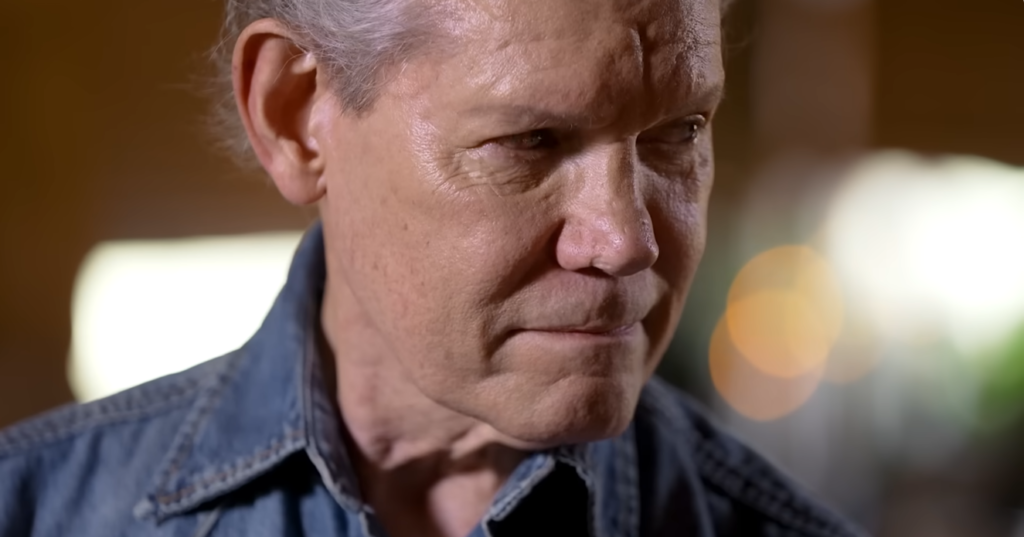
Storms of Life, his first album, came out in June 1986. In its first week, it sold more than 100,000 copies and went triple platinum. They heard something new that they hadn’t heard in a long time. One reviewer said that his voice sounded like Lefty Frizzell’s. It’s that deep, slow baritone voice that doesn’t try to impress you but does anyway. It’s not just hits that songs like “On the Other Hand” and “Diggin’ Up Bones” were. They thought they should be told off. Going back to something that got lost.
Travis went on to make more than 20 studio albums, have more than 50 singles hit the country charts, and win seven Grammy Awards. This single had sixteen number one hits. The term “neotraditional country” was first used by critics to describe what he stood for: a return to classic sounds after years of pop crossover. It’s possible that label doesn’t say enough. Travis wasn’t just a part of a group. In the late 1980s, he was pretty much the movement for a while.
In the 1990s, his popularity started to fade, as it does with most things. He switched record labels and became a real star in gospel music. He also built a modest acting career, appearing in a Patrick Swayze movie here and a TV movie there. The voice was still very impressive. It seems like he never quite got the critical reevaluation that some artists from his time did in the end. This could be because country nostalgia tends to skip a generation before it starts to hit.
After that, everything changed in 2013. Travis almost died after having a stroke that took away a lot of his ability to sing and speak. The man whose voice had made him famous was now mostly without it. Since then, he hasn’t been seen in public very often, but James Dupré has been on tour playing his music. Between the middle of 2024 and the beginning of 2025, Travis released two new songs in which his voice was reconstructed using AI. This is a new development that country music and the music industry as a whole are still trying to figure out how to deal with.
In 2016, Travis was inducted into the Country Music Hall of Fame. For many people in Nashville, this is the most prestigious honor for a career. A star on the Hollywood Walk of Fame and a Grammy Lifetime Achievement Award are two things that honor his work. Any of those things might not be the best way to judge Randy Travis, though. What will happen when you play “Forever and Ever, Amen” in a room full of people who don’t agree on much else? That’s likely the most accurate account of what he left behind.
