

There was no political theater or yelling when Cleo Fields declared he would not run for reelection to Louisiana’s 6th Congressional District. It included a statement about contemplation and prayer. Just the framing conveys something. After navigating one of the most contentious areas of American redistricting history for more than thirty years, Fields appeared to reach his conclusion with the fatigue of someone who had previously engaged in this particular struggle and who, perhaps more than most, recognized that some conflicts change course without ever truly coming to an end.
In 2024, Fields had just returned to Congress after winning Louisiana’s newly created 6th District seat in response to federal pressure to address Black voters’ diminished voting power. Black voters increased from about 25% to 55% in the redesigned district, which stretched from Baton Rouge to Shreveport. It was intended to provide minority communities with a real opportunity at representation. Fields prevailed. The Supreme Court then dismantled it.
In Louisiana v. Callais, decided in April 2026, the Court determined that the district’s construction was unconstitutional due to its excessive reliance on race. Months of legislative wrangling in Baton Rouge, conflicting maps, and real doubt about the district’s final design by November ensued. In the end, the Republican-controlled legislature decided on a map that preserved one majority-Black district, but it was not Fields’. The electoral basis that had placed him there was essentially eliminated when his district was redrawn around predominantly white communities in southern Louisiana and the Baton Rouge region.
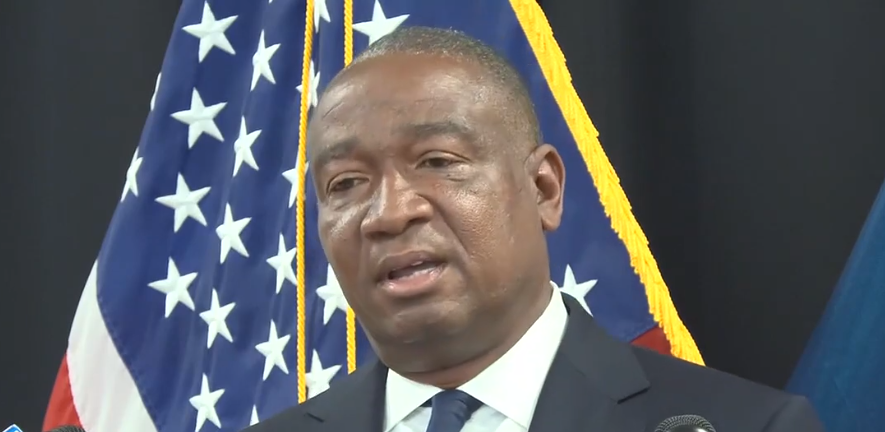
The bitter irony in all of this is difficult to ignore. Black voters were being excluded, according to a federal court, which led to the creation of the original district. The Court determined that race had been deliberately taken into account, so the replacement district was overturned. Between those two decisions, Cleo Fields’ political position just collapsed.
Observing this unfold gives the impression that Fields had already completed the calculations before making his announcement. His seat was already on the list of more than 30 districts that the National Republican Congressional Committee had designated as a target for 2026. Even under ideal conditions, it would have been a difficult campaign to run in a redrawn district that was centered around communities with disparate political compositions. Fields opted for a different route, running for Louisiana Senate District 14 to replace state senator Larry Selders, who died in early July.
Fields has made similar changes in the past. He moved to the Louisiana Senate in 1996 after his then-4th Congressional District was declared an unconstitutional racial gerrymander. He served there for ten years before going back to Congress in 2024. The parallel is striking and may have been deliberate. He has the ability to read a room, or in this case, a courtroom.
At the age of 29, Fields was elected to Congress for the first time in 1992, representing Louisiana as it navigated the politics of the Deep South following the Civil Rights Movement. It goes beyond biography to say that he is still involved in this discussion, continues to run for office, and maintains that minority candidates seldom win in districts where they are not the majority. He has been arguing this point throughout his career for more than thirty years.
His congressional departure raises serious concerns about Louisiana’s political landscape, regardless of the outcome of his state Senate campaign. In a state where Republicans have been systematically consolidating power, the 6th District now becomes a competitive race with no incumbent. What transpires there in November will reveal something about Louisiana as well as the extent to which redistricting struggles have changed the landscape of representation in the American South.
