

The Mojave National Preserve’s Clark Mountain region experiences a certain kind of silence that takes a few minutes to fully register. No crowds, no traffic, and no background noise from machinery. All that is present is heat, rock, wind, and an ecosystem that has been silently functioning for thousands of years. It is difficult to believe that bulldozers have been slicing through delicate habitat somewhere in this silence. However, that is precisely what occurred, and the legal system is now being consulted.
The federal government’s decision to permit Dateline Resources Ltd., an Australian mining company, to resume industrial operations at the long-dormant Colosseum Mine inside the Mojave National Preserve has been challenged in a lawsuit filed by the National Parks Conservation Association, represented by Earthjustice. The mine itself is not brand-new. From the 1860s until 1942, it operated sporadically as a gold and silver shaft mine. In the 1970s and 1980s, there was a brief resurgence of investor interest, but in 1993 it was shut down and put into reclamation. It remained silent for over thirty years. After Dateline Resources purchased it in 2021, things quickly got underway.
What transpired between 2021 and 2024 is what makes this lawsuit so remarkable. According to the Park Service, it repeatedly informed Dateline Resources that no new operations could start until an approved plan of operations and an updated environmental review were in place. According to reports, the company proceeded without authorization, demolishing park land, destroying delicate habitat, and constructing roads. The resulting damage is estimated to be in the hundreds of thousands of dollars. Then, in April 2025, the Department of the Interior completely changed its stance, informing Dateline that it could move forward under a mining plan that had been approved over 40 years prior—nearly ten years before Congress even created the Mojave National Preserve—and that it was not required to pay for those damages.
That’s the legal argument at the heart of the Mojave National Preserve mine lawsuit, though it’s still unclear how a plan that old could be deemed sufficient for a site that now has federal park protections. In short, the Park Service had ordered Dateline to immediately cease and desist all operations just over a year prior to the reversal, according to Earthjustice attorney Katrina Tomas. It was not a gradual flip. The lawsuit claims it broke several federal laws intended to shield national parks from the effects of mining, and it came after the shift in federal administration.
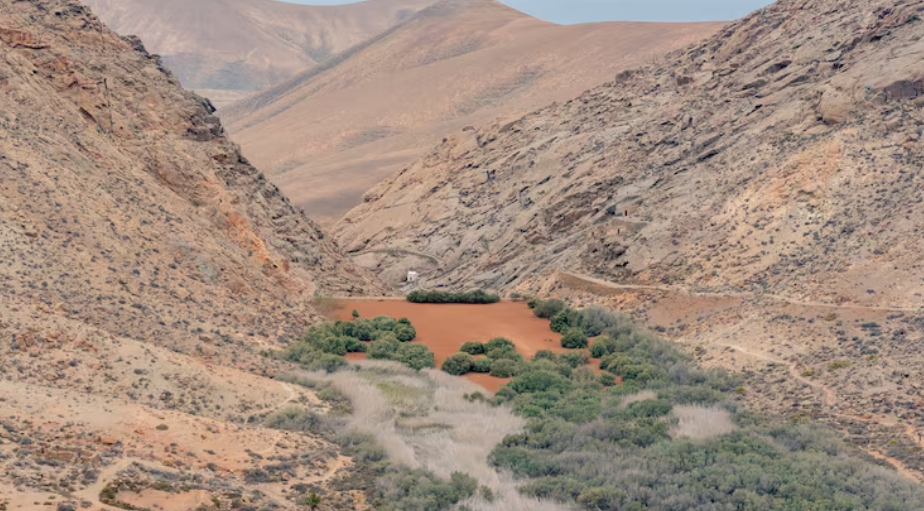
Nor is the Clark Mountain region a random stretch of desert. It provides essential habitat for desert bighorn sheep and has the second-highest concentration of rare plant species of any mountain range in California. These conservation statistics are not abstract. They stand for a living system that took millennia to stabilize itself and that is slow to recover from drill rigs and bulldozers. Many people who have actually spent time in the Mojave, including hikers, researchers, and Indigenous communities with strong ties to the land, seem to already be aware of this. This landscape has been connected to the Fort Mojave, Chemehuevi, and Paiute peoples for at least 10,000 years. It is difficult to compare that history to quarterly earnings reports.
It’s also important to note that Dateline’s goals seem to go beyond the Colosseum Mine. According to reports, the company has been growing its holdings of mining claims throughout the California Desert, including in the vicinity of Joshua Tree National Park. The outcome of this lawsuit may have some bearing on whether or not that broader push is successful. Despite what the administrative decisions may suggest, NPCA and YouGov polling revealed bipartisan opposition to mining in or near national parks, suggesting that this is not a neatly partisan issue.
1.6 million acres of desert habitat were permanently preserved when Congress created the Mojave National Preserve in 1994 under the California Desert Protection Act. It exists because people recently came to the conclusion that certain locations should be shielded from precisely this kind of pressure. The courts will now decide whether or not that ruling is upheld, at least in part.
