

Procedural exchanges, practiced non-answers, and the customary dance between senators and nominees are some of the moments in confirmation hearings that pass by quickly. Then there are times when you are completely stopped. The latter type of conversation took place on Wednesday between Senator Richard Blumenthal and Don Berthiaume.
As part of his official confirmation process, Berthiaume, a career Justice Department lawyer who has been acting as the DOJ’s inspector general, appeared before the Senate. He wasn’t regarded as a particularly explosive choice by the majority of early reports. He has real-world oversight experience. He is not a political operative who joined from the sidelines of a campaign. That is noteworthy in and of itself for this administration.
However, the hearing changed when Connecticut Senator Blumenthal, a Democrat, questioned whether the Capitol had been attacked on January 6, 2021. Berthiaume said, “I don’t know if I would use the term ‘attack,'” in response. “I mean, we had activity outside the Capitol — protests and such.”
That phrase makes it difficult to avoid pausing. “Protests and such.” The nominee to be the DOJ’s top internal watchdog chose “protests and such” as his framing on a day when Capitol police officers were beaten, windows were broken, and members of Congress hid under their desks. Later on, he admitted that “physical violence” had occurred, but he insisted that the term “attack” was too loaded and coordinated for what he had seen that day.
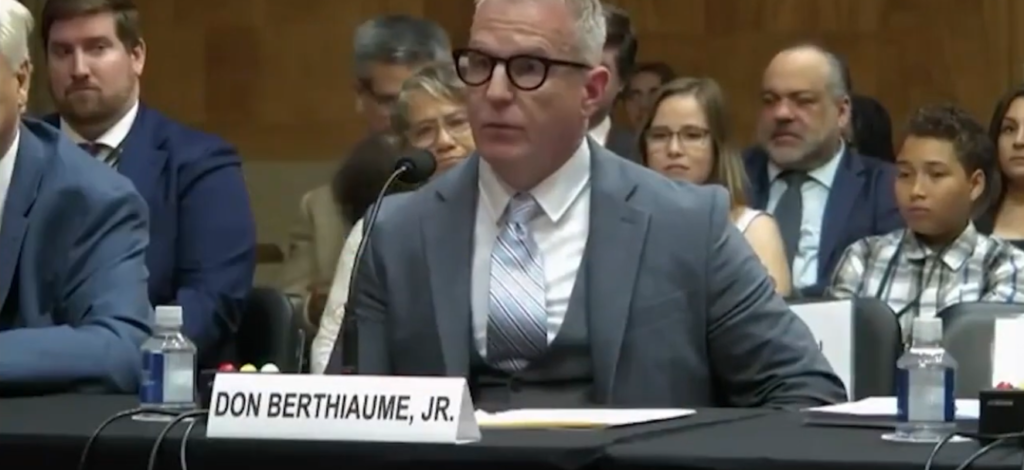
When pressed once more, Berthiaume clarified that the word “attack” refers to a “coordinated effort to attack specific things.” It’s an odd distinction to make, and most legal observers, law enforcement officers, and the courts themselves have not found it to be very compelling. Due to their involvement in what juries, judges, and federal prosecutors repeatedly referred to as an assault on democracy, hundreds of defendants were found guilty. Nearly all of them were later pardoned by Trump.
Blumenthal refused to let it go. The purpose of his questions, he told Berthiaume directly, was “a test of your prospective independence, and so far I think you’re failing that test.” When you take into account the job at stake, it’s the kind of line that lands differently. The Justice Department’s inspector general is expected to be an impartial, honest voice who doesn’t sugarcoat difficult facts in order to appease the powerful. The foundation of the entire office was established during the post-Watergate reforms of the 1970s because the nation determined that it needed government employees who would examine the facts and report them honestly.
Blumenthal inquired about the 2020 election winner earlier in the same hearing. In response, Berthiaume stated that Joe Biden had been “certified by the Senate”—a response that, like many recent responses from Trump nominees, technically contains truth while cautiously avoiding any direct declaration of it. He denied discussing his responses with the White House beforehand, a denial that senators have become accustomed to hearing and are now equally dubious of.
Here, it’s worth being fair. Berthiaume has worked in the department for many years. By most accounts, he is not an ideological activist. In one version of this tale, his circumspect language conveys caution instead of loyalty. However, there isn’t much room for such caution in the inspector general’s role. In a confirmation hearing, ambiguous responses are one thing. He is permanently looking for a position that deals with vague findings in an oversight investigation.
You remembered what Blumenthal said at the end of his interrogation: “I hope my colleagues will agree that the inspector general of the Department of Justice should recognize reality and facts for what they are.” In a way, it’s a low bar. However, as I watched this develop on Wednesday, it seemed more like a real concern than a rhetorical point. It remains to be seen if Berthiaume passes it and if enough senators are concerned.
