

In mid-April, Brett Veach entered his pre-draft press conference with the enthusiasm of someone who had already completed the majority of the thinking and was now relishing the opportunity to make hints. Speaking ahead of the draft in Green Bay, he said, “The fans will be in for a treat next Thursday.” The word “treat” struck a particular chord when you take into account that Kansas City recently concluded a 6-11 season—their worst in a long time—with Patrick Mahomes missing significant time due to injury. The context is important. The definition of a “treat” is altered.
In general, Veach is referring to a draft class that he believes is abnormally flat at the top. The entire board is not being reshaped by a transcendent quarterback prospect. There isn’t a clear Will Anderson or Myles Garrett—generational edge rushers who upend draft rooms at picks two or three. Rather, Veach describes a year in which wide receivers, defensive ends, and offensive tackles are grouped so closely together in grade that the difference between the eighth and eighteenth players at a position is less than usual. Teams that are adept at moving around the board—trading up here, trading back there, and gathering picks without losing talent—have a significant advantage in that kind of setting. With picks nine and twenty-nine and a track record of averaging almost six trades per draft, Kansas City is well-positioned for that kind of evening.
It’s important to comprehend the twenty-ninth choice itself. It originated from the trade that sent Trent McDuffie to the Los Angeles Rams, a move that caused controversy at the time because McDuffie was one of the league’s top cornerbacks. In essence, Veach turned a top-tier defensive back into a first-round selection by placing a wager that the draft would be able to add value elsewhere. It’s a daring computation. McDuffie wasn’t aging, wasn’t in decline, and wasn’t an issue. The decision to trade him was made with the intention of obtaining money rather than retaining talent; this is a move that appears confident and possibly even aggressive, and it will be largely determined by what Kansas City does with that selection.
| Category | Details |
|---|---|
| Name | Brett Veach |
| Title | General Manager, Kansas City Chiefs |
| Tenure as GM | Since 2017 |
| Team’s 2025 Record | 6-11 (disappointing season; Patrick Mahomes missed time with injury) |
| 2026 Draft Picks (Round 1) | No. 9 overall and No. 29 overall |
| Source of No. 29 Pick | Trade sending All-Pro CB Trent McDuffie to the Los Angeles Rams |
| Draft Location | Green Bay, Wisconsin |
| Avg. Picks Moved Per Draft | 5.8 (among highest in the NFL) |
| Key Departed Players | Trent McDuffie, Jaylen Watson |
| Priority Needs | Edge rusher, cornerback, offensive line, wide receiver |
| Key Returning Anchor | Chris Jones (defensive line) |
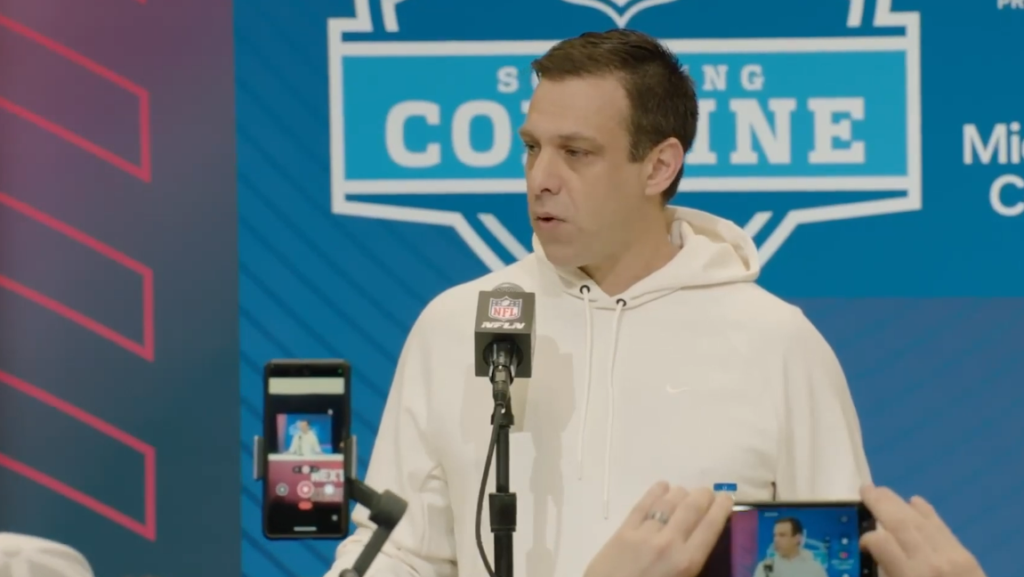
Listening to Veach speak gives me the impression that he sees this as a moment of reset. The Chiefs have Mahomes, Andy Reid, and Chris Jones, so it’s not a panic rebuild; rather, it’s a true retooling of the components around those anchors. Veach has stated unequivocally that the defensive line in 2025 was insufficient. The loss of McDuffie hurt the cornerback room. More weapons and defense are required for the passing game. That’s not a mystery at all. Instead of being constrained by positional requirements at specific locations, the draft provides an opportunity to fill multiple of those gaps simultaneously with the freedom to move around the board and find the best fits. A clever general manager can treat the entire first round more like a puzzle than a transaction when the talent grades are this condensed.
Naturally, the point is that it’s still unclear exactly what Veach has targeted. GMs’ pre-draft remarks are a combination of information and deception; everyone in those rooms is aware that Thursday night is approaching, and nobody wants to give a tip. However, the structural confidence is genuine. Kansas City has the picks, a trading history, and a coaching staff capable of assessing both talent and fit. It’s unlikely that the “entertaining night” promise is spin. Most likely, it’s just accurate. Until the games begin, we won’t know if entertaining will help the Chiefs recover from a difficult season.
It’s difficult to ignore how genuinely at ease Veach seems about everything. Some general managers arrive at a podium bearing the burden of a 6-11 season. Veach entered and talked about how much fun draft night would be. That either indicates that he is knowledgeable or that he has excellent audience management skills. Maybe both.
